Best Timings to Send Email Campaigns: Boost Opens & Engagement
Have you ever wondered why your marketing emails sometimes get lost in a sea of unopened messages, while others spark instant engagement and impressive results? Imagine spending hours perfecting your campaign, only to have it go unseen because it landed at the wrong moment.
The secret is all in the timing. In the fast-paced world of email marketing, relying on outdated advice can quickly lead to inbox fatigue and declining engagement. That is why discovering the Best Timings to Send Email Campaigns has never been more important.
In this guide, you will uncover the science, strategies, and essential tools that successful email marketers use to reach their target audience at exactly the right time. Get ready to transform your email campaign outcomes and finally get noticed.
Stop Guessing: AI Tools That Guarantee Optimal Time for Sending Marketing Emails
Sending promotional emails at fixed times is no longer effective. Your customers’ inboxes are already full during business hours and peak periods.
Advanced email automation and modern email marketing programs now use AI to analyze audience behavior, device usage, and historical data for finding the best send time for every email marketing campaign.
The Magic of Smart Sending (Send Time Optimization)
Smart sending, also known as send time optimization, uses customer data and subscriber habits to deliver emails at each recipient’s local time and optimal timing.
By leveraging key metrics like engagement patterns, open rates, and click-through rates, these features ensure that your email campaigns arrive when subscribers are most likely to check their inboxes, including early morning or during lunch breaks.
The result is fewer campaigns ignored and higher engagement.
Auto-Resend for Unopened Campaigns
Not every email gets opened the first time. An auto-resend feature automatically sends the same email or a new subject line to those who did not engage, usually within 24 to 48 hours.
This tactic gives your recipient’s inbox a gentle nudge and provides another opportunity for customer engagement without overloading audience segments.
Link Triggers (Behavioral Timing)
Link triggers harness email engagement in real time. When a user clicks a specific link, your email marketing program automatically delivers a follow-up message based on device usage, geographic location, and engagement rates.
This real-time, behavior-driven approach helps identify patterns for future emails and continuously improves the performance metrics of your digital marketing strategy.
Unlocking the Vault: 8 Send Time Secrets Only Data Analysts Know
Marketing email results depend on more than a single optimal time. Use these secrets to energize your email marketing efforts and increase your email engagement:
- The Post-6 PM Power Play: Subscribers often check emails after working hours. The best send time for business professionals is now between 6 PM and 7 PM local time on weekdays, helping you reach both desktop users and mobile users as they browse outside traditional business hours.
- The Monday 4 PM Magic: Monday at 4 PM delivers some of the highest open rates for email campaigns, especially for professional services. Open rates peak here at 53.4%, making early afternoon the new prime time for reaching your specific audience.
- The Click-Through Rate Pivot: With privacy changes affecting open rates, focus on click-through rate as the preferred performance metric for your email marketing strategy. CTR gives clearer insight into meaningful engagement.
- Exploit the Institution Gap: For audience segments such as education or non-profit, or if you run an email campaign, ecommerceTuesdayy push, Sunday at 9 AM, or Saturday mornings may be the right spot for peak engagement.
- The 7 AM Weekend Anomaly: Early mornings, especially 7 AM on Saturdays, often reach subscribers before daily activities begin. These times are ideal for high-quality content and nurture campaigns.
- The Thursday/Friday Trap: Too many marketers send emails at week’s end. For optimal timing, target mid-morning on Monday or early afternoon Tuesday instead—your email blast will face less competition in recipients’ inboxes.
- The Time Zone Block Requirement: Segment by broad time zones, such as East, Central, and West, so you do not dilute audience preferences. Focused time zones simplify delivery and boost engagement rates by respecting geographic location.
- Content-Specific Timing Rule: Adapt your email campaign timing based on content type. Send long reads in the evening, urgent messages during business hours, and promotions timed to audience behavior and purchase history.
The Data Does Not Lie: 2025 Send Time Statistics for Email Marketing
Fine-tuning your email send times, using data and key metrics, can improve open rates, click-through rates, and overall ROI for your email marketing efforts. Even minor adjustments, based on audience behaviors, can translate into higher engagement and stronger campaign results.
| Day of the Week | Most Popular Send Day? | Highest Average Open Rate | Peak Best Timing (Local Time) |
| Monday | No (3rd) | 51.90% (Highest) | 4 PM (early afternoon) |
| Tuesday | No (2nd) | 51.00% | 6 PM |
| Wednesday | No (4th) | 50.40% | 4 PM |
| Thursday | Yes (Most Popular) | 50.90% | 7 PM |
| Friday | Yes (2nd most) | 50.80% | 6 PM |
| Saturday | No (6th) | 51.08% | 7 AM and 9 AM (Saturday mornings) |
| Sunday | No (Least Popular) | 51.28% | 9 AM |
Industry-Specific Best Send Time Benchmarks
Email marketing success requires knowing your audience’s preferences. Consider these examples for improving your email marketing program and engaging subscribers’ inboxes at the optimal time:
- Creators (Authors, Bloggers, YouTubers): Best send time is Monday. Peak open rates result from connecting with subscribers as the week begins, pinpointing early morning or early afternoon.
- SMBs (E-commerce, Local Services): Monday also performs strongly for email campaign ecommerce. Test different best send times across multiple time zones, using customer data from previous engagement.
- Institutions (Non-Profit, Education): Sunday morning is optimal. Email campaigns targeting professional services or institutions see higher open rates and meaningful engagement outside business hours.
7 Business Benefits of Strategic Send Times
Implementing strategic timing in email marketing campaigns brings measurable improvement. Here are seven advantages for your email marketing strategy:
- Higher Conversion Rates: Meet your specific audience when they are most attentive, like the early evening, not during email fatigue.
- Improved Deliverability: High open rates and engagement rates strengthen sender reputation, leading to fewer promotional emails lost in the spam folder.
- Reduced Unsubscribe Rates: When marketing emails align with recipients’ inbox habits and local time, they feel less intrusive and more valuable.
- Enhanced Brand Trust: Targeting email campaigns to the recipient’s preferences using device usage and purchase history builds loyalty over time.
- Maximized Lifetime Value: Accurate performance metrics mean future emails reach the right people, at the right time, across audience segments.
- Better Campaign ROI: Each email blast sent at the optimal time maximizes engagement, supporting all facets of your digital marketing.
- Data-Driven Decisions: By continually reviewing key metrics and identifying patterns, you refine your email marketing efforts for even greater returns.
How to Improve Your Email Timing for Maximum Engagement
Improving your email timing is crucial for maximizing engagement and ensuring your messages resonate with your audience. Start by analyzing your audience’s behavior, including their time zones, device usage, and past engagement patterns.
Use tools like A/B testing to experiment with different send times and identify what works best for your specific audience. Leverage automation features, such as Smart Sending, to deliver emails at optimal times based on individual subscriber habits.
Additionally, segment your audience to tailor timing strategies for different groups, such as B2B versus B2C. By continuously monitoring performance metrics like open and click-through rates, you can refine your email timing strategy to achieve higher engagement and better results.
Take your email marketing strategy to the next level:
Smart Strategies for Email Marketers
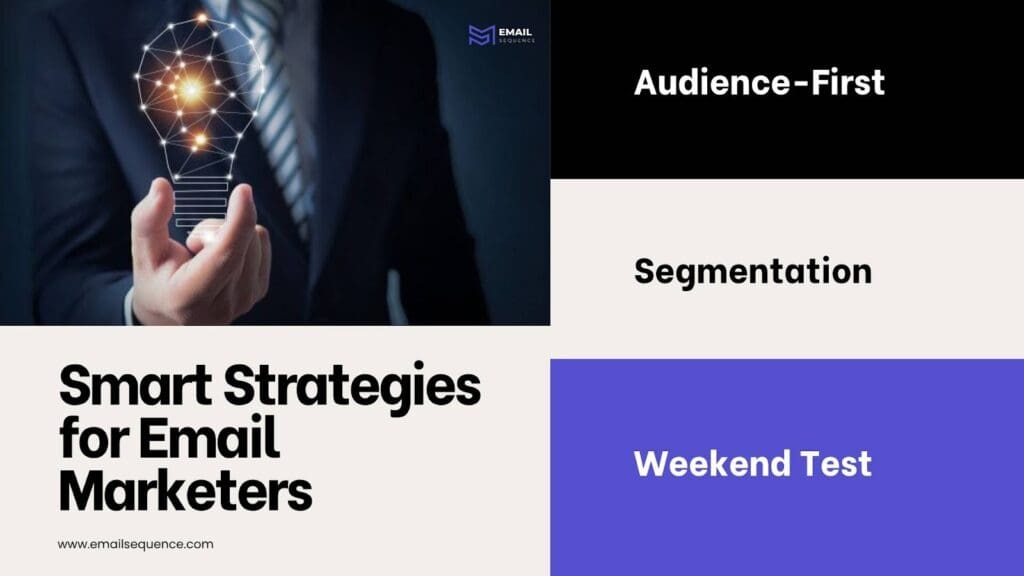
- Audience-First: Use customer data to A/B test various timings targeting early afternoon or 6 PM on Mondays for maximum click-through rates.
- Segmentation: Separate your audience segments (B2B, B2C, professional services) and adjust the best send time for their behavioral patterns.
- Weekend Test: Fewer campaigns are sent on weekends, so test Saturday mornings or Sunday at 9 AM for higher open and engagement rates.
Requirements for Success
- Clean Subscriber Data: Accurate time zone and engagement data are critical for timing deliverability in multiple time zones.
- Robust A/B Testing: Use your email marketing tools to focus on click-through rates and open rates for specific audiences and content types.
- Segmentation Maturity: Divide your list by device usage, working hours, and audience segments to increase meaningful engagement.
Conclusion: Unlock the Best Timings to Send Email Campaigns
Optimizing your email timing is essential for achieving higher engagement, superior open rates, and stronger performance metrics. By focusing on the Best Timings to Send Email Campaigns, you ensure your marketing emails reach the recipient’s inbox when they are most likely to engage.
Do not settle for average results—analyze your data, test your send times, and watch your digital marketing efforts pay off. Start implementing the Best Timings to Send Email Campaigns today to maximize your campaign success.
Take action now and give your next email campaign the timing edge it deserves with Email Sequence!
Frequently Asked Questions
What is the best time to send email campaigns?
The best time varies by audience and industry, but weekdays between 10 AM and 2 PM often yield higher engagement. For B2C, evenings (6 PM – 7 PM) and weekends (9 AM) can also perform well.
Which day of the week is best for email marketing?
Monday and Tuesday are top-performing days for open rates, with Monday peaking at 4 PM. For institutions, Sunday shows high engagement due to less competition.
How does the time zone affect email send times?
Time zones significantly impact engagement. Scheduling emails based on the recipient’s local time ensures they receive messages at optimal times, like mid-morning or early evening.
Should I send emails on weekends?
While weekends see fewer campaigns, they can achieve higher open rates, especially for B2C audiences. Test Saturday mornings (7 AM – 9 AM) or Sunday at 9 AM for potential success.
How can I determine the best send time for my audience?
Use A/B testing and analyze engagement metrics like open and click-through rates. Tools like Smart Sending can optimize delivery based on individual subscriber behavior.