Lead Scoring Automation: Boost Sales Productivity 3x
A staggering 70% of marketing-generated leads are never contacted by sales teams. This is not because sales reps are lazy; it is because they are overwhelmed. Faced with a flood of leads, they rely on intuition to chase what feels “hot,” leaving a huge portion of the sales pipeline to go cold.
This manual lead qualification process is costing you revenue. The solution is to move from static, outdated methods to a dynamic system built on data and speed. In an economy of information overload, the first company to respond to a high-intent signal often wins the deal. Lead scoring automation is how you ensure you are always first.
This guide will show you how to build an automated lead scoring system that turns raw lead data into actionable intelligence. You will learn to prioritize leads effectively, align your sales and marketing teams, and ultimately, convert more high-potential leads into customers.
The Core Pillars of Automated Lead Scoring
An accurate lead scoring model is built on a foundation of different data points. It combines what prospects tell you with what their actions show you. Automating the collection and analysis of this lead data is the key to unlocking sales efficiency.
Explicit Data (The “Who”)
Explicit data is information that prospects provide directly. This includes demographic data and firmographic details that help determine if a lead matches your Ideal Customer Profile (ICP). Relying on manual data entry for this is slow and prone to human error. Instead, use data enrichment tools to automate the process. These tools can automatically gather crucial information such as:
- Job Title: Is the person a decision-maker or an intern?
- Company Size: Does the company fit the scale you typically sell to?
- Industry: Do they operate in a vertical you serve?
- Location: Are they in a region your sales team covers?
Implicit Data (The “How”)
Implicit data, or behavioral data, reveals a lead’s interest and intent. This “digital body language” is one of the most powerful indicators of a promising lead. A robust lead scoring system tracks these online interactions to gauge engagement. Key actions to monitor include:
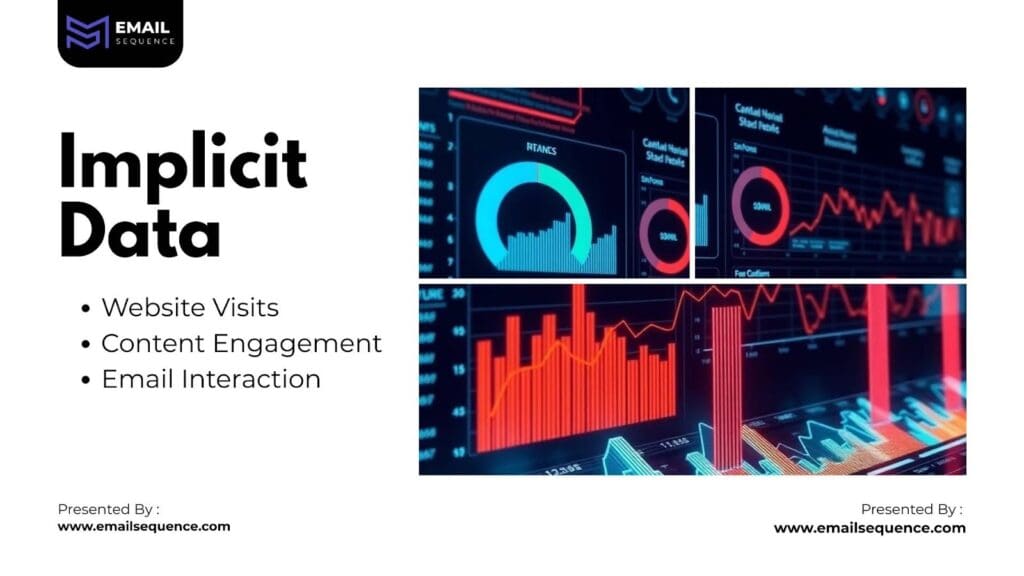
- Website Visits: Did they visit your pricing page or a specific product feature page?
- Content Engagement: Did they download a whitepaper, register for a webinar, or read multiple blog posts?
- Email Interaction: Are they opening your emails and clicking on links?
Negative Scoring (The “Red Flags”)
Just as important as identifying positive signals is recognizing negative ones. Negative scores help you filter out unqualified leads and keep your sales pipeline clean. An automated lead scoring process should deduct points for actions that indicate a poor fit or lack of interest. Common red flags include:
- Unsubscribing from emails.
- Visiting your “Careers” page.
- Having a “student” or “intern” job title.
- Coming from a competitor’s IP address.
The “Decay Factor”: Why Timing is Everything
A lead’s interest is not permanent. A prospect who was highly engaged last week may be completely cold today. This is where the concept of score decay becomes critical. Score decay automatically reduces a lead’s score over time if they do not interact with your brand.
This process prevents your CRM from becoming a graveyard of once-promising leads. By automating the cool-down, you ensure your sales reps are always focused on the most valuable leads who are actively showing interest right now.
For example,
you can set up a workflow that reduces a lead’s score by 10 points for every week of inactivity. This keeps your lead prioritization dynamic and accurate.
The A1 to D4 Automation Matrix
To make lead scoring truly actionable, you need a framework that translates scores into specific actions. The A1-D4 matrix combines a lead’s profile fit with their engagement level to create a clear lead qualification process.
- Profile Fit (A-D): How closely does the lead match your ICP? ‘A’ is a perfect fit, while ‘D’ is a poor fit.
- Engagement Level (1-4): How active is the lead? ‘1’ represents high intent (e.g., demo request), while ‘4’ is low interest.
This matrix creates a simple grid for your sales and marketing efforts.
| Lead Grade | Profile Fit | Engagement | Recommended Automated Action |
| A1 | Perfect ICP | High Intent | Immediate Slack alert to sales + CRM sync for follow-up |
| B1/B2 | Good Fit | Active | Enroll in an “accelerated” email nurture sequence |
| A4/B4 | Good Fit | Low Interest | Add to a long-term, value-add nurture campaign |
| C/D | Poor Fit | Any | Disqualify and move to a passive list or remove from CRM |
This system ensures that hot leads get immediate attention, warm leads are nurtured, and unqualified leads do not waste your sales team’s time.
Integrating Automation with Your Sales Stack
For lead scoring automation to work, your technology must communicate seamlessly. Your scoring tool needs to integrate with your CRM and other marketing automation platforms to create a unified system for lead management.
CRM and Marketing Automation Integration
Your lead scoring software must have real-time, two-way sync with your CRM (like HubSpot or Salesforce). When a lead’s score changes, that information should instantly update in the CRM.
This allows sales reps to see lead prioritization in real time. Similarly, when a sales rep updates a lead’s status, that data should flow back to the marketing automation platform to refine future marketing efforts.
Predictive Lead Scoring and AI
The next frontier is AI-powered lead scoring. Predictive lead scoring models use machine learning to analyze historical data from your closed-won and lost deals. The AI identifies complex patterns in behavioral and demographic data that humans might miss.
This predictive analytics approach creates a more accurate lead scoring model that continuously learns and improves, helping you identify the most promising prospects with greater precision.
Trigger-Based Sequences
Automation allows you to engage leads with personalized outreach at the perfect moment. You can set up triggers based on score changes. For instance, when a lead reaches a score of 75, it could automatically trigger a workflow that:
- Sends a notification to the assigned sales rep.
- Adds the lead to a high-priority list in the CRM.
- Initiates a personalized connection request on LinkedIn from the rep.
Closing the Loop: The Sales-Marketing SLA
Effective lead scoring automation requires strong sales and marketing alignment. Both teams must agree on the process and definitions. This is formalized in a Service Level Agreement (SLA).
The SLA should clearly define the hand-off point. At what score does a marketing qualified lead (MQL) become a sales qualified lead (SQL)? This creates clear ownership and accountability.
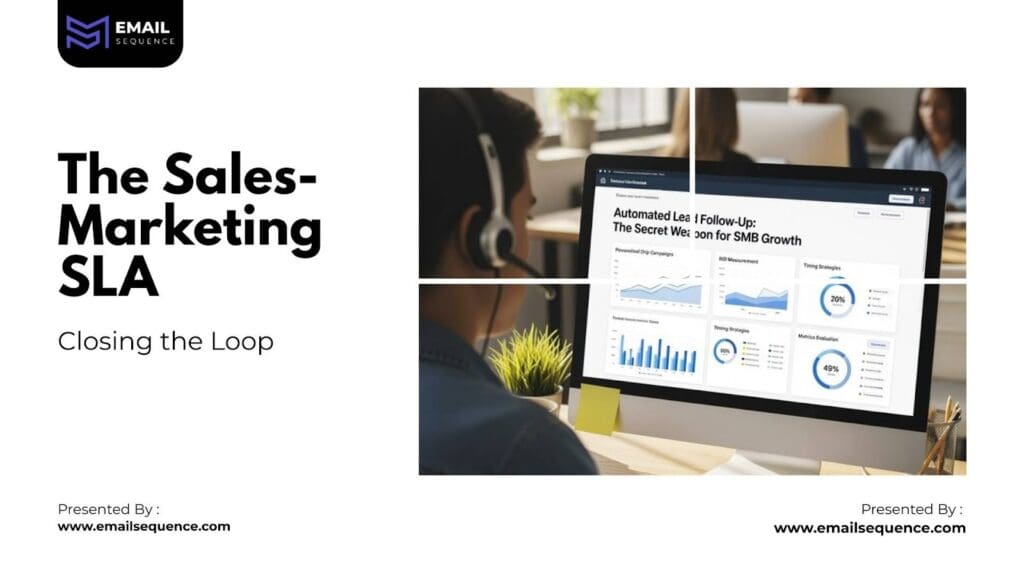
The agreement must also include a feedback loop. When the sales team disqualifies a lead, they should be required to provide a reason (e.g., “wrong timing,” “no budget,” “unresponsive”). Automating this data collection helps marketing teams fine-tune the lead scoring criteria, ensuring the lead quality constantly improves.
Conclusion Turning Data into Revenue
Lead scoring automation is not about generating more leads; it is about having better, more timely conversations with the right leads. By replacing manual guesswork with a data-driven system, you empower your sales team to focus on what they do best: selling.
This shift transforms your lead generation efforts from a cost center into a predictable revenue engine. Start by implementing a simple scoring model and build from there. The result will be higher lead conversion rates, increased sales efficiency, and a stronger bottom line.
Ready to transform your lead qualification process? Begin implementing lead scoring automation today or visit our website email sequence to discover how we can help you accelerate sales productivity and achieve measurable growth.
Frequently Asked Questions (FAQs)
What is lead scoring automation?
Lead scoring automation is the process of using software to evaluate and prioritize leads based on their fit and engagement levels, helping sales teams focus on high-potential leads.
How does lead scoring automation improve sales efficiency?
It automates the lead qualification process, reducing manual effort, minimizing human error, and ensuring sales reps focus on the most valuable leads.
What are the key benefits of automated lead scoring?
Automated lead scoring improves lead quality, aligns sales and marketing teams, enhances conversion rates, and streamlines the lead qualification process.
What data is used in lead scoring automation?
Lead scoring automation uses explicit data (e.g., job title, company size) and implicit data (e.g., website visits, email engagement) to evaluate lead potential.
Can AI improve lead scoring automation?
Yes, AI-powered lead scoring models analyze historical data and identify patterns to predict lead quality more accurately, enhancing overall sales efficiency.