How to Build an Email List from Scratch: Complete Guide
Social media algorithms change overnight. Search rankings fluctuate without warning. But your email list? That remains yours, fully under your control. When you build an email list, you create a direct line to people who have chosen to hear from you. No middleman, no algorithm deciding who sees your message.
The data doesn’t lie: building an email list is one of the most effective ways to achieve a high ROI. Compared to the ever-declining organic reach of social media, email subscribers are more engaged, convert more often, and stay loyal longer. Focusing on building your email list can give your marketing strategy the boost it needs.
This guide will walk you through building an email list from zero to your first 1,000 subscribers. You’ll learn proven strategies, discover the best tools, and understand how to create offers that people can’t resist.
Why Building an Email List Matters More Than Social Followers
Before shifting your efforts from social to email, it’s important to weigh the unique advantages email provides. Unlike social media, where you never truly own your following, an email list is a business asset that delivers consistent reach and measurable ROI. Here’s why investing in email list growth pays off.
- Full Ownership and Control: Your email list belongs to you. This insulates your business from sudden algorithm changes or platform suspensions that can erase your social media following without notice.
- Direct Communication: Email allows you to speak directly to your audience in their personal inbox, a less crowded and more intimate space than a social media feed.
- Higher Engagement: People who subscribe to your list have explicitly asked to hear from you. This results in significantly higher open and click-through rates compared to the fleeting visibility of social media posts.
- Superior Conversions: Email is a powerful sales tool. Subscribers are warm leads who are more likely to purchase products, sign up for services, or take other desired actions.
- Long-Term Value: An email subscriber is an asset that grows more valuable over time. As you nurture the relationship, you build trust and loyalty that translates into repeat business and brand advocacy.
Common Email List Growth Challenges (and How to Solve Them)
Most marketers face similar challenges when trying to build an email list. Identifying these roadblocks early helps you address them quickly and stay on track. Let’s explore what might be slowing down your email list growth and how to fix it effectively.
Low Signup Rates
A trickle of new subscribers often points to a disconnect between your offer and your audience. If visitors don’t see a compelling reason to sign up, they won’t. This is often caused by a weak value proposition or poorly placed signup forms.
- Create an irresistible lead magnet (like an ebook, checklist, or webinar) that solves a specific problem for your target audience.
- Place clear and visible calls-to-action (CTAs) across your website, including in the header, footer, sidebar, and within blog posts.
- Use exit-intent popups to capture visitors’ attention one last time before they leave your site.
High Unsubscribe Rates
Losing subscribers is a natural part of email marketing, but a high rate signals a problem. This could mean your content isn’t meeting expectations, you’re emailing too frequently, or the initial promise you made isn’t being fulfilled.
- Set clear expectations on your signup form about what kind of content subscribers will receive and how often.
- Segment your list to send more targeted and relevant content to different groups of subscribers.
- Regularly survey your audience to understand what they want to learn about and adjust your content strategy accordingly.
Attracting the Wrong Audience
A large list is useless if it’s filled with people who will never buy from you. Attracting the wrong subscribers happens when your lead magnet or promotional messaging is too broad. This leads to low engagement and poor conversion rates.
- Ensure your lead magnet is highly specific to the paid products or services you offer.
- Target your promotional efforts (e.g., social media ads) to demographics and interests that align with your ideal customer profile.
- Use clear language in your CTAs that speaks directly to the needs and goals of your desired audience.
Step 1: Choose the Right Email Marketing Platform
Your email marketing platform is the engine that helps you build an email list effectively. A good platform makes it simple to collect subscribers, design engaging emails, and automate your communication.
Key features to look for in a platform include:
- Ease of Use: An intuitive interface that allows you to create forms and campaigns without a steep learning curve.
- Automation Capabilities: The ability to set up automated welcome sequences and other workflows that run in the background.
- Segmentation and Tagging: Tools to organize your subscribers into different groups based on their interests or actions.
- Analytics and Reporting: Dashboards that show you important metrics like open rates, click-through rates, and subscriber growth.
- Scalability: A platform that can grow with you, offering more advanced features as your list and needs expand.
Step 2: Create a High-Value Lead Magnet
A lead magnet is a free resource you offer in exchange for an email address. To be effective, it must provide a quick, valuable win for your new subscriber. Think about a common pain point your audience faces and create something that offers an immediate solution.
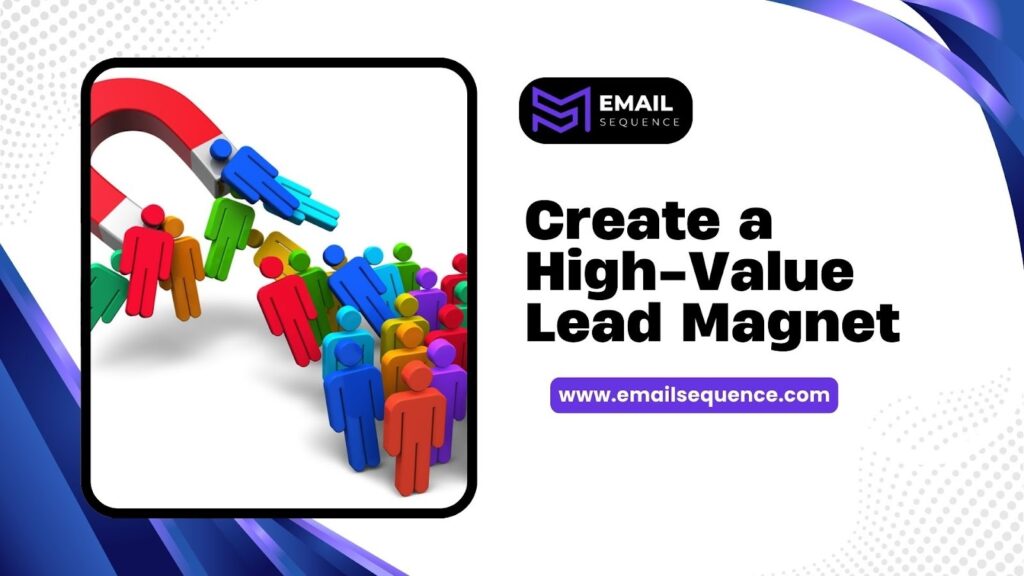
Here are some proven lead magnet ideas that work across industries:
- Checklists or Cheat Sheets: A one-page downloadable that simplifies a complex process.
- Ebooks or Guides: A comprehensive deep-dive into a topic that your audience cares about.
- Webinars or Video Training: An interactive session that teaches a valuable skill.
- Templates or Swipe Files: Ready-to-use resources like email scripts, social media templates, or spreadsheets.
- Quizzes or Assessments: An interactive tool that gives users personalized results and insights.
- Exclusive Discounts or Early Access: A compelling offer for e-commerce businesses to drive signups and first-time purchases.
Step 3: Optimize Your Website for Email Signups
Your website is prime real estate to build an email list. Don’t make visitors hunt for a way to subscribe—integrate signup opportunities naturally throughout your site to maximize your chances of converting traffic into subscribers.
Strategic placements for your signup forms include:
- Header or Navigation Bar: A sticky bar at the top of your site keeps your signup offer visible at all times.
- Within Blog Posts: Place a form inside your content, offering a content upgrade related to the article.
- Sidebar: A classic placement that works well for blog or resource-heavy sites.
- Website Footer: Many visitors scroll to the footer looking for contact or subscription options.
- About Page: People who visit your About page are already interested in you; give them a way to stay in touch.
- Dedicated Landing Page: Create a specific page just for your lead magnet and drive all promotional traffic there for a distraction-free experience.
Step 4: Promote Your Email List and Lead Magnet
Once your infrastructure is in place, it’s time to actively drive traffic to your offers. To build an email list, you need to take consistent action. Promoting your list regularly is essential to attract a steady stream of new subscribers.
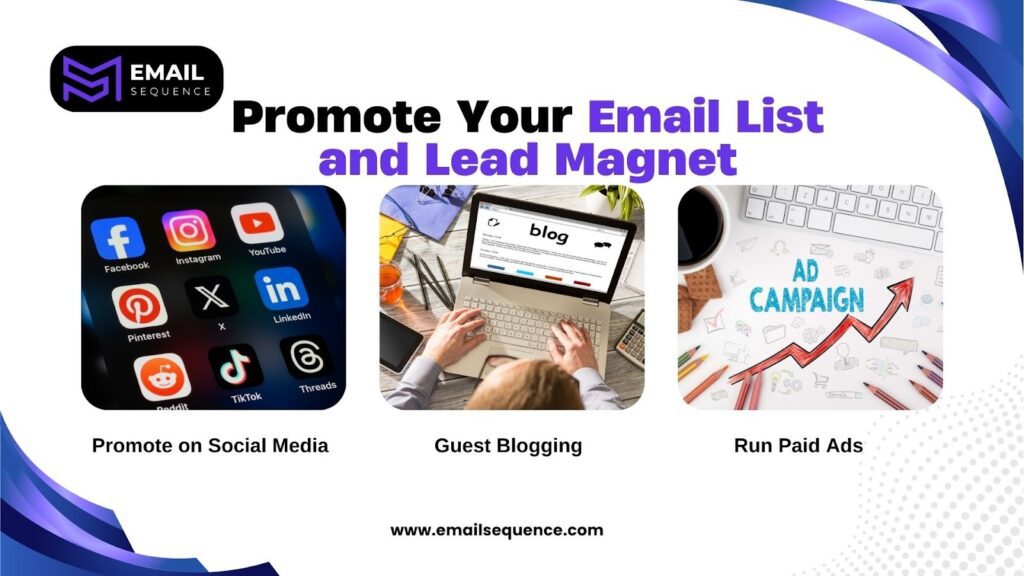
Use these tactics to get your first 1,000 subscribers:
- Promote on Social Media: Add a link to your lead magnet’s landing page in your social media bios. Regularly create posts that highlight the benefits of your free resource.
- Guest Blogging: Write articles for other websites in your niche and include a link back to your lead magnet in your author bio.
- Collaborate with Peers: Partner with other creators or businesses that serve a similar audience for a joint webinar or content swap.
- Run Paid Ads: Use targeted Facebook, Instagram, or Google ads to send traffic directly to your landing page.
- Engage in Online Communities: Participate in relevant forums, Facebook groups, or Slack channels. Answer questions and, when appropriate, share a link to your helpful lead magnet.
By following these steps, you will build a strong foundation for a thriving email list. Remember that consistency is key. Focus on providing value, promoting your list regularly, and engaging with your new subscribers. Your first 1,000 subscribers are well within reach.
Step 7: Use Automation to Nurture New Subscribers
Building your list is just the start—delivering a meaningful, automated experience keeps your audience engaged from day one. A welcome email sequence helps introduce your brand, deliver promised resources, and guide new subscribers toward their next steps.
Examples of automation series to include:
- Welcome + Value Orientation: Greet new subscribers and set expectations about what they’ll receive and how often.
- Lead Magnet Delivery: Immediately provide access to your opt-in offer and reinforce its value.
- Segmentation Tagging: Use subscriber replies or link clicks to tag interests, allowing more relevant content in the future.
- Follow-ups and Engagement Boosters: Send helpful content, tips, or soft offers within the first week to keep your brand top of mind.
- Timing Tips: Space emails 1-3 days apart, and avoid overwhelming new subscribers with too much information at once.
Step 8: Improve Conversions with Testing & Optimization
Continuous improvement is vital for growing and converting your email list. For example, testing different subject lines—like “Don’t miss out!” versus “Your exclusive invite inside”—can reveal what grabs attention and drives more signups. Experimenting with various elements ensures you’re getting the most signups and engagement possible.
Ways to test and optimize:
- A/B Testing Subject Lines: Send variations to discover what drives higher open rates.
- Signup Form Placements and Design: Test forms in different locations or with different layouts to find the most effective setup.
- Button Text and Sequence Timing: Experiment with CTA wording and adjust the timing or order of your welcome emails.
- Conversion Rate Optimization Best Practices: Simplify forms, minimize required fields, and make the signup process as user-friendly as possible.
- Analyze Drop-offs and Subscriber Activity: Use analytics to identify at what point subscribers leave or disengage, and iterate based on data.
Step 9: Keep Your List Clean & Healthy
A healthy email list means higher engagement, better deliverability, and a reputation you can rely on. Regular maintenance is essential to long-term success.
Here’s how to maintain good list hygiene:
- Why List Hygiene Matters: Removing disinterested users improves your sender reputation and engagement rates.
- Remove Inactive Subscribers: Periodically clean your list by removing people who haven’t opened or clicked emails in months.
- Re-Engagement Campaigns Before Pruning: Before you delete, send a win-back campaign to try to revive inactive subscribers.
- Avoid Bought or Scraped Lists: Only add people who have truly opted in; third-party lists hurt deliverability and trust.
Step 10: Email List Growth Metrics You Must Track
Tracking the right metrics is key to building an email list effectively. Understanding what’s working and where to improve gives you insights to make smarter, data-driven decisions.
Key metrics to monitor include:
- Total Subscribers & Net Growth: Are you gaining more subscribers than you’re losing over time?
- Signup Rate: Track the percentage of website visitors becoming subscribers.
- Source Attribution: Know which channels (social, ads, referrals) are driving list growth.
- Open Rate: Measures the percentage of recipients who open your emails—a sign of good subject lines and trust.
- Click-Through Rate: Indicates the effectiveness of your email content in prompting action.
- Unsubscribe Rate: Stay informed about how often people leave your list. High rates may signal content, frequency, or targeting issues.
Good benchmarks vary by industry, but aim for open rates above 20%, click rates around 2–5%, and unsubscribe rates below 0.5%.
Advanced Tactics to Accelerate List Growth
Once your foundation is solid, advanced strategies can take your efforts to the next level. From leveraging partnerships to creating irresistible lead magnets, these tactics can supercharge your ability to build an email list. With the right approach, you’ll rapidly reach new milestones and grow your audience like never before.
Powerful tactics include:
- Referral Incentives: Encourage subscribers to invite friends with refer-a-friend rewards and viral loops.
- Partnership Swaps and Co-Promotions: Collaborate with other brands or influencers for mutual exposure.
- Gamification: Use interactive elements like spin-to-win wheels or contests to boost signups in a fun way.
- Segmented, Targeted Offerings: Deliver lead magnets and campaigns tailored to specific audience segments for higher conversion.
Legal & Ethical Considerations for List Building
Compliance isn’t optional; it’s a must for the longevity and reputation of your email marketing. Ensuring your campaigns comply with regulations like GDPR and CAN-SPAM not only protects your brand but also builds trust with your audience.
Ensure you follow these best practices:
- GDPR Consent: Always collect explicit permission from EU subscribers and be transparent about how data will be used.
- CAN-SPAM Compliance: Include your business address and make it easy to unsubscribe in every email.
- Double Opt-In vs. Single Opt-In: Double opt-in adds a layer of consent, reducing fake signups and ensuring list quality.
- Clear Privacy Policy: Link to an up-to-date privacy policy and be clear about how information is handled.
Conclusion
Building an email list is a journey that brings lasting rewards. Define your audience, pick the right email service provider, craft an irresistible lead magnet, optimize your signup forms, and promote your list consistently.
As you build an email list, it’s important to put systems in place to nurture subscribers with automation, regularly test and optimize your approach, and maintain a healthy list. Track your progress using key metrics and ensure you stay compliant with data regulations.
Most importantly, remember that list building is a marathon, not a sprint. Start small, test often, and focus on delivering real value. With patience and effort, you will reach and surpass your first 1000 engaged subscribers.
Ready to transform your email strategy? Visit emailsequence.com to access the tools and insights you need to build and nurture your audience effectively.
Frequently Asked Questions
What is the first step to building an email list?
The first step is to select a reliable email service provider (ESP), set up an opt-in form, and create an irresistible lead magnet that will motivate visitors to subscribe.
How many subscribers make an email list successful?
Success depends on your goals, but even a few hundred engaged subscribers can drive meaningful results. Focus on quality and relevance over sheer numbers.
Do lead magnets really help?
Yes, lead magnets dramatically increase signup rates by providing immediate, tangible value in exchange for contact information.
What’s better — a pop-up form or a landing page?
Both have merits. Popups capture attention site-wide, while dedicated landing pages work best for focused campaigns and advertising.