The 2026 Zero-Party Data Playbook: Email Automation
Zero-party data refers to information that customers intentionally and proactively share with a brand, such as preferences, purchase intentions, and personal context. Unlike first-party data, which is collected through interactions, zero-party data is explicitly provided by the customer, ensuring accuracy and compliance with privacy regulations.
This data empowers businesses to create highly personalized marketing strategies, improve customer experiences, and build trust. By leveraging tools like interactive quizzes and preference centers, brands can collect zero-party data seamlessly, gaining valuable insights while respecting consumer privacy. It is a critical asset for data-driven marketing in today’s privacy-conscious digital landscape.
This guide explores the transition from inferred analytics to explicit customer consent. You will learn how to define zero-party data and build a robust zero-party data strategy. We will provide actionable tactics to collect zero-party data directly from your audience. You will discover how to use preference center data to create engaging digital experiences.
The 2026 Shift: Beyond Behavioral Data
First-party data and behavioral signals have become noisy. Email clicks and website visits often represent automated bot activity rather than genuine human interest. You cannot rely on time spent browsing to understand purchase intentions.
The death of inference forces brands to seek better alternatives. Third-party cookies are obsolete. Second-party data from trusted partners provides limited value. You need a direct relationship with your audience.
Zero-Party Data Defined
Zero-party data consists of details that customers willingly and deliberately provide to a brand. This valuable data includes communication preferences, personal context, and purchase intentions. When businesses collect data directly from the customer, they eliminate the guesswork.
In 2026, successful brands do not guess what the user wants. They engineer the conversation. They ask questions and build rich customer profiles based on shared data. This approach creates a massive competitive advantage.
Anatomy of a High-Performance ZPD Strategy
Consumers fiercely protect their consumer privacy. You must offer a compelling reason for them to share their personal information.
The Value Exchange
Customers will share data if they receive an immediate utility gain. This win-win scenario requires transparency. You must explain exactly how you will use the data provided. When customers feel respected, they trust the brand. Increased customer trust leads to better data quality.
Offer better recommendations, exclusive access, or saved time. If you run a loyalty program, clearly state the benefits of sharing customer preferences.
The Zero-Party Data Hierarchy
| Data Category | Definition | Collection Method | 2026 Utility |
| Preferences | Likes, dislikes, and styles | Interactive Polls | High (Creative Alignment) |
| Intent | Future purchase plans | “When are you buying?” Quiz | Maximum (Timing Accuracy) |
| Personal Context | Life stages (e.g., “New Parent”) | Progressive Profiling | High (Emotional Resonance) |
| Communication | Frequency and channel | Dynamic Preference Centers | High (Churn Prevention) |
Different data types offer varying levels of utility. You must structure your data collection efforts strategically.
- Preferences: Collect likes and styles via interactive polls to achieve high creative alignment.
- Intent: Ask about future purchase plans using an interactive quiz to maximize timing accuracy.
- Personal Context: Use progressive profiling to understand life stages and build emotional resonance.
- Communication: Leverage dynamic preference centers to manage frequency and prevent churn.
5 Tactical Methods to Collect ZPD via Email
You must integrate zero-party data collection into your existing marketing efforts seamlessly. Eliminate friction to maximize opt-in rates.
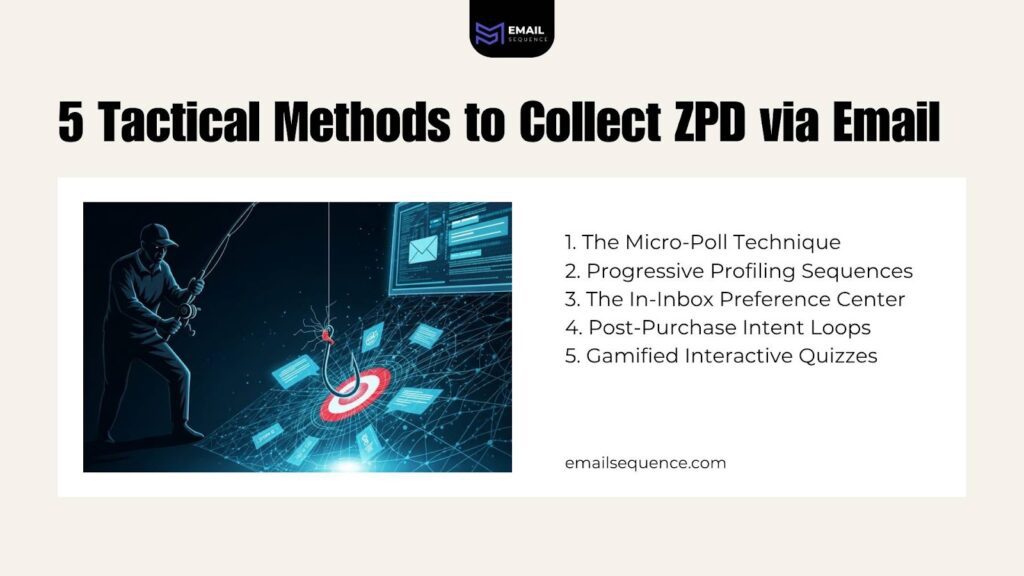
1. The Micro-Poll Technique
Insert single-question, one-click polls directly into the email body. This method tags users without friction. You gather valuable insights without forcing users to visit external sources.
2. Progressive Profiling Sequences
Spread questions across a five-email welcome series. Do not overwhelm new customers with long web forms. Build a rich profile gradually as you nurture customer relationships.
3. The In-Inbox Preference Center
Leverage AMP for Email technology. Allow users to update their communication preferences without leaving their inbox. This tactic reduces click friction significantly and protects your existing data.
4. Post-Purchase Intent Loops
Ask buyers a simple question after they complete a transaction: “Was this a gift or for you?” This separates personal context from purchase history. You clean your behavioral data for future marketing campaigns.
5. Gamified Interactive Quizzes
Transition from boring lead magnets to self-discovery tools. Interactive quizzes provide value while capturing multiple data points. You create engaging experiences that generate high-quality consumer data.
The Revenue Loop: Activating ZPD
Collecting data is only the first step. You must activate this valuable data to drive your business goals.
Transforming Data into Automated Revenue
Move users into specialized interest tracks immediately. Implement self-segmenting onboarding within 60 seconds of their first data share. You instantly personalize the customer experience.
Use dynamic hero inversion to swap email imagery in real time. Show hiking gear or running shoes based on the stated preference. Align your creative assets with explicit customer desires.
Utilize predictive replenishment workflows. If a customer states they use a product every 30 days, trigger a sales sequence on day 25. Data-driven marketing relies on perfect timing.
Technical Integrity: Filtering the Noise
You must protect your customer data platform from automated interference. Data quality dictates the success of your marketing initiatives.
Human vs. Bot Data
Corporate security filters click links automatically. These bots inflate preference data artificially. You must implement bot-filter protection to identify and exclude non-human web activity.
Explicit Consent Mapping
Automate the timestamping of every zero-party data entry. You must ensure absolute compliance with the 2026 EU AI Act and GDPR. Users must have clear options to opt out. Strict adherence to data privacy laws protects your brand reputation.
The Implementation Checklist for 2026
Take immediate action to upgrade your email marketing strategy. Follow these steps to harness the power of zero-party data.
- Audit Your Data: Identify where you currently infer customer behaviors. Determine where you should ask directly instead.
- Implement the One-Question Rule: Add a single preference question to your highest-volume automated flow today.
- Integrate Your Systems: Ensure your email service provider writes data back to your customer data platform in real time.
- Complete the Feedback Loop: Show the customer you listened. State clearly: “Based on your interest in X, here is Y.”
By executing this zero party data playbook, you will forge stronger connections with your audience. You will deliver enhanced personalization and achieve sustainable organic growth. Focus on value, respect consumer privacy, and let your customers guide your marketing efforts.
Conclusion
Mastering zero-party data collection is no longer optional in 2026; it is essential for creating personalized, data-driven marketing strategies that respect consumer privacy. By proactively gathering customer preferences, purchase intentions, and personal context, businesses can build trust, enhance customer experiences, and gain a competitive edge. Implementing tools like interactive quizzes, preference centers, and progressive profiling ensures seamless data collection while aligning with privacy regulations.
Ready to transform your marketing efforts? Start collecting zero-party data today and unlock the power of personalized, consent-driven customer relationships. Take the first step toward sustainable growth and enhanced customer loyalty. Your audience is waiting for an email sequence!
Frequently Asked Questions
What is zero-party data, and why is it important?
Zero-party data is information that customers intentionally share with a brand, such as preferences, purchase intentions, and personal context. It is important because it provides accurate, consent-based insights, enabling businesses to deliver personalized experiences. Unlike third-party data, zero-party data builds trust and aligns with data privacy regulations, ensuring a direct relationship with customers.
How can businesses collect zero-party data effectively?
Businesses can collect zero-party data through interactive methods like quizzes, polls, and preference centers. These tools encourage customers to share their preferences and communication preferences willingly. By offering value in exchange, such as personalized recommendations or exclusive offers, businesses can enhance customer trust and gather valuable insights for data-driven marketing.
What is the difference between zero-party data and first-party data?
Zero-party data is proactively shared by customers, such as their preferences or purchase intentions. First-party data, on the other hand, is collected through customer interactions, like website visits or purchase history. While both are valuable, zero-party data offers deeper insights into customer preferences, enabling businesses to create highly personalized and engaging experiences.
Why is zero-party data collection critical for marketing strategies?
Zero-party data collection is critical because it ensures compliance with data privacy laws and eliminates reliance on third-party cookies. It allows businesses to create tailored marketing campaigns based on explicit customer consent. This approach improves customer relationships, enhances personalization, and provides a competitive advantage in today’s privacy-conscious digital landscape.
What are the best tools for collecting zero-party data?
The best tools for collecting zero-party data include interactive quizzes, dynamic preference centers, and progressive profiling sequences. These tools make data collection seamless and engaging while respecting consumer privacy. By integrating these tools with customer data platforms, businesses can use real-time insights to optimize marketing campaigns and improve customer experiences.