White Label Growth: Agency Scaling Guide for 2026
Are you feeling overwhelmed by the demands of scaling your agency, hiring more staff for every new client, managing spiraling costs, and facing burnout as your business expands? Imagine a future where, instead of being trapped by the old growth paradox, you unlock a smarter, faster path to agency success.
This is where white label growth changes everything. In 2026, the agencies leading the industry are not those with the largest teams, but those who master leveraging white label strategies to expand their services, boost profit margins, and enter new markets with ease.
Curious about transforming your agency from a boutique operation to an industry powerhouse? Dive in to discover the blueprint for sustainable, scalable success fueled by white label growth.
The Unit Economics of White Label Scaling
Understanding the financial mechanics of white label growth is crucial for agency scaling. It fundamentally shifts how you analyze efficiency and engineer profit margins, moving you away from the endless and costly “Hire-Train-Retain” cycle.
Instead, you adopt a “Plugin-Launch-Scale” model. This approach bypasses the time-consuming processes of recruitment, onboarding, and training for every new service you offer. You can plug a proven white label service into your portfolio and begin selling it almost immediately.
This efficiency directly impacts your bottom line. While outsourcing fulfillment might seem like it would reduce profits, strategic partnerships allow you to maintain impressive margins, often between 50% and 70%. You avoid the costs of salaries, benefits, and infrastructure associated with an in-house team. The scalability formula becomes clear:
Revenue Growth / Operational Overhead = The Growth Multiplier
By keeping your operational overhead low and fixed, every new sale contributes more significantly to your net profit. This is the core of smart white label growth.
Strategic Service Development: Building Your 2026 Portfolio
Scaling your agency is not just about selling more of the same service. True growth strategies involve intelligent service development. White label partnerships offer two primary paths for expanding your portfolio.
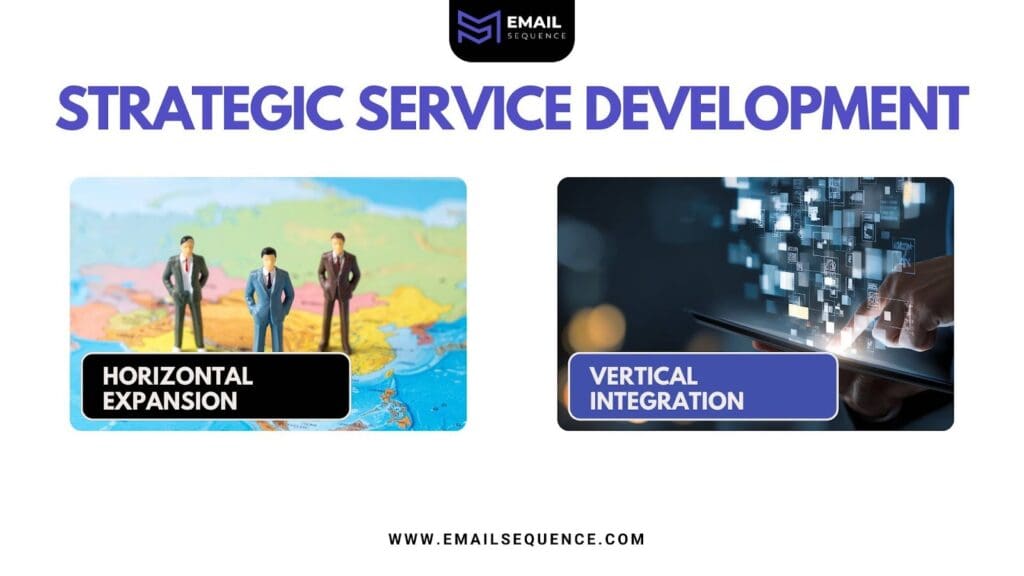
- Horizontal Expansion: This involves adding adjacent services to your current offerings. For example, a successful SEO agency can instantly begin selling white label PPC management, social media marketing, or web development. This allows you to capture a larger share of your existing clients’ marketing budgets and attract new customers looking for a full-service agency. This is an effective way to enter new product categories without the resource drain.
- Vertical Integration: This strategy focuses on deepening your expertise within your current niche. You can integrate advanced, high-tech solutions that would be difficult or impossible to develop in-house. This could include offering white-label AI chatbots, sophisticated CRM management, or proprietary analytics platforms. This positions your agency as an innovator and a leader in its field.
Scaling is not just about customer acquisition; it is about retention. As you grow, ensure your expansion includes high-touch white label client support. This maintains your brand’s reputation for quality and service, even as fulfillment is handled by a partner.
The White Label Growth Matrix
Choosing the right white label strategy depends on your agency’s current stage and goals. This matrix helps you identify which approach will have the most significant impact on your business expansion.
| Growth Strategy | Best For | Impact on Scaling | Market Expansion Level |
| Service Arbitrage | New Agencies | High (Immediate Revenue) | Entry-Level |
| Productized Services | Established Agencies | Extreme (Predictable RR) | Mid-Market |
| Ecosystem Aggregation | Elite Agencies | Infinite (Total Market Share) | Enterprise |
| AI-Hybrid Fulfillment | Tech-Forward Agencies | High (Efficiency Boost) | Future-Proof |
Operational Excellence: The “Invisible” Hand-Off
The success of any white label strategy hinges on a seamless integration between your agency and your partner. To the end-client, the entire process should feel like it is being handled by a single company. This “invisible” hand-off is critical for maintaining brand integrity.
A key element is bridging the gap between your sales team and your white label partner. Your team needs to sell with confidence, fully understanding the capabilities and processes of the fulfillment partner.
The first 48 hours after a client signs on are pivotal and often determine their lifetime value (LTV). Implementing a professional white label onboarding process is essential. This ensures the transition from “sold” to “fulfilled” is smooth and invisible to the customer.
It sets the tone for the entire relationship and builds immediate trust. Finally, establish quality governance through automated Key Performance Indicators (KPIs) to monitor your white label partner’s performance. This allows you to ensure high-quality service delivery without micromanaging their production process.
2026 Growth Strategies: Beyond the Logo
Advanced white label strategies go beyond simply reselling services. They enable you to build a more resilient and competitive business model.
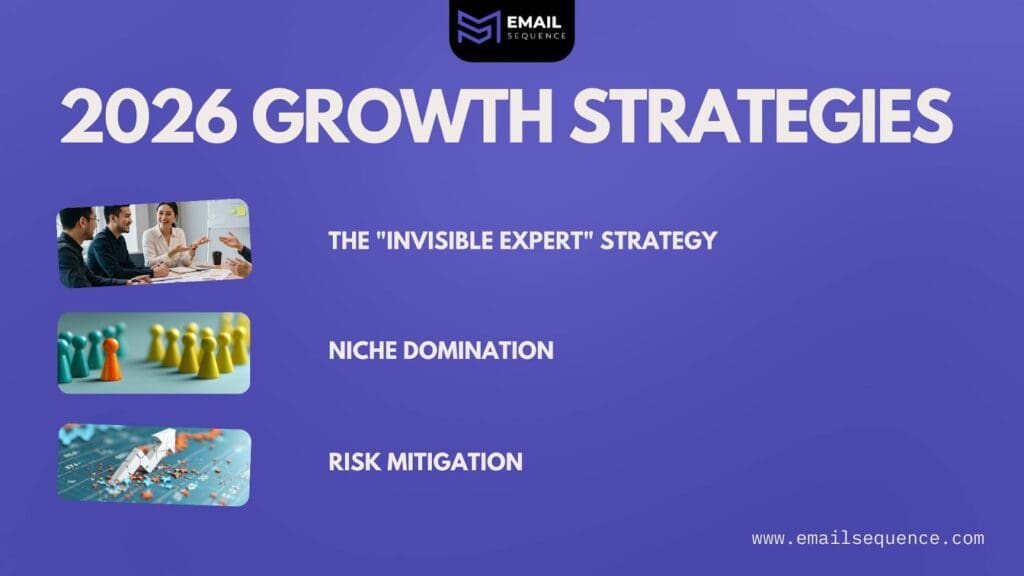
- The “Invisible Expert” Strategy: Position your partner’s specialists as your own senior team members. You can bring these “Senior VPs” onto high-stakes sales calls to provide deep expertise and close larger deals. This elevates your brand’s authority without adding to your payroll.
- Niche Domination: Use the speed of white labeling to enter emerging “micro-niches” before your competitors can hire and train their own experts. When a new demand or trend appears, you can partner with a specialist and be in the market within weeks, not months.
- Risk Mitigation: Do not rely on a single white label provider for all your fulfillment needs. Diversify your white label “stack” with multiple partners. This prevents single-point-of-failure issues and gives you flexibility, ensuring business continuity even if one provider encounters problems.
Case Study: Scaling from $20k to $150k MRR in 12 Months
Anatomy of a successful scale using white label growth strategies:
- Identify the Bottleneck: A digital marketing agency was excellent at sales but struggled with fulfillment capacity, capping their growth at $20k monthly recurring revenue (MRR).
- Partner Selection: They vetted and selected specialized white label providers for SEO, PPC, and content creation, focusing on partners with proven systems and strong communication.
- Automated Onboarding: The agency developed a streamlined client onboarding workflow that seamlessly transferred project details and assets to their white label partners, making the hand-off invisible.
- Aggressive Market Expansion: Freed from fulfillment constraints, the sales team focused entirely on growth. They expanded their service offerings and targeted larger clients, confidently scaling operations. The result was an increase to $150k MRR in just 12 months.
Conclusion: The Aggregator Wins
Agency scaling in 2026 is a different game. The winners will not be the agencies that do the most work, but those that build and manage the best systems. By embracing white label growth, you shift your role from a service provider to a service aggregator, curating best-in-class solutions for your clients under your own brand.
It allows you to focus on your core strengths, client relationships, and sales while leveraging the expertise and efficiency of specialized partners. White label growth is not just about outsourcing; it is about building a smarter, more scalable, and more profitable agency.
Ready to explore what white label growth can do for your agency? Schedule a complimentary consultation or download our exclusive White Label Growth Guide today to take the first step toward scalable success with an email sequence.
Frequently Asked Questions
What Is White Label Growth?
White label growth is a strategic approach to business scalability where companies use white label services to offer products or solutions under their own brand. This model enables faster expansion, reduced operational burden, and consistent brand ownership without building everything in-house.
How Does White Label Growth Support Agency Growth?
White label growth accelerates agency growth by allowing agencies to expand service offerings, reduce internal costs, and deliver high-quality results through trusted outsourcing solutions. This helps agencies scale revenue while staying focused on sales and client relationships.
Which Industries Benefit Most From White Label Growth?
White label growth is widely adopted in industries such as digital marketing, SaaS, software development, e-commerce, IT services, and consulting. Any business seeking faster expansion and improved business scalability can benefit from white label services.
What Are the Biggest Challenges in White Label Growth?
Common challenges in white label growth include maintaining service quality, aligning workflows with outsourcing partners, ensuring smooth communication, and protecting brand credibility while scaling agency operations.
How Do You Choose the Best White Label Growth Partner?
To succeed with white label growth, choose a provider that offers proven white label services, strong communication, flexible outsourcing solutions, competitive pricing, and scalable systems aligned with long-term agency growth goals.