Predictive Email Analytics: Boost Campaign Performance
Email marketers often feel like they are looking in the rearview mirror. You analyze past data from email campaigns to understand what worked and what did not. While this reactive approach offers some lessons, it leaves significant opportunities on the table. Imagine knowing how your campaign will perform before you hit send. This is the power of predictive email analytics. By shifting from reactive reporting to proactive forecasting, your brand can optimize its marketing efforts, boost conversion rates, and dramatically improve customer loyalty.
This post will explore how predictive analytics is revolutionizing the email marketing industry. You will learn what it is, how it provides a competitive advantage, and how you can implement predictive analytics to build intelligent, high-performing email marketing campaigns. We will also cover the challenges and best practices to ensure you make data-backed decisions that drive real business growth.
The Core Pillar: What is Predictive Email Analytics?
Predictive email analytics is the science of using historical data, statistical algorithms, and machine learning to forecast future outcomes. It moves beyond descriptive analytics, which tells you what happened, to the predictive realm, which tells you what is likely to happen next. This method analyzes patterns in open rates, click-through behavior, purchasing patterns, and other data points to assign a probability score to future actions.
Think of it as a powerful tool for anticipating customer behavior. Instead of just reporting on last month’s numbers, you can generate accurate predictions about your next campaign. This allows email marketers to fine-tune email campaigns for maximum impact.
Key applications include:
- Outcome Prediction: Estimate the specific revenue or conversion rate of a scheduled email blast.
- Trend Forecasting: Identify seasonal shifts in subscriber interest before they peak, allowing you to prepare relevant content.
- Performance Forecasting: Use “digital twins” of your audience segments to simulate how they will react to different offers, subject lines, and calls to action.
Finding the Competitive Advantage
Standard analytics might tell you that a campaign underperformed. Predictive insights, however, can warn you that a campaign is likely to fail while you still have time to change the subject line or adjust the offer.
This proactive capability is a significant competitive advantage. To truly master your strategy, you should conduct a thorough email competitor analysis. See how rival brands are timing their own campaigns to capitalize on predictive seasonal peaks and engagement trends.
Predictive models are the engine behind these insights. Data science offers different predictive modeling techniques, each designed to answer a specific business question.
Key Models in Email Forecasting
| Model Type | What it Forecasts | Business Value |
| Propensity Model | The likelihood of a subscriber purchasing within a specific timeframe, such as 48 hours. | Achieves higher conversion with fewer, more targeted emails, reducing list fatigue. |
| Churn Prediction | Which users are at risk of unsubscribing or becoming inactive? | Enables proactive re-engagement and win-back campaigns to retain valuable subscribers. |
| Subject Line Sentiment | The predicted open rate is based on the emotional triggers and language used in your subject lines. | Maximizes inbox visibility and initial customer engagement. |
| Offer Sensitivity | Which customers need a 20% discount to convert versus those who will buy at full price? | Protects profit margins by personalizing promotions for specific segments. |
| Send-Time Optimization | The exact time a user is most likely to check their email and engage with your message. | Increases “Top of Inbox” placement and overall email engagement metrics. |
How Predictive Modeling Transforms Strategy
Implementing predictive analytics transforms email marketing from a broadcast channel into a personalized communication tool. It helps you understand the nuances of the customer journey and deliver relevant messages at the perfect moment.
Performance Forecasting and Outcome Prediction
By feeding historical data into a machine learning engine, marketers can run “What-If” scenarios.
For example,
You could ask, “If I change my CTA from ‘Buy Now’ to ‘Explore the Collection,’ how does the predicted click-through rate change for my high-value prospects?”
This allows your marketing team to test hypotheses without risking a live campaign. It turns your email marketing efforts into a continuous loop of data-driven improvement, leading to more accurate predictions over time.
Trend Forecasting and List Health
Predictive tools can spot a downward trend in engagement weeks before a user unsubscribes. This early warning system enables “pre-emptive strikes.” You can send a personalized check-in email or a high-value piece of content to warm up the relationship before the lead goes cold.
This proactive approach to list health is critical for maintaining a base of valuable subscribers and maximizing customer lifetime value. It also helps you identify your most promising leads for sales teams to follow up on.
Building the “Intelligent” Campaign
To succeed, your predictive engine needs a steady diet of high-quality data. The more data points your model has, the more it learns about future customer behaviors. Your CRM systems, website analytics, and social media interactions are all valuable data sources.
The workflow for an intelligent campaign typically follows these steps:
- Data Ingestion: The process begins by gathering six to twelve months of behavioral data. This includes past interactions, purchasing patterns, and email engagement metrics.
- Pattern Recognition: The AI analyzes this data to identify “buyer personas.” These are based on actual consumer behavior, not just demographic information.
- Simulation: The model runs thousands of virtual versions of your campaign against these personas to forecast future outcomes.
- Optimization: You receive a set of actionable insights. These include recommendations for the ideal send time, subject line, and audience segments for your campaign.
Challenges and Best Practices
While the benefits are clear, implementing predictive analytics in email marketing comes with challenges.
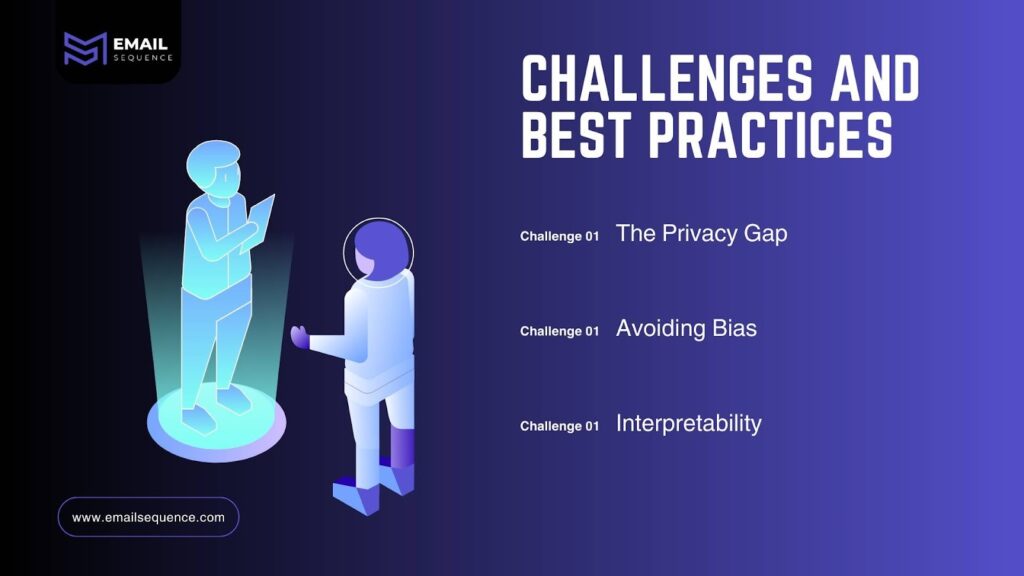
- The Privacy Gap: With the decline of third-party tracking pixels due to regulatory compliance like GDPR, models must adapt. The focus is shifting toward “Click-Breadcrumbs,” analyzing on-site actions after a click, and Zero-Party data, which is information customers willingly share.
- Avoiding Bias: Your historical data must be clean. Ensure your data quality is not skewed by a one-time viral event or a past technical issue that will not happen again. Biased data leads to inaccurate predictions.
- Interpretability: Complex data is useless if your team cannot act on it. Use data visualization tools to turn complex probability scores into simple, actionable directives like “High/Medium/Low” priority leads. The goal is to empower your team to make better data-backed decisions.
Conclusion
Predictive email analytics is no longer a luxury reserved for large enterprise brands; it is a vital tool for survival in the modern, crowded inbox. By leveraging performance forecasting and predictive insights, you can stop guessing what your audience wants. Instead, you can start delivering exactly what they are ready to buy, right when they are ready to buy it.
This strategic shift from reaction to prediction unlocks new levels of efficiency and revenue growth. It helps you build stronger customer relationships, reduce spam complaints, and maximize the return on your marketing efforts. By embracing the power of predictive models and machine learning, you can transform your business processes and secure a powerful competitive edge.
Ready to transform your email marketing strategy? Explore leading predictive analytics tools or visit email sequence today for expert guidance on implementing predictive solutions tailored to your business goals.
Frequently Asked Questions (FAQs)
What is predictive email analytics?
Predictive email analytics uses historical data, machine learning, and predictive models to forecast email campaign performance, helping marketers make data-backed decisions.
How does predictive analytics improve email marketing?
Predictive analytics enhances email marketing by forecasting customer behavior, optimizing subject lines, and improving engagement metrics, leading to higher conversion rates.
What data is needed for predictive analytics in email campaigns?
Predictive analytics requires historical data, such as past interactions, behavioral data, and email engagement metrics, to generate accurate predictions.
What are the benefits of using predictive models in email marketing?
Predictive models help identify customer segments, forecast future outcomes, and fine-tune email campaigns for better ROI and customer engagement.
How can predictive analytics tools boost conversion rates?
Predictive analytics tools optimize send times, personalize offers, and analyze customer behavior to target the most promising leads, boosting conversion rates effectively.