Re-Engagement Automation: Revive Leads & Boost Revenue
If you are not running re-engagement automation, you are likely leaving a significant portion of potential revenue on the table. Each month, a part of your email list goes dark. Life gets busy, priorities shift, or your content simply stops connecting. A silent subscriber, however, is not always a lost lead. Often, they just need a specific, automated nudge to remember why they joined your list in the first place. This is where a robust recovery strategy becomes essential.
This blueprint will guide you through creating an automated system to revive these “zombie leads.” We will cover how to define inactivity, structure a high-converting recovery sequence, and use advanced triggers to maximize your results. You will learn how to turn a disengaged audience into a source of consistent revenue while improving your overall list health.
Beyond “One-Off” Campaigns: The Power of Automation
The most common mistake in email marketing is treating re-engagement as an infrequent, manual blast. A modern revival strategy works as a self-sustaining safety net.
Once a subscriber hits a defined threshold of inactivity, such as 60 days without opening an email, the system should automatically move them into a specialized sequence. This sequence is designed to either reactivate their interest or cleanly remove them from your list, thereby protecting your sender reputation and deliverability.
Automated re-engagement is not just about saving time; it is about perfect timing. An automated system catches a lead the moment they cross the inactive threshold. In contrast, manual campaigns often reach out months too late, when the subscriber has already forgotten your brand.
How Automation Outperforms Manual Efforts
Let’s compare the two approaches directly. The advantages of an automated system become clear when you examine its dynamic and proactive nature.
| Feature | Manual “Win-Back” Campaign | Automated “Retention Sequence” |
| Timing | Static and infrequent (e.g., sent once per quarter) | Dynamic and immediate (triggers based on user behavior) |
| Relevance | Low (sends the same generic message to everyone) | High (can reference a last-viewed product or specific interest) |
| List Health | Reactive (you clean your list after bounces occur) | Proactive (automatically removes cold leads after the sequence) |
| Revenue Impact | Spiky and unpredictable results | Consistent, predictable recovery of sales |
Building Your Subscriber Recovery Sequence
A successful re-engagement strategy requires a clear definition of what “inactive” means for your business and a multi-step approach to communication. Do not bet everything on a single subject line. A high-converting automation flow follows a specific psychological path to win subscribers back.
Step 1: Define Your “Inactive” Trigger
Before you can automate anything, you must define the trigger. This threshold for inactivity varies widely by industry and depends on how frequently your audience expects to hear from you.
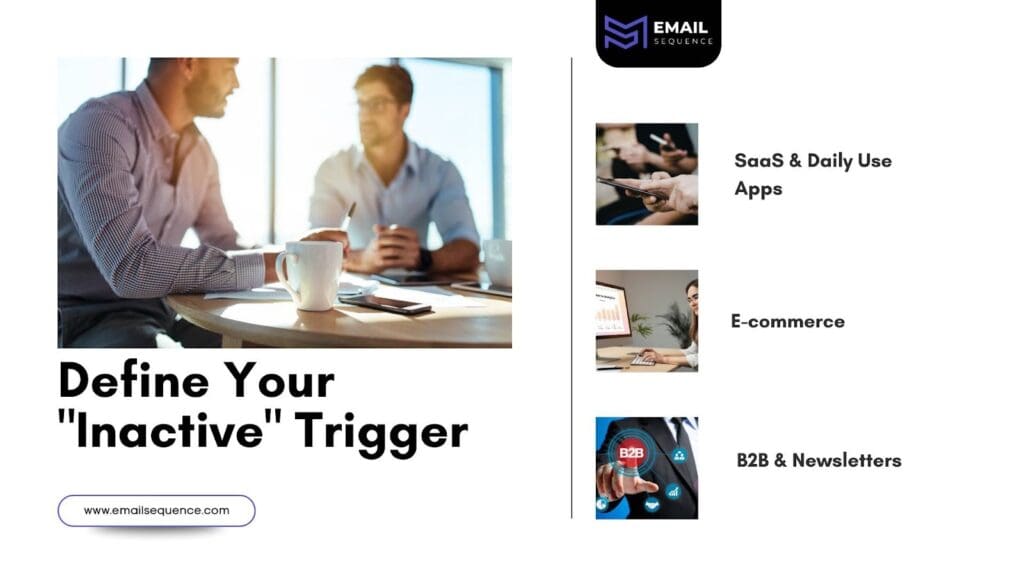
- SaaS & Daily Use Apps: Consider a user inactive after 14 to 30 days of no logins or interactions.
- E-commerce: A 60 to 90-day period since the last purchase or email click is a common benchmark.
- B2B & Newsletters: Given a longer sales cycle, 90 to 180 days without an email open is a reasonable trigger.
Step 2: Design a 3-Step Recovery Flow
Once your trigger is set, you can build the email sequence. This three-part journey is designed to escalate its appeal, moving from a gentle reminder to a clear choice.
- Email 1: The Helpful Nudge: The focus here is on empathy and value. The goal is to remind them of the value you offer without a hard sell. A subject line like, “We noticed you have been away,” paired with a message highlighting something useful they missed, works well.
- Email 2: The Incentive: This email introduces loss aversion. You are showing them what they stand to lose by remaining inactive. Offer a tangible reason to return, such as a 20% discount, a free strategy audit, or an exclusive resource.
- Email 3: The Sunset or Goodbye: The final email communicates finality and respect for their inbox. A message like, “Is this goodbye? We are removing you from our active list in 48 hours,” gives them one last chance to opt in. It also frames list removal as a benefit to them.
Advanced Re-Engagement: Using Behavioral Triggers
To make your automation truly powerful, move beyond simple “no-open” triggers. Use advanced behavioral signals to initiate your subscriber recovery flows at the perfect moment. These triggers show a renewed interest, even if the user is not opening your emails.
- The “Pricing Page” Visit: A subscriber who has not opened an email in 60 days suddenly visits your pricing page. This is a strong buying signal. Trigger an immediate “Personal Outreach” automation that addresses potential questions.
- The “Cart Abandonment” Crossover: If an inactive user adds an item to their cart but does not complete the purchase, your re-engagement email should take priority over a standard cart abandonment reminder. Tailor the message to acknowledge their return.
- The Milestone Trigger: Use anniversaries to re-engage. An email celebrating their one-year “subscription-versary” can remind them of their long-term connection with your brand and prompt a positive response.
The Critical Factor Most Guides Forget: Deliverability
Sending emails to thousands of inactive subscribers at once is a major red flag for Internet Service Providers (ISPs) like Google and Outlook. It can signal that you are sending spam, which can severely damage your sender reputation and cause your emails to land in the junk folder.
The solution is a technique called “drip throttling.” Instead of emailing your entire inactive segment simultaneously, configure your automation to send the re-engagement sequence to only 5–10% of the group per day. This approach “warms up” your sending activity and ensures your messages have the best chance of reaching the primary inbox.
Final Thoughts: A Clean List is a Successful List
If a subscriber completes your entire retention sequence without clicking or engaging, you should remove them from your list. The ultimate goal of re-engagement automation is not just to win everyone back; it is to identify who is truly gone. A smaller, highly engaged list will always outperform a large, inactive list in the eyes of ISP algorithms. Better deliverability and higher open rates are the rewards of maintaining a clean list.
You can start today. Segment your email list by the “Last Open Date” and begin building your first three-step automation flow with an email sequence.
Frequently Asked Questions (FAQs)
What is re-engagement automation?
Re-engagement automation is a strategy that uses automated email sequences to reconnect with inactive subscribers, boosting engagement and revenue.
How does re-engagement automation improve email deliverability?
It removes unresponsive leads from your list, maintaining a clean sender reputation and ensuring emails land in inboxes, not spam folders.
What are the key steps in a re-engagement automation sequence?
A 3-step sequence includes a helpful nudge, an incentive offer, and a final goodbye email to either re-engage or clean inactive leads.
Why is re-engagement automation better than manual campaigns?
Automation triggers emails based on user behavior, ensuring timely, personalized outreach, while manual campaigns are static and less effective.
How can I identify inactive subscribers for re-engagement?
Define inactivity based on your industry, such as 60–90 days without opens or clicks for e-commerce, and set triggers for automated sequences.