Emotional Email Marketing: Triggers & Sentiment Analysis
Imagine opening an email that feels like it was written just for you, one that understands your mood, your motivations, and what truly matters to you. That’s the magic of emotional email marketing. It’s not just about targeting age or location; it’s about tapping into the emotions and psychology of your audience to create messages that resonate on a deeper level.
Standard marketing highlights features and benefits, but emotional intelligence focuses on understanding the “why” behind a purchase—without manipulation. Psychological messaging designed to deceive is unethical and short-sighted. True emotional marketing builds trust by validating the reader’s feelings and offering genuine solutions to their problems.
When a brand successfully establishes an emotional connection, the metrics follow. Open rates increase because the subject lines speak to a felt need. Click-through rates improve because the copy resonates with the user’s internal narrative.
Why Emotions Drive Email Engagement
Why do we buy what we buy? The answer lies deep within our neurology. Human decision-making is emotional first and rational second.
According to neuroscientist Antonio Damasio’s somatic marker hypothesis, emotions are integral to the decision-making process. Without emotional input, humans actually struggle to make simple choices.
In the context of email marketing, this means that logic alone is rarely enough to trigger a click. You must appeal to the heart or the gut before the brain can justify the action.
Effective emotional email marketing bridges this gap. It catalyzes:
- Open rates: By sparking curiosity or addressing anxiety.
- Click-through rates: By aligning the solution with a desire.
- Conversions: By removing emotional friction at the point of sale.
- Long-term loyalty: By consistently reinforcing positive feelings associated with the brand.
The Core Emotional Triggers You Can Use in Email Copy
Strategic use of emotion requires you to know which specific feelings drive action. You must identify the correct trigger for where the customer stands in their journey.
Trust & Security
Consumers hesitate to purchase when they perceive risk or uncertainty in the transaction. You must dismantle these barriers by proving that your brand is a safe and reliable choice.
- Social proof: “Over 10,000 customers trust us.”
- Guarantees: “Try it risk-free for 30 days.”
- Transparency: “Here is exactly how we source our materials.”
Urgency & Fear of Missing Out (FOMO)
People are naturally loss-averse and will work harder to avoid losing an opportunity than to gain a benefit. You can leverage this psychological trait to encourage immediate action on time-sensitive offers.
- Limited time: “This offer expires in 24 hours.”
- Scarcity: “Only 3 spots remain.”
- Loss framing: “Do not leave money on the table.”
Joy & Anticipation
Positive reinforcement creates a dopamine response that makes subscribers look forward to your emails. You should use this trigger to build excitement around product launches or customer milestones.
- Positive storytelling: “See how Sarah reclaimed her weekends.”
- Reward anticipation: “Your exclusive gift is waiting inside.”
Belonging & Identity
Humans have an innate desire to belong to a group or tribe that shares their values. You can use inclusive language to make the subscriber feel like they are part of a special community.
- Community language: “Welcome to the family.”
- Identity reinforcement: “For the creators who refuse to settle.”
Empathy & Understanding
Validating the pain points of your customer builds a bridge of trust that is difficult to break. You simply need to show them that you see their struggle and have the solution.
- Acknowledge pain: “We know how frustrating it is to…”
- Human language: “We have been there too.”
Writing with Empathy: Emotional Copy Frameworks
Listing triggers is not enough; you need frameworks to structure your writing effectively. These models ensure that empathy in copy remains central to your messaging strategy.
Empathy Mapping for Emails
Before you write a single word, you must visualize the person on the other side of the screen. This exercise helps you move away from demographic data and toward psychographic understanding.
- Who is the reader? Define their role and daily reality? (e.g., A busy parent, a stressed executive)
- What do they think and feel? Identify their anxieties and aspirations. (e.g., Overwhelmed, hopeful, skeptical)
- What are their pains and gains? Clarify what keeps them up at night. (e.g., Pain: lack of time. Gain: peace of mind.)
AIDA with Emotional SDR (Situation, Desire, Response)
The classic AIDA model (Attention, Interest, Desire, Action) becomes more powerful when you layer emotional intelligence on top of it. This ensures the reader feels understood before they are asked to buy.
- Attention (Situation): Use an emotional hook that reflects their current reality.
- Interest (Desire): Build empathy by validating their feelings about that reality.
- Desire (Response): Present your solution not just as a product, but as the emotional relief they crave.
- Action: A call to action that feels like the natural next step to achieve that relief.
Storytelling Techniques
Stories bypass the skepticism of the brain and allow the reader to see themselves in the narrative. You should use storytelling to illustrate the transformation your product offers.
- Relatable journey: Start where the customer is right now. “I used to struggle with X, just like you.”
- Conflict and resolution: Every good story needs a problem and a satisfying conclusion.
- Success vignettes: Let your successful customers tell the emotional story for you.
Emotional Hooks That Work (With Examples)
Your email is useless if nobody opens it or reads the first line. You need to master the art of the hook to grab attention immediately.
Subject Line Emotional Hooks
The subject line is the gatekeeper of your email strategy. You must craft it to trigger an immediate emotional response that compels the user to click.
- Curiosity + Empathy: “Why you feel tired at 2 PM (and how to fix it).”
- Fear of missing out: “Your invite expires tonight.”
- Benefit emphasis: “Finally, a way to organize your inbox.”
Preview Text “Emotional Hooks.”
The preview text acts as a second subject line and offers a chance to reinforce the emotional promise. You should use this space to tease the outcome or deepen the intrigue.
- Reinforce promise: “Say goodbye to morning stress forever.”
- Tease outcome: “The answer might surprise you.”
Emotional Segmentation: Targeting Emotional States
Most brands segment by demographics, but high-performing brands segment by emotional state. This allows you to tailor your message to the specific feelings of the user at that moment.
- First-time subscribers: They likely feel anxious or skeptical. Your emails should focus on trust, welcome, and reassurance.
- Dormant subscribers: They might feel indifferent or that they are missing out. Your re-engagement flows should trigger curiosity or FOMO.
- Frequent buyers: They feel a sense of belonging and loyalty. Your messaging should focus on exclusivity, rewards, and community.
Sentiment Analysis: Assessing Emotional Impact
How do you know if your emotional email marketing is working? You need to measure it.
Sentiment analysis is the process of determining the emotional tone behind a series of words. While typically used to analyze customer feedback, it is increasingly valuable for analyzing your own outbound copy and the replies you receive.
- What it is: This technology uses natural language processing to determine if text is positive, negative, or neutral.
- Tools to score tone: APIs like Google Cloud NLP or IBM Watson can analyze your copy and incoming customer replies.
- Iterating based on data: If sentiment analysis shows your audience reacts poorly to fear-based subject lines, you shift to joy-based ones.
- Correlation: Track how high emotional intensity correlates with your open and click-through rates.
Aligning Emotional Messaging With Brand Voice
Consistency builds trust, while inconsistency breeds confusion. You must ensure that the emotions you evoke align with your established brand personality.
- Authenticity: Do not feign sadness or excitement if it does not fit your brand.
- Consistency: A serious B2B financial brand should use trust and security triggers, not wild excitement.
- Avoiding mismatch: Using high-energy slang for a luxury brand creates cognitive dissonance.
- Guidelines: Create a style guide that defines which emotions are “on-brand” for you.
Ethical Considerations in Emotional Email Marketing
With great power comes great responsibility. Because emotional triggers bypass logic, they can be abused.
Where emotional marketing becomes manipulative:
- False Scarcity: Claiming a digital product is “sold out” when it is not.
- Fear-Mongering: Exaggerating a problem to terrify the reader into buying.
Respect subscriber autonomy. The goal is to help them make a decision that is good for them, not just good for your bottom line. Transparency is vital. Furthermore, ensure your claims are truthful to comply with regulations like CAN-SPAM and GDPR. Emotional claims must still be factual claims
Email Sequences That Use Emotional Intelligence
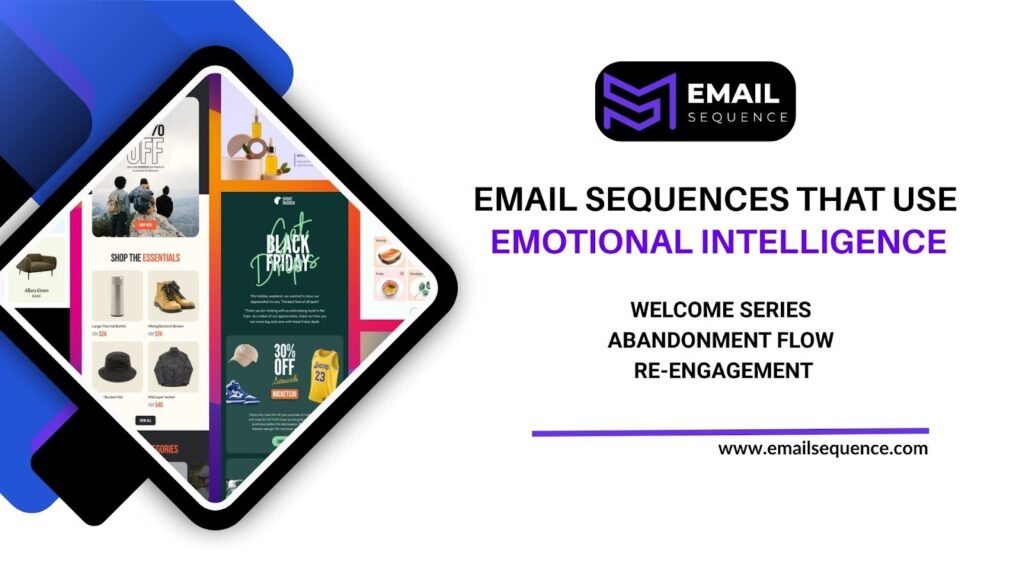
Applying EQ to your automated flows ensures that every touchpoint feels personal. Here are templates for common scenarios.
Welcome Series
The goal here is to validate the decision of the new subscriber. You want to reduce buyer remorse and make them feel at home.
- Emotional goal: Belonging and Relief.
- Key phrases: “You are in the right place,” “Welcome to the family,” “We have got you covered.”
- Metrics: Open rate, Reply rate.
Abandonment Flow
The customer wanted the item, but hesitated; you need to understand why. You should approach this with helpfulness rather than just demanding the sale.
- Emotional goal: Desire and Reassurance.
- Key phrases: “Did life get in the way?” “Your items are safe with us.” “Complete your look.”
- Metrics: Recovery rate, Click-through rate.
Re-Engagement
When a subscriber pulls away, you need to remind them of the value they are losing. You should use nostalgia or a significant benefit to win them back.
- Emotional goal: Nostalgia and Curiosity.
- Key phrases: “We miss you,” “It has been a while,” “See what is new.”
- Metrics: Win-back rate, Unsubscribe rate.
Common Mistakes & How to Avoid Them
Even well-intentioned marketers make errors when trying to be emotional. You must be aware of these pitfalls to protect your deliverability and reputation.
- Overusing emotional words: Emails packed with “urgent,” “amazing,” and “shocking” often trigger spam filters.
- Ignoring audience sentiment: Sending a happy, upbeat email during a global crisis can appear tone-deaf.
- Emotional inconsistency: Do not switch from a clinical tone to a best-friend tone in the same email.
- Lack of data: Do not assume an emotion works; test it.
- Emotion without value: Crying wolf with emotional subject lines that lead to boring content destroys trust.
Conclusion
Emotional email marketing is the key to standing out in a crowded inbox. It allows you to move beyond being just another sender and become a trusted partner in the life of your subscriber. By implementing empathy in copy and understanding the core emotional triggers of your audience, you transform passive readers into active buyers.
Remember to measure your results with sentiment analysis and always prioritize ethical communication. When you master psychological messaging, you build a resilient strategy that drives revenue. Start building a genuine emotional connection today, and watch your conversions grow.
Ready to write emails that convert? Steal our battle-tested email sequences at emailsequence.com.
Frequently Asked Questions
What is emotional email marketing?
It is the practice of using psychological principles and emotional intelligence to create email content that resonates with the feelings and needs of the audience to drive engagement..
What are the best emotional triggers for email marketing?
Trust, urgency (FOMO), belonging, empathy, joy, and anticipation are the most effective emotional triggers used to increase engagement and conversions.
What is sentiment analysis in email marketing?
Sentiment analysis uses natural language processing to evaluate the emotional tone of email content, or subscriber replies, to measure positive, negative, or neutral reactions.
How do I avoid being manipulative in emotional marketing?
Avoid false scarcity, exaggerated fear, or misleading claims. Focus on authentic messaging that respects subscriber autonomy and provides real value.