Email Content Calendar: Step-by-Step Campaign Planning Guide
An email content calendar is a strategic framework that maps out exactly what messages you send to your subscribers and when you send them. It acts as the ultimate blueprint for campaign planning.
A well-structured calendar ensures consistent content scheduling and optimizes your email timing for maximum open rates. By prioritizing campaign organization, you eliminate guesswork and establish a reliable communication rhythm. This systematic approach directly leads to better subscriber engagement, stronger brand trust, and higher conversion rates.
What Is an Email Content Calendar?
An email content calendar is a visual scheduling tool that tracks your upcoming marketing emails. It serves as a central hub for your marketing team to coordinate messages, assign tasks, and monitor deadlines.
You can view exactly which segments receive specific messages on specific dates. This level of clarity prevents audience fatigue and keeps your marketing strategy aligned with broader business goals.
Email Content Calendar vs Editorial Calendar
Many marketers confuse these two tools. They serve different purposes and require different execution methods. Consider these primary differences before building your system.
- Purpose: The editorial calendar manages broad content production like blog posts and whitepapers. The email content calendar focuses solely on distribution and inbox engagement.
- Execution: Editorial planning involves long-term search engine optimization and drafting cycles. Email planning involves precise segmentation and immediate call-to-action metrics.
- Channel focus: Editorial tools track multi-channel assets. Email tools focus strictly on subscribers’ inboxes and deliverability rates.
Key Components of an Effective Email Content Calendar
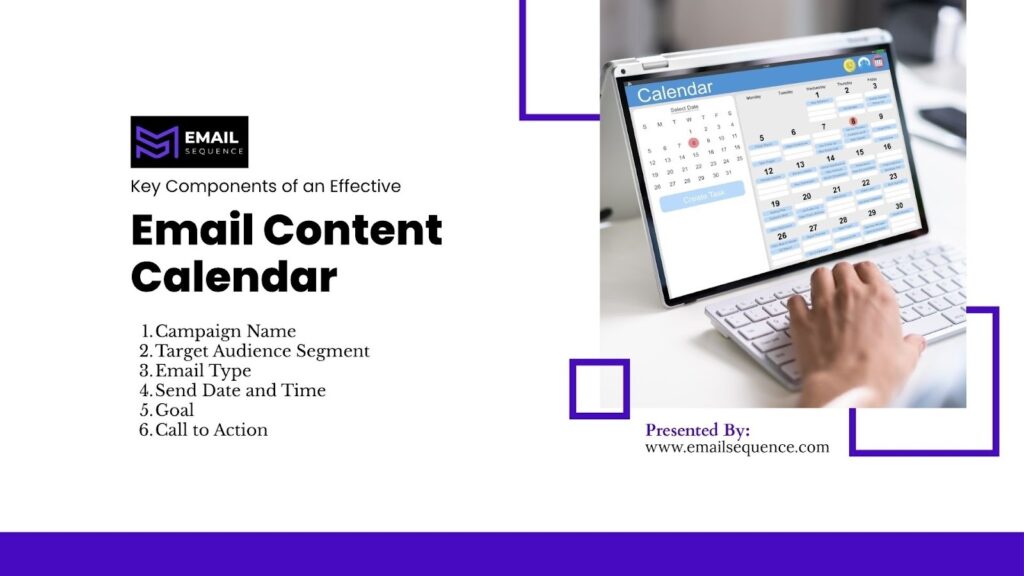
Every successful scheduling system requires specific data points. Tracking these elements guarantees that your team executes the strategy flawlessly. Make sure to include these critical components in your tracking document.
- Campaign name: Assign a clear, recognizable title to identify the promotion or newsletter easily.
- Target audience segment: Specify exactly which subscriber group receives the message to ensure high relevance.
- Email type: Categorize the message as a newsletter, promotional offer, or lifecycle sequence.
- Send date and time: Pinpoint the exact day and hour the message will leave your outbox.
- Goal: Define the primary objective, such as driving product sales, nurturing leads, or boosting engagement.
- Call to action: State the specific action you want the reader to take after opening the message.
Step-by-Step Process to Create an Email Content Calendar
Step 1 – Define Your Campaign Goals
Every message must serve a specific business objective. You must determine whether your primary goal is to generate sales, capture leads, or foster community engagement. Tie these individual email goals directly to your overarching quarterly business targets.
Step 2 – Identify Audience Segments
Sending the same message to your entire list destroys engagement rates. A strong segmentation strategy solves this problem. You must divide your audience based on their previous purchases, engagement levels, and demographic data.
Personalization drives higher conversion rates because the reader feels you understand their specific needs.
Step 3 – Plan Campaign Types
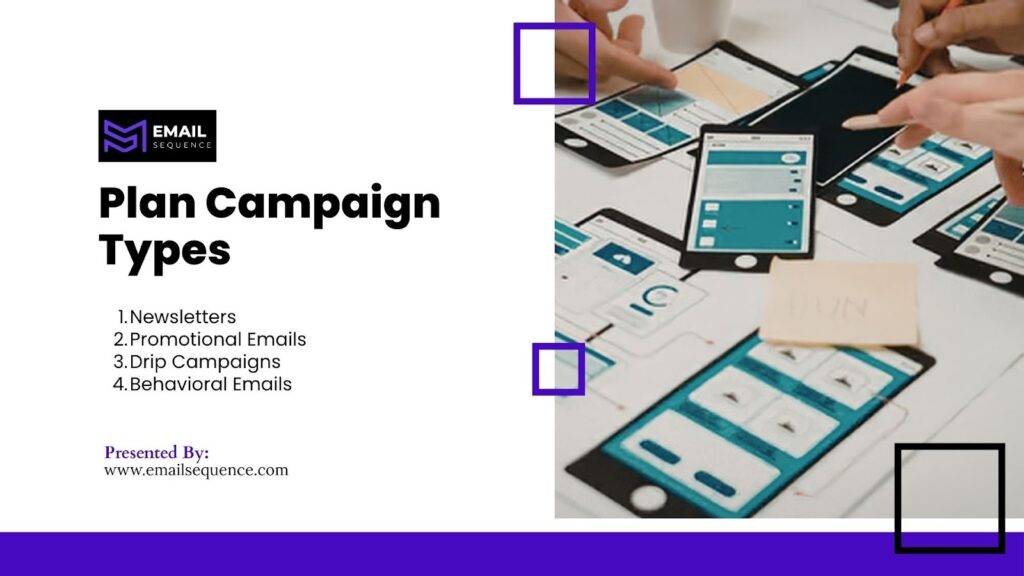
A healthy marketing ecosystem requires variety. You must balance different styles of communication to keep your audience interested. Include these core campaign types in your strategy.
- Newsletters: Deliver weekly industry insights, company updates, and valuable educational material.
- Promotional emails: Drive direct revenue through targeted discounts, product launches, and limited-time offers.
- Drip campaigns: Automate a series of educational messages that gradually warm up new leads.
- Behavioral emails: Trigger highly converting messages based on specific user actions, such as abandoning a shopping cart.
Step 4 – Build a Content Scheduling Framework
Random sending days confuse your subscribers. You need a predictable rhythm that trains your audience to open your messages. Implement the Weekly Email Flow Model to structure your communication.
- Monday: Send a high-value educational email that solves a specific problem for your reader without asking for a sale.
- Wednesday: Send an engagement email that asks a question, requests feedback, or shares a community story.
- Friday: Send a direct promotional offer that gives the engaged reader a clear opportunity to purchase.
Step 5 – Optimize Email Timing and Frequency
Sending great content at the wrong time ruins your open rates. You must link your email timing with your specific audience behavior. Test sending on Tuesday mornings or Thursday afternoons as a baseline.
Avoid over-sending, which immediately triggers unsubscribes. Psychologically, consumers appreciate boundaries and respect brands that do not flood their inboxes.
Step 6 – Map Content Themes and Topics
Your messaging should reflect the broader calendar year. You must map out major themes well in advance. Maintain a strict balance between different topic categories to keep the content fresh.
- Seasonal campaigns: Align your messaging with major holidays, changing seasons, or industry-specific events.
- Evergreen content: Share foundational knowledge and tutorials that remain relevant regardless of the time of year.
- Promotions: Schedule product launches and discount periods strategically between your educational themes.
Step 7 – Use Tools for Campaign Organization
Managing your schedule in your head is a recipe for disaster. You must leverage technology to maintain order. Select tools that match your team size and technical capabilities.
- Google Sheets: Use customizable spreadsheets for a free, highly flexible, and collaborative planning environment.
- Email platforms: Utilize the built-in calendar features offered by your email service provider.
Example of an Email Content Calendar (Template)
Visualizing the framework helps you implement it effectively. A practical template breaks down complex strategies into actionable daily tasks. Review this real-use scenario for a typical weekly campaign structure.
- Tuesday, 9:00 AM: Send the “Weekly Tech Insights” newsletter to the entire active subscriber list to build authority.
- Thursday, 2:00 PM: Send the “Abandoned Cart Reminder” exclusively to users who left items in their cart within the last 24 hours.
- Saturday, 10:00 AM: Send the “Weekend Flash Sale” strictly to the VIP customer segment to drive immediate weekend revenue.
Best Practices for Effective Content Scheduling
Long-term success in email marketing hinges on discipline and refinement. To keep your brand top-of-mind and your campaigns effective, adopt an optimization mindset where you constantly adjust your strategy based on hard data.
Here are some best practices to follow:
- Maintain consistency: Keep your brand visible and build anticipation with a regular sending schedule.
- Balance promotional and educational content: Offer value-driven, educational emails alongside your promotional pitches to build trust.
- Track performance metrics: Diligently monitor open rates, click-through rates, and conversions to understand what works.
- Continuously optimize: Adjust send times, subject lines, and segment criteria based on your performance data to improve results.
Common Mistakes to Avoid in Email Campaign Planning
Errors in planning cost you subscribers and revenue. You must recognize these pitfalls before they damage your marketing ecosystem. Avoid these frequent missteps to protect your list’s health.
- Random scheduling: Sending emails erratically trains subscribers to ignore your brand entirely.
- Ignoring segmentation: Blasting irrelevant content to your whole list significantly increases your spam complaint rate.
- Too many emails: Flooding inboxes causes immediate subscriber fatigue and mass unsubscriptions.
- No clear campaign goal: Sending messages without a specific call to action wastes your resources and confuses the reader.
Conclusion
An effective email content calendar can turn your chaotic marketing efforts into a predictable revenue stream. By focusing on clear campaign planning, you can avoid the stress of last-minute content creation and build a reliable brand presence. Consistent content scheduling fosters deep trust with your audience, as they come to expect and value your communications.
This commitment to campaign organization is crucial for growth. Ready to transform your strategy? Visit emailsequence.com to to build a powerful email marketing engine. Start plotting your next 30 days of messages, stick to the schedule, and watch your engagement and revenue climb.
Frequently Asked Questions
What is an email content calendar?
An email content calendar is a strategic planning tool that helps marketers organize, schedule, and execute their email communications. It details exactly which audience segment receives a specific message on a specific date. This organization ensures consistent communication, prevents audience burnout, and aligns your daily email marketing efforts directly with your overarching business goals.
How often should you send marketing emails?
You should send marketing emails consistently, typically between one to three times per week. You must balance the frequency to provide value without triggering spam filters. Monitor your unsubscribe rates closely to find the perfect sending rhythm for your unique audience.
What tools can I use for content scheduling?
You can use tools like Google Sheets, Trello, or Asana for basic planning. For integrated scheduling, you can use built-in calendars from platforms like Mailchimp, ActiveCampaign, or Klaviyo. These tools offer the benefit of streamlining the process from planning directly to deployment.
How do I plan email campaigns effectively?
You start by defining clear business goals. Next, you segment your audience based on their behavior. Then, you select the appropriate email types and map them onto a visual calendar. Finally, you track the performance data to continuously improve your future sends.
What is the best email timing strategy?
The best timing strategy relies entirely on your specific audience behavior. General data suggests Tuesday mornings and Thursday afternoons perform well. However, you must test different days and hours, analyze the open rates, and adjust your schedule to match when your readers are most active online.