How to Boost Sales with Abandoned Cart Emails?
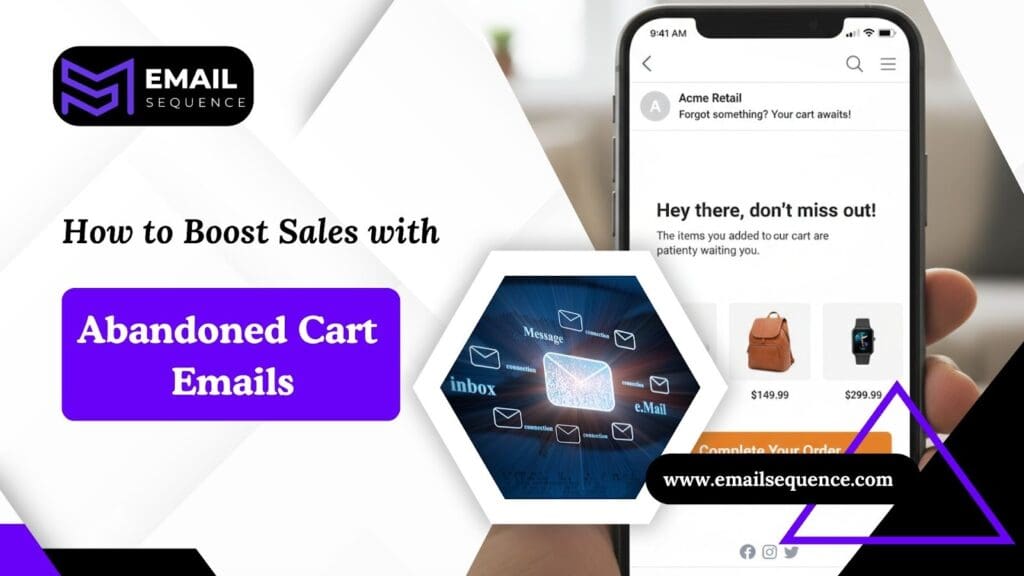
The average online shopping cart abandonment rate is over 70%. This figure represents a substantial pool of highly qualified potential customers who have demonstrated a clear intent to purchase. Leaving this revenue on the table is not an option for any serious e-commerce business. You must actively work to recover it.
The data shows that abandoned cart email flows drive the highest average Revenue Per Recipient ($3.65) of any email automation, making them a critical component of your sales strategy.
Success with abandoned cart emails does not happen by chance. It requires a strategically timed, three-part email sequence designed to address the core reasons customers abandon carts: distraction, hesitation, and price sensitivity.
This guide provides a blueprint for that exact sequence. By implementing these three steps, along with several advanced tactics, you can achieve industry-leading conversion rates and turn lost opportunities into a consistent revenue stream.
The 3-Part Abandoned Cart Sequence Blueprint
This section provides the concrete, data-backed structure for your abandoned cart campaign. Each email has a specific goal, timing, and content focus designed to guide the customer back to their purchase.
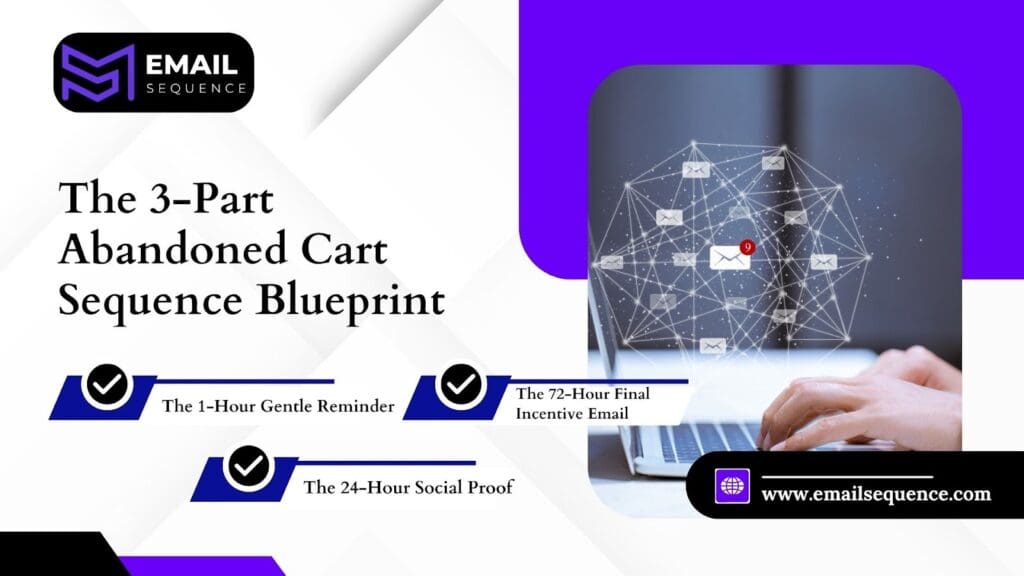
Email 1: The 1-Hour Gentle Reminder (The “Oops” Email)
The first email in your sequence aims to recapture the attention of impulse buyers who were simply distracted. It is designed to be a gentle nudge, not a hard sell. This initial email typically generates the highest click-through rate of the entire sequence.
- Send this email between 45 and 60 minutes after the customer abandons their cart.
- The content should be simple and direct. Remind the customer of the items they left behind and provide a clear, easy link back to their cart.
- You mustn’t offer a discount at this stage.
Email 2: The 24-Hour Social Proof/Urgency Email
The second email targets customers who may be hesitating. Your goal here is to build confidence and create a sense of urgency. Send this email 24 hours after the cart was abandoned. The content should focus on reinforcing the value of the products. How do you accomplish this? Use these methods to build trust and urgency.
- Inject social proof by showcasing customer reviews, star ratings, or testimonials related to the exact products in the cart.
- Create a sense of scarcity by mentioning that stock is low or that other customers are viewing the same items.
- Use an engaging, emotional subject line to capture their attention and encourage them to reconsider.
Email 3: The 72-Hour Final Incentive Email
The third and final email is your opportunity to close the deal by addressing the most common remaining objection: price. Send this email 72 hours (or three days) after the initial abandonment. This is the moment to present a clear, final incentive. What does a compelling final offer look like?
- Offer a tangible discount, such as 10% off the total order or a specific dollar amount.
- Provide a free shipping code, which can be highly effective in overcoming last-minute cost concerns.
- Include a time-limited coupon that creates a strong sense of urgency.
Make the expiration date of any offer highly visible to motivate immediate action.
Strategic Content: What Converts at Each Stage
The effectiveness of your abandoned cart sequence depends heavily on the strategic content within each email. Every element, from the subject line to the call to action, must be optimized for conversion.

Subject Line Strategy (The Open)
Your subject line is the first thing a customer sees, and it must be compelling enough to earn an open.
- Use personalization, such as the customer’s first name, to create a direct connection.
- Incorporate relevant emojis to make your email stand out in a crowded inbox.
- Tailor the message to the stage of the sequence. For example, “Did you forget something, [Name]?” works well for Email 1, while “Others are looking at your items!” is suited for Email 2.
Visual Strategy
The visual presentation of your email is just as important as the text. Customers need to be instantly reminded of what they were considering. To achieve this, what should your visual strategy include?
- Display high-quality images of the exact items left in the cart.
- Include the product names and prices alongside the images for clarity.
- Design a clean, uncluttered layout that focuses attention on the products and the call to action.
The Single CTA
Your email needs one clear goal: get the customer back to their cart. That’s why a single, prominent “Return to Cart” button is essential. Don’t clutter your message with other links or distractions. Instead, make your CTA irresistible and action-oriented:
- “Complete Your Purchase Now!”
- “Go Back to Your Cart & Finish Up!”
- “Don’t Miss Out! Return to Cart”
- “Secure Your Items | Continue Shopping”
- “Ready When You Are: Pick Up Where You Left Off”
Advanced Automation: Exclusion & Segmentation (The Expert Edge)
To run a truly professional abandoned cart sequence, you need to implement advanced automation rules. These rules protect your profit margins and ensure a better customer experience by preventing irrelevant or annoying emails.
Mandatory Exclusion Rules
Exclusion rules are critical for both effective email marketing and a positive customer experience, especially for abandoned cart emails. By implementing smart exclusion rules, you can avoid unnecessary communications, reduce customer frustration, and boost engagement rates. Here are some essential exclusion rules to consider for your abandoned cart sequence:
- Completed Purchase: Remove users from the sequence as soon as a purchase is confirmed. Avoid sending emails after successful orders to maintain trust.
- Recent Purchaser: Exclude customers who have purchased in the last 24 hours to prevent overwhelming them with unnecessary emails.
- Frequent Openers: Avoid sending follow-ups to users who have already engaged with the email, such as clicking or opening multiple times, to avoid redundancy.
- Uninterested Users: Exclude users who have not engaged with your emails after several attempts to prevent wasting resources on uninterested leads.
Cart Value Segmentation (Boost AOV)
Segmentation allows you to tailor your offers based on the potential value of the sale. Create separate abandoned cart sequences based on the dollar value of the items in the cart. For example, a high-value cart (e.g., over $150) may justify a more significant incentive, such as free two-day shipping, to secure the larger sale and maximize profit recovery.
First-Time Abandoners vs. Repeat Offenders
It’s also wise to treat first-time cart abandoners differently from repeat offenders. Some customers intentionally abandon their carts to trigger a discount.
By creating a separate segment for these “repeat offenders,” you can place them on a shorter email sequence or one that doesn’t include a discount at all. This tactic helps prevent “discount training” and protects your brand’s value.
Here’s how to manage different types of abandoners:
- First-Time Abandoners: Nurture these potential customers with your standard abandoned cart sequence. The goal is to convert them with helpful reminders and a compelling offer.
- Repeat Offenders: Identify customers who frequently abandon carts and then purchase only after receiving a discount. Exclude them from discount-based flows to encourage immediate purchase.
- High-Intent Abandoners: For users who have abandoned multiple high-value carts but never purchased, consider a more personalized outreach. A one-time, high-value offer or a direct message from customer support could be effective.
Conclusion
Abandoned cart emails are a mandatory profit center for any e-commerce brand, not merely a recovery tactic. When executed correctly, they represent one of the highest-ROI activities in your email marketing arsenal.
Your first actionable step is to audit your existing abandoned cart email sequence. Verify that your first email is hitting the inbox within 60 minutes of abandonment. If you do not have a sequence, now is the time to build one.
Implement the 1-hour, 24-hour, and 72-hour sequence outlined in this guide. Begin using Cart Value Segmentation this week to tailor your offers more effectively. By taking these steps, you will be well on your way to reclaiming lost revenue and boosting your overall sales.
Ready to get started? Visit emailsequence.com to learn more and take your email campaigns to the next level!
Frequently Asked Question
What is an abandoned cart email?
An abandoned cart email is an automated message sent to customers who added items to their cart but didn’t complete the purchase.
Why do customers abandon their carts?
The most common reasons are high shipping costs, distractions, complicated checkout, price concerns, or lack of trust.
How many abandoned cart emails should I send?
A 3-email sequence is proven most effective:
1-hour reminder → 24-hour urgency → 72-hour discount.
How soon should the first cart reminder email be sent?
The first email should be sent within 45–60 minutes after cart abandonment to catch impulse buyers while their interest is still high.
How long should the abandoned cart sequence last?
A typical abandoned cart sequence lasts 72 hours, with emails spaced strategically at 1 hour, 24 hours, and 72 hours. Extending beyond three emails risks annoying customers, while fewer emails may miss opportunities to recover lost sales.