Drip Campaign Automation: 5 Rules for 10x Conversions
Imagine this: Your prospects open their inbox every morning to find tailored messages that guide them step by step on a journey to becoming loyal customers. Each email lands at just the right time, speaks directly to their needs, and nudges them gently toward action. What if you could automate this level of personalized engagement for every lead without lifting a finger after setup?
Welcome to the era of Drip Campaign Automation. As the competition in the digital marketplace intensifies, simply sending one-off emails is no longer enough to keep customers engaged or conversions rising. You need a strategic approach that blends timely delivery, compelling content, and advanced automation to nurture contacts at every stage of your sales funnel.
If you want to maximize your email marketing results, boost customer retention rates, and drive consistent growth, read on because mastering drip campaign automation will put you far ahead of the curve.
The 5 Secret Actionable Rules for High-Converting Drip Content
The success of your drip marketing campaigns lies in the strategy behind your drip emails, not just the automation software.
By focusing on customer engagement, consistent communication, and key metrics, you can create campaigns that drive action and boost retention.
Leverage robust marketing tools to refine subject lines, segmentation, and content, ensuring every email sequence supports your goals and delivers lasting results.
The Single-Action CTA Focus
Every email in your drip sequence must have one clear call-to-action (CTA). Overwhelming your reader with multiple choices leads to inaction. A welcome email, for instance, should focus entirely on the next logical step, such as starting a free course or joining a community. Avoid mixing this with requests to browse products or follow you on every social channel. Clarity drives conversion.
The Empathy Close
At the end of your initial welcome or onboarding emails, prompt the user to reply.
A simple line like, “Just hit reply and tell me what you are struggling with right now,” works wonders. This simple action signals to email service providers (ESPs) like Gmail and Outlook that your message is part of a genuine conversation.
This “empathy close” is a powerful hack that drastically improves your future email deliverability rates.
The Value Escalation Framework
Structure long-term nurture campaigns to deliver incremental value before ever introducing a sales pitch. Offer free guides, exclusive tips, or access to webinars first.
This approach lowers the perceived risk for the lead and warms them up over time. By the time you present an offer, you have already established credibility and trust, making the sale a natural next step.
The Urgent Value Reminder
For high-intent sequences, such as abandoned carts, timing is critical. The first automated follow-up email must trigger within 24 hours while the product is still fresh in the user’s mind. The content must be direct and helpful.
Show them the item they left behind and use a clear, personalized nudge to encourage them to complete the purchase.
The “No-Engagement Unsubscribe” Policy
Protect your sender reputation and optimize costs with a strategic list-cleaning policy. Implement an automation rule that automatically unsubscribes users who have not opened or clicked any of your emails in 90 days.
This practice ensures you are only communicating with an engaged audience, which improves your metrics and reduces the risk of being marked as spam.
Mechanics, Software, and The Drip Campaign Workflow
Drip marketing campaigns are more than email sequences; they are strategic, automated workflows driven by triggers, delays, and goals. Using robust automation tools, these campaigns deliver personalized, consistent communication that moves engaged contacts through the sales funnel.
By leveraging segmentation, tracking key metrics like retention rates, and refining subject lines, businesses can optimize user engagement and support their sales team. Whether on a free or paid plan, the right email marketing platform ensures impactful drip emails that nurture leads, enhance retention, and drive revenue.
Defining Drip Campaigns: Features and How They Work
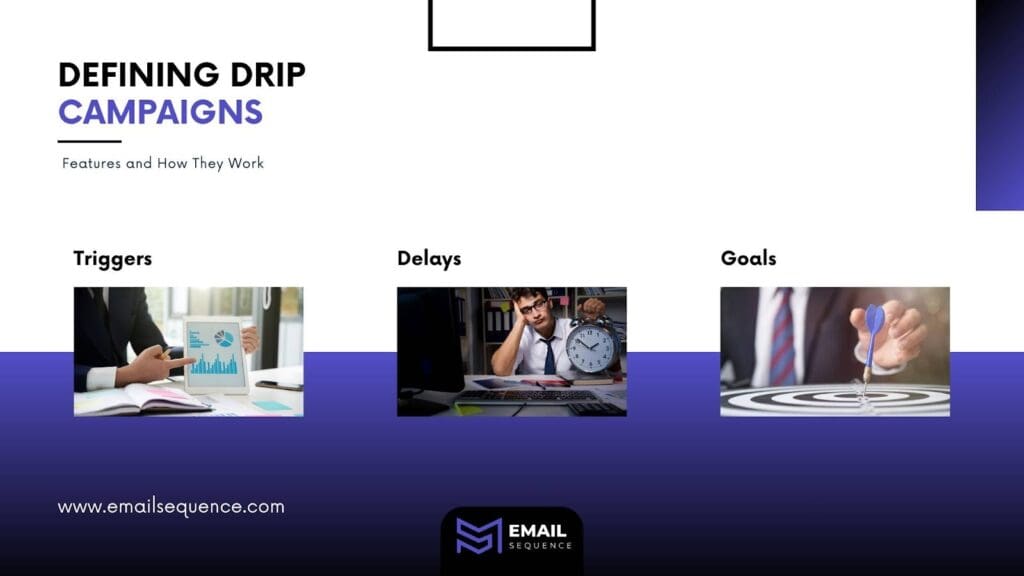
A drip campaign is an automated sequence of emails sent to a specific group of people based on a trigger. This could be an action they took, a behavior they exhibited, or a set timeline. The core features that make this system work include:
- Triggers: The specific event that initiates the sequence. Examples include signing up for a newsletter, downloading an ebook, or abandoning a shopping cart.
- Delays: The crucial time period between each email. These timed sequences ensure content is delivered at a natural pace, not all at once.
- Goals: The desired action that, once completed, terminates the sequence for that user. This could be purchasing a product, booking a demo, or upgrading a plan.
Visualizing the Automation Flow: The 4-Step Setup Guide
Modern marketing platforms offer visual automation builders that make setting up drip campaigns intuitive. You can map out the entire customer journey, creating branches for different user behaviors.
- Build: Start by selecting a campaign template or building your automation flow from scratch.
- Define: Choose the specific trigger that will enroll a contact into the sequence.
- Create: Add the subsequent actions and delays. This is where you design the progressive messaging, determining what email is sent and when.
- Launch: Set the campaign to “Live.” Finalize your segmentation and tagging to ensure the right people receive the right messages.
5 Core Uses of Drip Campaign Automation
Drip campaigns are incredibly versatile. Here are five core use cases:
- Welcome and Onboarding: Make a strong first impression and guide new users toward product adoption.
- Lead Nurturing: Convert marketing-qualified leads (MQLs) into sales-qualified leads (SQLs) with educational content.
- Abandoned Cart Recovery: Recapture lost sales with timely, automated follow-ups.
- Re-engagement and Win-back: Reactivate dormant subscribers who have not engaged with your brand recently.
- Upsell and Retention: Increase Customer Lifetime Value (CLV) by introducing existing customers to complementary products or premium features.
Choosing the Right Automation Platform
Several powerful tools are available for building and managing your drip campaigns. Platforms like HubSpot, ActiveCampaign, and Brevo offer advanced features, while tools like Mailerlite provide a more streamlined, user-friendly experience. When choosing, consider your specific goals and the features required to achieve them.
| Drip Campaign Goal | Core Feature Needed | Business Benefit |
| New Subscriber Onboarding | Timed Sequences | Builds immediate engagement and trust. |
| Product Education | Progressive Messaging | Increases product adoption and usage. |
| Abandoned Cart Recovery | Automated Follow-Up | Recaptures lost revenue instantly. |
| Prospect Conversion | Lead Nurturing Sequences | Converts cold leads into qualified leads over time. |
| Customer Loyalty & Upsell | Lead Cultivation | Maximizes Customer Lifetime Value (CLV). |
Strategic Value and Requirements for Business Growth
Drip marketing campaigns automate personalized, timely communication to drive business growth. Using robust tools, they enhance email strategies by segmenting contacts, analyzing behavior, and delivering targeted messages. This approach boosts engagement, retention, and metrics, ensuring seamless customer journeys and measurable growth.
The benefits are clear and directly impact your bottom line. You will:
- Save significant time and labor.
- Increase conversion rates with contextual content.
- Improve deliverability and sender reputation.
- Boost customer loyalty through personalization.
- Maximize Customer Lifetime Value (CLV).
- Reduce cart abandonment rates.
- Gain measurable insights into the customer journey.
To succeed, you need a few core requirements:
- Technical: A reliable CRM or email service provider with robust automation and segmentation tools.
- Content: A library of pre-written email copy tailored for each stage of the funnel.
- Strategy: Clearly defined triggers, goals, and exclusion rules for every campaign.
Optimization, Multi-Channel, and Future Trends
Optimizing drip marketing campaigns is crucial for sustained success. Regularly review automated sequences, refine subject lines, and analyze key metrics like form submissions and retention rates.
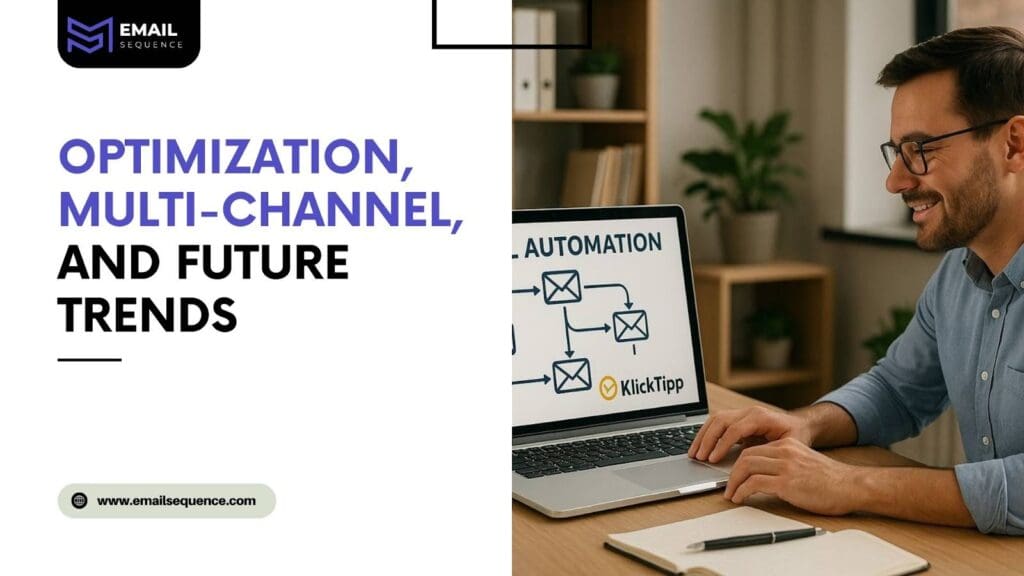
Use robust automation tools to enhance engagement strategies, support your sales team, and drive results across the sales funnel. Continuous improvements to your email drip campaigns ensure consistent communication, high user engagement, and lasting impact for your brand.
Advanced Strategies for Optimization
Go beyond basic open rates. Use A/B testing to strategically test subject lines, send times, and the delay periods between emails. A one-day delay might perform drastically differently from a three-day delay.
Also, analyze “lag time,” the average time it takes a subscriber to convert after entering a sequence. This metric provides deep insights that can inform your optimization decisions.
Multi-Channel Drip Marketing Strategies
Expand your strategy with SMS marketing for urgent messages and social media ads to retarget leads, creating a cohesive brand experience. Avoid the “set-and-forget” trap by regularly updating content to stay relevant.
Emerging AI and machine learning technologies will soon optimize send times, personalize content, and predict lead conversions, making drip campaigns even more impactful.
Conclusion
In summary, mastering drip campaign automation unlocks the potential to nurture leads, increase conversions, and build customer loyalty by delivering timely, personalized communication at every stage of the sales funnel.
By leveraging the right automation tools, refining your engagement strategy, and optimizing each email sequence, you will drive measurable business growth and outperform your competition.
Ready to boost your results? Start implementing these drip campaign automation strategies today and watch your engagement and revenue soar with an email sequence!
Frequently Asked Questions
What is a drip marketing campaign?
A drip marketing campaign is an automated series of emails sent to leads or customers based on specific triggers, like sign-ups or purchases, to nurture engagement and drive conversions.
How do automated drip campaigns work?
They use triggers, delays, and goals to send personalized, timely emails that guide users through the sales funnel without manual intervention.
What tools are best for drip email campaigns?
Popular tools include HubSpot, ActiveCampaign, Mailerlite, and Brevo, offering features like segmentation, automation, and analytics.
Why are drip campaigns important?
They ensure consistent communication, improve engagement, and drive conversions by delivering the right message at the right time.
How can I optimize my drip email campaigns?
Regularly review metrics, refine subject lines, segment contacts, and test email timing to improve performance and engagement.