B2B Email Performance Tracking: A 3-Tiered Model

In B2B sales and marketing, the term email performance tracking is often a misnomer. Too many teams celebrate a 40% Open Rate but fail to ask the essential question: Did that email sequence generate a single qualified opportunity, and how quickly did it move the deal?
Traditional campaign metrics from e-commerce just don’t cut it when it comes to high-value B2B sales. In this world, success isn’t about quick clicks or impulse buys; it’s about driving Pipeline Generation and accelerating Deal Velocity.
That’s where the 3-Tiered Measurement Framework comes in. This guide will walk you through a smarter approach to email analytics, designed specifically to align your performance metrics with real business growth.
Introduction: Shifting Focus from Vanity to Velocity
A. The B2B Metric Blind Spot
In B2B, the true goal of an email is to initiate a conversation or move a prospect to a high-intent action. Traditional metrics like a high Open Rate or a low Unsubscribe Rate are merely indicators of good content, but they do not prove business impact.
The true goal is Pipeline Generation and Deal Velocity—the speed at which a lead turns into a customer. Effective email performance tracking must evolve beyond these surface-level indicators to measure what truly matters.
B. Core Thesis
Effective email performance tracking must move beyond inbox metrics to a 3-Tiered Framework that integrates technical health, conversational engagement, and measurable revenue impact. This model provides a clear, actionable path from ensuring an email is delivered to proving it generated revenue, transforming marketing efforts from a cost center into a growth engine.
C. The 3-Tiered Measurement Framework Overview:
This framework is built on three distinct, yet interconnected, tiers that build upon one another. The first tier focuses on the technical health of your email program, the second on conversational engagement, and the third on revenue impact.
- Tier 1: Technical Health (Deliverability): Can the email land? This is the prerequisite for all B2B outreach and the bedrock of your entire strategy.
- Tier 2: Sequence Engagement (Qualification): Does the prospect care enough to respond? This tier measures the move from passive reading to active conversation.
- Tier 3: Business Impact (Revenue): Did the engagement lead to money? This is the ultimate business goal and the final proof of success.
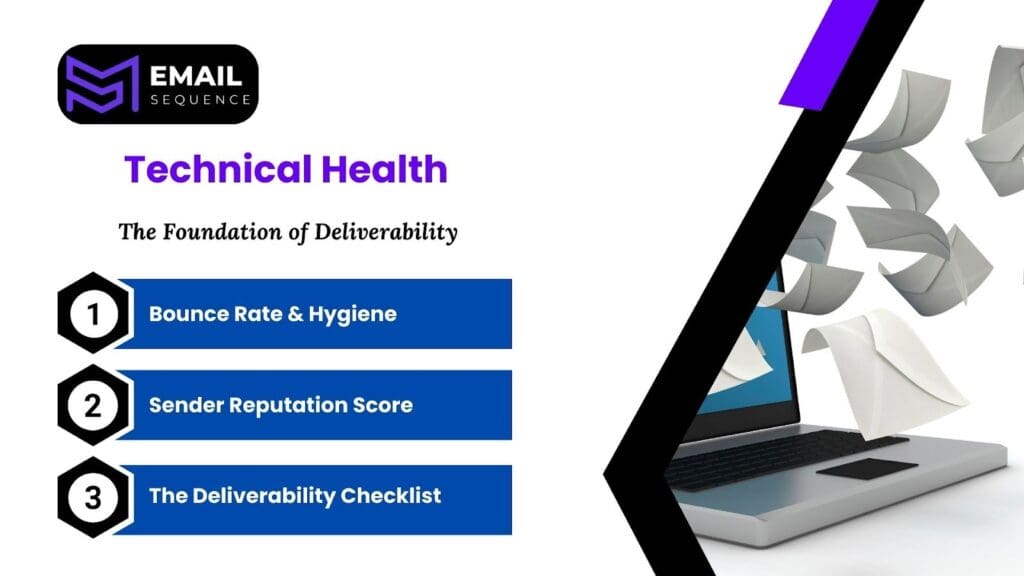
Tier 1: Technical Health | The Foundation of Deliverability
If your emails do not land in the primary inbox, no other metric matters. These are non-negotiable health email KPIs, critical for cold outreach and maintaining your domain reputation. Monitoring this tier ensures your messages have a chance to be seen in the first place.
A. Bounce Rate & Hygiene
The Bounce Rate tracks the percentage of sent emails that failed to deliver. This is the clearest indicator of your list hygiene and the risk you pose to Email Service Providers (ESPs).
A high bounce rate is a direct signal that your list is outdated or poorly sourced, which can quickly harm your sending authority.
What is the specific target you should aim for to maintain a healthy sender reputation? To protect your domain, you must be disciplined with your list management.
- Actionable Target: Maintain a combined hard/soft bounce rate under 1.5%. Exceeding this damages your domain reputation and future deliverability.
- Focus: Immediate removal of hard bounces (invalid addresses) is essential to maintain list quality and protect your sending domain.
B. Sender Reputation Score and Spam Complaints
Your Sender Reputation Score determines where your email lands. This internal score is assigned by ESPs based on your sending history, volume, and recipient reactions. The most critical metric here is the Spam Complaint Rate.
How do you keep this crucial number in a safe range? A single complaint carries significant weight, so your content and targeting must be precise.
Critical Metric: The Spam Complaint Rate must be kept below 0.05% (1 complaint per 2,000 sends). A higher rate signals you are spamming and can lead to blacklisting.
C. The Deliverability Checklist
How can you solidify your Tier 1 health and ensure your technical foundation is sound? You must ensure your sending domain adheres to universal technical standards that prove your legitimacy to mailbox providers.
- SPF (Sender Policy Framework): This record specifies which mail servers are permitted to send email on behalf of your domain.
- DKIM (DomainKeys Identified Mail): This adds a digital signature to your emails, allowing the receiving server to verify that the message was sent by an authorized owner of that domain.
- DMARC (Domain-based Message Authentication, Reporting, and Conformance): This protocol uses SPF and DKIM to determine the authenticity of an email and provides instructions on how to handle messages that fail authentication.
These are non-negotiable for protecting your domain health and guaranteeing accurate email analytics.
Tier 2: Sequence Engagement | The Qualification Campaign Metrics
These metrics move past passive consumption to measure how effective your content is at fostering conversation—the core goal of high-value B2B sequences. This is where you determine if your message resonates enough to provoke a response.
A. Open Rate (OR) & Click-Through Rate (CTR)
These are diagnostic tools, not success metrics. The Open Rate, especially with Apple’s Mail Privacy Protection (MPP), can be artificially inflated and is less reliable for B2B.
It is most useful for open rate tracking when A/B testing subject lines. The Click-Through Rate measures content relevance; a high CTR signals a strong content/offer match that prompts the prospect to seek more information.
B. Click-to-Open Rate (CTOR)
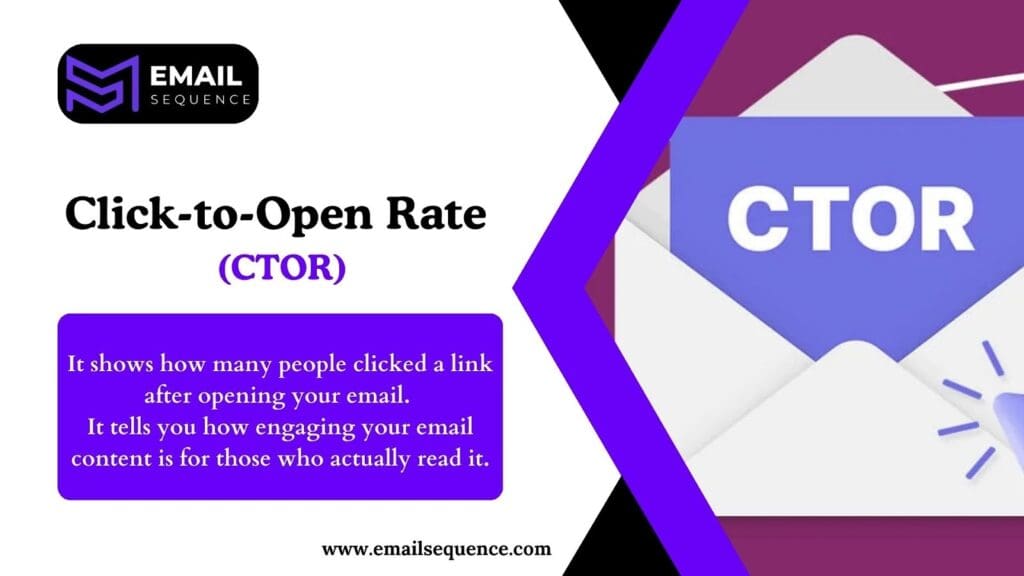
This is a purer measure of engagement than CTR because it removes the subject line’s influence. CTOR is calculated as (Total Unique Clicks ÷ Total Unique Opens) × 100.
What does this metric truly reveal about your content? It isolates the performance of your email body from the allure of your subject line, giving you a clearer picture of message quality.
Significance:
- Why does CTOR matter? A high CTOR indicates that your content resonates with your audience, while a low CTOR suggests that your email content may not be meeting expectations.
- Common issue: If your Open Rate is high but your CTOR is low, it often means that your subject line is promising something your email content doesn’t deliver.
- How to improve: Ensure your email content aligns with the subject line, use clear and compelling calls-to-action, and focus on delivering value to your audience.
C. The Primary B2B Metric: Reply Rate
This is the single most valuable of all campaign metrics for B2B outreach. The Reply Rate is the percentage of sent emails that generated a human, positive response. A reply signals the move from passive interest to an active, qualified lead.
How can you leverage this metric for strategic optimization? Tracking this by sequence step uncovers powerful insights into what drives conversation.
Actionable Insight:
- Track the Reply Rate by Sequence Step to see which email drives the most conversations (“money email”).
- Use this data to identify and remove weaker steps.
- Shorten your sequences for better efficiency.
D. Unsubscribe Rate
While painful, a small unsubscribe rate (under 0.5%) is healthy because it cleans your list. Use peaks as a diagnostic tool to assess list segment issues or content fatigue. A sudden spike indicates a mismatch between your content and your audience’s expectations.
Tier 3: Business Impact | The Ultimate Conversion Measurement
This is where your email performance tracking is validated. These email KPIs are tied directly to the CRM and the sales process, demonstrating the true financial value of your efforts. This tier answers the ultimate question: Did your email campaign make money?
A. Conversion Rate (CR) to Goal
This tracks the percentage of recipients who complete the specific campaign goal, like booking a demo or signing up for a trial. The methodology requires meticulous UTM tagging on all email links for accurate attribution in your web analytics platform. This ensures every click can be traced back to a specific campaign and its impact measured.
B. Pipeline Value Generated (PVG)
Forget leads; this is the conversion measurement that matters to the C-suite. PVG is the total estimated value of all sales opportunities that originated or were directly influenced by the email sequence.
Why is this metric the gold standard? It connects marketing activity directly to financial outcomes, shifting the conversation from costs to revenue.
Significance:
- It highlights that email is a direct revenue driver rather than just a marketing expense.
- PVG offers clear, irrefutable evidence of how much revenue your email campaigns generate per visitor.
- By tracking PVG, you can better understand the profitability and ROI of your email marketing efforts.
- This metric helps optimize campaigns, allocate budgets effectively, and justify email as a key growth channel.
C. Deal Velocity & Multi-Touch Attribution
Deal Velocity tracks how email engagement influences the time it takes for a lead to move through sales stages. Optimized sequences should accelerate this journey.
Attribution is also crucial, as few B2B deals close on the first click. Understanding email’s role as a supporting touchpoint (email-assisted conversions) provides a complete picture of its influence.
Actionable Strategy: Turning Email Analytics into Optimization
Data is useless unless it informs your next decision. Use this systematic approach to fixing and scaling your B2B sequences. By diagnosing problems at each tier, you can implement targeted fixes that yield measurable improvements.
A. The 3-Step Diagnostic Framework
Use the tiered metrics to isolate problems quickly.
| Problem | Tier Affected | Diagnosis | Fix |
| Low OR | Tier 2/Engagement | Subject line is irrelevant or weak. | Test a new hook or increase personalization. |
| High Bounce | Tier 1/Health | List verification/hygiene is poor. | Implement stricter list cleaning protocols immediately. |
| High Reply but Low Conversion | Tier 3/Impact | Sales handoff or landing page is broken. | Fix the post-reply process or simplify the offer. |
B. Sequence Optimization Tactics
How can you use these diagnostics to actively improve your campaigns? Focus on refining your sequences based on what the data tells you is working.
- Pruning: Review the Reply Rate by Sequence Step. Remove underperforming emails to shorten the sequence and focus on the “money emails.”
- Behavioral Nurturing: Use high-intent clicks (e.g., pricing page views) to automatically trigger sales outreach sequences, immediately moving the prospect out of generic automation.
C. CRM Integration and Lead Scoring
The key to advanced email analytics is feeding engagement data back into the CRM. Use engagement signals (Open → Click → Reply) to create a dynamic Lead Score that prioritizes the warmest prospects for the sales team, turning raw data into immediate sales action. This closes the loop between marketing efforts and sales execution.
Your Email KPI Action Checklist
True email performance tracking for B2B success requires a disciplined focus on pipeline and conversion measurement, not just activity. By implementing a structured framework, you can move beyond vanity metrics and demonstrate real business impact.
Here is your checklist for immediate implementation:
- Implement UTM tagging consistently for accurate attribution across all Tier 3 reports.
- Establish a 1.5% max bounce rate policy to protect your domain health.
- Make Reply Rate your primary success metric for content effectiveness (Tier 2), and focus your open rate tracking efforts on A/B testing.
- Start reporting on Pipeline Value Generated this month (Tier 3) to prove your value.
Conclusion
Email marketing continues to be a crucial aspect of any successful business strategy. By understanding the different tiers of metrics and how to track them effectively, you can ensure that your email campaigns are not only reaching a large audience but also driving real results.
From establishing a low bounce rate policy to focusing on reply rates and pipeline value generated, there are various tactics you can implement to improve your email marketing performance. By constantly monitoring and analyzing your metrics, you can make data-driven decisions to optimize your campaigns and ultimately achieve better ROI.
Don’t forget to regularly test and experiment with different subject lines, designs, and content types to keep your emails engaging and relevant for your subscribers. And most importantly, always prioritize delivering value and building relationships with your email audience, rather than simply trying to sell your products or services. Visit our website to get started with your next email sequence.
Frequently Asked Questions
What are the key email marketing metrics?
The key metrics include bounce rate, open rate, CTR, CTOR, reply rate, unsubscribes, and final conversion rate. These show whether your emails are being delivered, opened, and acted on.
Why is bounce rate important?
Bounce rate directly affects deliverability. High bounces signal poor list hygiene and can damage your sender reputation, reducing inbox placement.
What is a good open rate for B2B emails?
Most B2B campaigns perform well at 25–40%. Anything below this range usually points to weak subject lines or poor audience targeting
What does CTOR mean?
CTOR (click-to-open rate) shows how many people clicked after opening your email. It measures content relevance and message quality.
What is a good unsubscribe rate?
Anything under 0.3% is considered normal. Higher rates usually mean your content or targeting needs improvement.