Master AI-Driven Email Segmentation in 2026
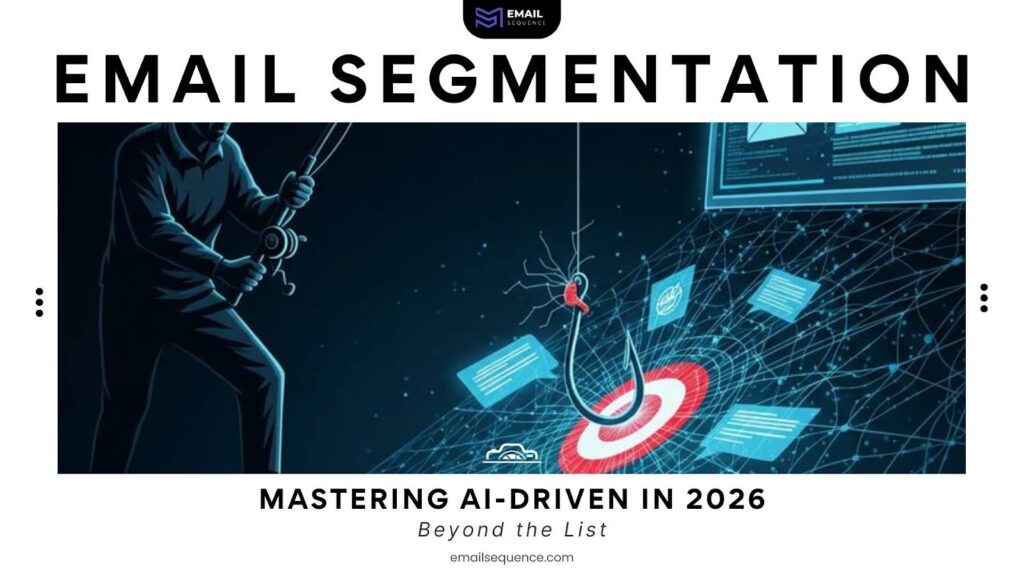
The era of the static email list has officially ended. In the past, marketers relied on basic demographics and manual tagging to sort their audiences. We grouped people by age, location, or past purchases. That methodology is now dangerously obsolete.
As we move through 2026, the inbox is no longer controlled by the user alone. It is controlled by Artificial Intelligence. Advanced algorithms now filter, summarize, and prioritize every message before a human eye ever sees it. If your segmentation strategy relies on outdated manual lists, your content will never breach the surface.
To succeed in this new environment, you must shift your focus from organization to “Propensity Clusters.” You must stop categorizing users based on who they were and start segmenting them based on what they are about to do. This guide explores the necessary evolution of email segmentation and provides a roadmap for mastering the AI-driven landscape.
The 2026 Paradigm Shift: From Lists to “Propensity Clusters”
The fundamental architecture of email marketing has changed. We are witnessing a move away from static data points toward fluid, real-time behavioral modeling.
The Rise of the AI Gatekeeper
Your primary challenge in 2026 is not the delete button; it is the “AI Summary” filter. Platforms like Gmail, Outlook, and Apple Mail now utilize onboard AI to scan incoming messages. These agents determine if an email is worthy of the user’s attention.
If your email is relevant to a broad segment but irrelevant to the individual, the AI Gatekeeper will hide it. It will bundle your message into a “Low Priority” summary or a “Promotions” folder that users rarely check. Your strategy must survive this filter. You must achieve a level of hyper-relevance where the AI recognizes your sender domain as a high-value source.
Interaction Velocity (IV)
We must move beyond simple click-through rates (CTR). A click is a binary metric; it happened, or it did not. It tells us nothing about the quality of the engagement.
In 2026, sophisticated marketers measure Interaction Velocity (IV). This metric combines dwell time and scroll depth.
- Dwell Time: How long did the user keep the email open?
- Scroll Depth: Did they read to the bottom, or did they bounce immediately?
A user who clicks a link after reading for three seconds is vastly different from a user who reads for forty seconds before clicking. IV allows us to segment these users differently. The former is impulsive; the latter is methodical. Treating them the same is a mistake.
The Death of Static Tagging
Manual tags are a liability. When you manually tag a user as “Interested in Shoes,” that tag remains attached to them indefinitely. Six months later, they may have lost interest, yet you continue to send them shoe promotions. This lowers your engagement scores and signals to inbox providers that you are sending spam.
We now utilize Dynamic Propensity Modeling. This involves segmenting users based on predictive actions. Artificial intelligence evaluates user behavior to anticipate their next actions. We target the future action, not the history.
The 2026 Segmentation Matrix: Key Segment Types
| Segment Type | 2026 Data Trigger | Personalization Strategy | Revenue Goal |
| High-Intent Lurkers | 3+ pricing page visits in less than 24 hours | “Human-Verified” nudge | Close the Sale |
| Predictive Churn | 40% drop in Interaction Velocity | Success-Check & “Snooze” Offer | Protect Sender Reputation |
| Zero-Party VIPs | Explicit Preference Center updates | Co-Creation & Beta Access | Maximize LTV |
| Bot-Click Ghosts | <0.5s click-through time | Aggressive List Scrubbing | Safeguard Deliverability |
5 High-ROI Segmentation Strategies (The 2026 Edition)
To stay competitive, you must implement strategies that leverage these new data points. Here are five high-return strategies for the current landscape.
1. Zero-Party “State of Mind” Segments
Most competitors guess intent based on clicks. This is often inaccurate. A user might click a link by mistake or out of idle curiosity.
The Strategy: Use micro-polls within your Email Preference Centers. Allow users to “self-segment” based on their goals for the next 90 days.
- Ask: “What is your main focus this quarter?”
- Tag them based on the answer.
The 2026 Gap: While others infer intent, you capture it directly from the source. This data is 100% accurate because the user provided it voluntarily.
2. Interaction Velocity (IV) Buckets
People consume content differently. Grouping users by their “Response Window” respects their time and habits.
The Strategy: Analyze when and how users read.
- Morning Commuters: These users scan emails on mobile devices between 7:00 AM and 9:00 AM. Send them short, punchy summaries at 8:00 AM.
- Deep Divers: These users read long-form content on desktop computers, often on Saturday mornings. Send them your detailed newsletters and white papers then.
3. The “Human-Only” Engagement Filter
Engagement data in 2026 is inflated by bots. Approximately 30% of all recorded clicks come from automated security scanners, not humans.
The Strategy: Implement a filter that ignores any click occurring under one second.
- Isolate these “Ghost” users.
- Do not trigger automation workflows based on these clicks.
Why It Matters: This ensures your sales team does not waste time calling leads who never actually visited your website. It keeps your data clean and your team efficient.
4. Semantic Topic Alignment
Your email strategy must align with your broader content strategy. We call this Semantic Topic Alignment.
The Strategy: Align your email segments with your “Email Marketing for SEO” clusters.
- If a user clicks a link about “Technical SEO” in your newsletter, instantly move them to a segment dedicated to technical content.
- Trigger a sequence that delivers higher-level technical advice.
The Result: You stop sending beginner-level content to experts. This increases retention and establishes your authority.
5. Reputation-Based Tiering
Not all subscribers are equal. Some are risky.
The Strategy: Use Sender Reputation Monitoring to categorize users by risk level.
- Safe Segment: Highly active, verified humans.
- Risky Segment: Low activity, older email addresses.
Only send high-volume promotions to your “Safe” segment. Send cautious, lower-frequency content to the “Risky” segment.
Research and Analysis: Why Competitor Methods are Failing in 2026
Many organizations continue to struggle with declining open rates. This failure stems from reliance on outdated tools and philosophies.
The “Manual Sheet” Trap
The old-school approach involved exporting data to CSV files, manipulating it in spreadsheets, and re-uploading it. This leads to Data Decay. By the time you upload the list, the data is already old. A user who was interested yesterday may have already bought from a competitor today. Manual processes cannot keep pace with real-time behavior.
The “One-Size-Fits-All” Myth
Even campaigns labeled as “Targeted” often fail because they ignore Inbox Priority signals. They send the same content to everyone in the segment at the same time. They do not account for dwell time or previous replies. If you do not account for these signals, the AI Gatekeepers will bury your message.
The Compliance Gap
Managing global privacy is no longer optional. The GDPR and the EU AI Act require strict adherence to data privacy. Competitors who fail to use Automated Consent Segments risk massive fines. You must have systems that automatically remove users from segments if they withdraw consent, without human intervention.
Implementation: Setting Up Your 2026 Segmentation Engine
Transitioning to this new model requires a systematic approach. You cannot simply flip a switch. You must build the infrastructure.
Phase 1: The Audit
Before you add new technology, you must clean your current house.
- Identify “Ghost Subscribers” who have not opened an email in six months.
- Identify “Bot Clickers” using the sub-second click filter.
- Remove or quarantine these records to improve your baseline metrics.
Phase 2: The Data Sync
Your email platform cannot exist in a silo. It must talk to your website.
- Connect your Email Marketing Platforms to real-time web behavior tracking.
- Ensure that a visit to a pricing page instantly triggers a tag update in your email system.
- Latency is the enemy. The sync must be near-instant.
Phase 3: The AI Loop
Finally, set up “Self-Healing” segments. These are segments that update themselves automatically.
- Configure the system to review user behavior every six hours.
- Move users between “High Intent” and “Low Intent” segments based on their most recent actions.
- This removes the need for manual list management.
The AI Advantage at EmailSequence.com
At EmailSequence.com, we have built our platform specifically for this new reality. We do not just store emails; we analyze intent.
Propensity Scoring
Our proprietary AI assigns a “Revenue Probability” score to every user in your database. You can instantly see which segments are likely to convert and which require nurturing. This allows you to focus your resources where they will generate the highest return.
Agent-Optimized Copy
Writing for humans is no longer enough. You must write for the AI agents that summarize your emails. We segment your list so that users known to utilize AI Summarizers (like Gemini or Copilot) receive specific message structures. We “Front-Load” value propositions to ensure the AI summary is compelling enough to earn a click.
Conclusion: From Lists to Living Ecosystems
The future of email marketing is not about building larger lists. It is about cultivating a living ecosystem of data. In 2026, email segmentation is about Relationship Orchestration.
We must move away from static categories and toward fluid, responsive models that respect the user’s time and intent. By leveraging Interaction Velocity, Propensity Modeling, and AI-driven filters, you can bypass the gatekeepers and deliver value directly to the human on the other side.
Do not let your database rot. Static tags and manual uploads are costing you revenue every single day.
Final Action Step: Is your list a mess of dead tags? Run the EmailSequence Segmentation Audit and uncover the hidden revenue in your database today.
Frequently Asked Questions (FAQs)
What is AI-driven email segmentation?
AI-driven email segmentation uses artificial intelligence to group email subscribers based on real-time behaviors, preferences, and predictive actions. It ensures hyper-relevant messaging for better engagement and conversions.
Why is Interaction Velocity important in email marketing?
Interaction Velocity (IV) measures how users engage with emails, including dwell time and scroll depth. It helps marketers understand user intent and tailor content for higher engagement rates.
How does propensity modeling improve email campaigns?
Propensity modeling predicts user actions, such as purchases or churn, based on behavioral data. It allows marketers to target future actions, increasing campaign effectiveness and ROI.
What are zero-party data segments?
Zero-party data segments are created using information users voluntarily share, like preferences or goals. This data ensures 100% accuracy and personalized email content.
How can AI prevent email deliverability issues?
AI identifies bot clicks, ghost subscribers, and risky segments, ensuring clean email lists. It also optimizes sender reputation by targeting active and engaged users.