Email Sequence Automation: 5 Advanced Strategies for Growth
Manual, one-off email blasts demand constant attention and often yield diminishing returns. The most profitable businesses have shifted their approach. They run on set-and-forget automated email sequences that generate passive revenue and build deep customer relationships around the clock.
This is the power of email sequence automation and advanced email marketing automation. By moving beyond basic automated emails and traditional autoresponders, you can deliver highly personalized messages, boost customer retention, save time, and unlock revenue at a scale you cannot achieve manually.
This guide will walk you through the mechanics of automation, the foundational email sequences every business needs, and five advanced strategies to help you create automated email sequences that convert leads and maximize conversions. From lifecycle emails to a high-performing onboarding email sequence and re-engagement email sequence, you will learn how to build a truly automated system.
The Engine Mechanics: How Email Sequences Work
Before building complex automated email marketing systems, you must understand the key differences between types, features, and how to create email sequences effectively. These elements are vital for an efficient email marketing strategy.
What is Email Sequence Automation?
Email sequence automation refers to any message that your email marketing software or automation software can automatically send based on customer behavior or a particular page visit. These sequences are triggered by user actions such as joining your list or purchasing, a powerful part of every email marketing campaign.
Automation is not about sending multiple emails with a generic template. It is about delivering a targeted message or personalized email sequences to each contact at the precise time, thanks to your email sequence tool or advanced email sequence software.
Every sequence is built with:
- Triggers: The user action or event that starts the sequence, such as signing up for a newsletter or reaching a renewal point.
- Delays: The timed gaps between emails allow you to nurture leads with the optimal timing and avoid spam filters or the spam folder.
- Conditions: The “If/Then” logic that produces truly targeted messages, so the outreach efforts are smart and effective.
Core Sequence Types
Automated email marketing campaigns generally use two main categories of sequences. Understanding each helps you maximize your email marketing strategy.
- Drip Campaigns: These sequence-based emails go out at set intervals. Drip campaigns are ideal for onboarding sequence delivery, nurture sequence content, and structured drip email campaigns or sequence templates.
- Triggered/Behavioral Campaigns: Sent in response to a customer’s actions, these could be an abandoned cart email sequence, renewal email sequence, or follow-up emails. They automatically send the right message for each scenario.
The 4 Essential Automation Sequences
Every business should create email sequences to support key moments in the sales process and nurture contacts enrolled for maximum engagement.
- The Welcome/Nurture Sequence: A welcome email or welcome email sequence greets new users, shares a personalized message, and introduces your brand. Using a well-designed onboarding email sequence sets the foundation for audience engagement and customer success.
- The Abandoned Cart Sequence: Recover lost sales by sending automated emails to customers who leave items in their carts. This email marketing sequence guides them to complete their purchase.
- The Post-Purchase/Upsell Sequence: Maintain a personal touch after a sale. Send re-engagement emails, request reviews, and promote complementary products. Properly crafted automated email sequences increase retention and revenue from paying customers.
- The Re-Engagement/Win-Back Sequence: Regularly re-engage inactive subscribers with targeted emails. A valuable re-engagement email sequence cleans your list and protects your sender score, ensuring only engaged users receive your campaigns.
5 Advanced Strategies for High-Converting Automation
After establishing your foundation with key lifecycle emails, it is time to create automated email sequences that perform like an advanced outreach machine.
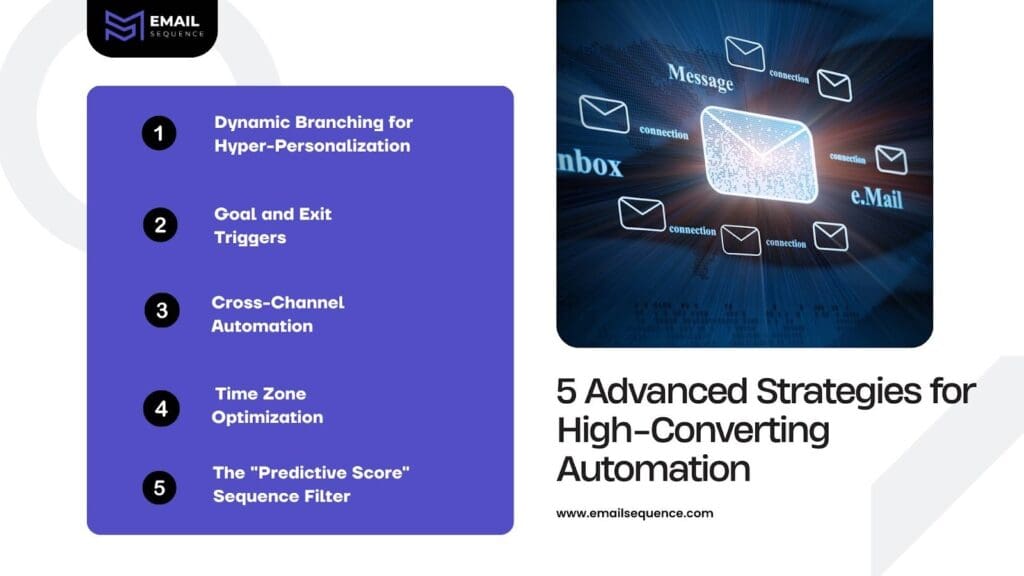
Dynamic Branching for Hyper-Personalization
Deploy “If/Then/Else” logic in your email sequence tool or automation software to send personalized email sequences based on each customer’s actions.
For example, if a contact clicks on a previous email about advanced content, automatically send the next in that series. This nurtures leads with relevant, targeted messages.
Goal and Exit Triggers
Assign every sequence a clear goal, such as “convert leads to paying customers” or “encourage product renewal.”
When achieved, use automation tools to remove that contact from the sequence and avoid sending irrelevant follow-up emails. Goal and exit actions save time and increase customer satisfaction.
Cross-Channel Automation
Integrate automated email marketing with SMS, push, or even cold email software. If a user does not open a key onboarding email or abandoned cart sequence, your automation can automatically send a low-frequency SMS or use another channel to boost outreach efficiency and campaign performance.
Time Zone Optimization
Use automation tools to ensure your welcome email, nurture sequence, or follow-up campaign arrives at the right hour, maximizing open rates.
Email marketing software with local time send features places your email campaigns at the top of the inbox.
The “Predictive Score” Sequence Filter
Pair artificial intelligence and detailed analytics with your automation engine.
Filter contacts by lead generation scores so only highly engaged subscribers enter advanced nurture sequences or sales emails, increasing ROI and keeping your audience engaged.
The Automation ESP Toolkit
For the best results, select email automation platforms and sequence-based software that put critical key features at your fingertips:
| Platform | Best Automation Feature | Segmentation Strength | Ideal For |
| ActiveCampaign | Advanced Conditional Logic (If/Then/Else) | Excellent (CRM-driven) | Power Users, E-commerce |
| HubSpot | Built-in CRM Triggers | Elite (Highly detailed filters) | Marketing & Sales Teams |
| MailerLite | User-Friendly Visual Workflow | Good (Basic Tagging/Groups) | Beginners, Simple Nurturing |
| Brevo | High Volume & Transactional Triggers | Good (List & Behavior-based) | High Volume Senders |
Prioritize these advanced features when choosing your email sequence tool:
- Drag and drop editor for building multiple emails and automations.
- Goal/Exit Actions for smarter campaign control.
- A/B testing within the sequence for subject lines and content optimization.
- Tight integration with your CRM and customer data for a seamless experience.
Best Practices and Deliverability
Keep your automated system in top shape with these deliverability and optimization tips:
Measuring and Optimizing Performance
Monitor the performance of each campaign using key automation metrics: open rates, click-through rates, conversion rates, and audience engagement. Refine your email template and email style using A/B testing, optimizing the email subject line, timing, and personal touch for every sequence based on what works best.
Compliance, Volume, and List Hygiene
All email marketing must comply with laws such as CAN-SPAM and GDPR. Provide easy opt-out links, keep volume reasonable to avoid spam filters, and use a re-engagement email sequence or re-engagement emails to maintain a clean list.
Segment inactive users and only send emails to interested contacts enrolled in your campaigns.
The Future of Automation: AI and Hyper-Personalization
Email automation is evolving quickly. AI-powered automation software is revolutionizing email marketing strategies through:
- Advanced Send Time Optimization: Email campaigns are delivered at the user’s ideal time, driving high click-through rates and engagement.
- Automated Content Creation: Personalized email sequences are built using customer data, so your sequence templates fit every segment.
- Predictive Pathing: Your email automation system will automatically adjust which emails are sent and to whom, maximizing conversions and increasing revenue.
Conclusion: Your Next Steps to Building Passive Revenue
Email sequence automation is the foundation for modern email marketing and lead generation.
By using the right automation tools, leveraging a strong nurture sequence, deploying an advanced onboarding sequence, and maintaining rigorous hygiene, you build a scalable, sequence-based, set-and-forget email marketing strategy that keeps your audience engaged and turns new users into loyal, paying customers.
Start today by implementing a welcome email sequence and goal triggers in your automated system to accelerate audience growth and increase revenue with every campaign.
Frequently Asked Questions
What is email sequence automation, and how does it work?
Email sequence automation is the process of sending pre-scheduled or trigger-based emails to subscribers based on their actions, behaviors, or predefined conditions. It works by using triggers (e.g., signing up for a newsletter), delays (timing between emails), and conditions (e.g., “If/Then” logic) to deliver personalized, timely messages without manual intervention.
What are the benefits of using email sequence automation?
The main benefits include:
- Saving time by automating repetitive tasks.
- Ensuring consistent communication with subscribers.
- Personalizing messages at scale to improve engagement.
- Nurturing leads and guiding them through the sales funnel.
- Increasing conversions and customer retention.
What types of emails can be automated?
Common automated emails include:
- Welcome sequences for new subscribers.
- Abandoned cart reminders for e-commerce.
- Post-purchase follow-ups to encourage reviews or upsells.
- Re-engagement campaigns for inactive subscribers.
- Onboarding sequences to guide new users.
How can I improve the effectiveness of my email sequences?
To optimize your email sequences:
- Use dynamic content for personalization.
- Set clear goals and exit triggers to avoid redundant emails.
- Test subject lines and timing with A/B testing.
- Segment your audience for targeted messaging.
- Monitor performance metrics like open rates and click-through rates.
What tools are best for email sequence automation?
Popular tools include:
- ActiveCampaign: Advanced conditional logic and CRM integration.
- HubSpot: Built-in CRM triggers and detailed segmentation.
- MailerLite: User-friendly visual workflow editor.
- Brevo (Sendinblue): High-volume and transactional email capabilities.
Choose a tool based on your business size, goals, and required features.