Email List Acquisition: Ethical Growth Strategies
Email marketing remains one of the most effective channels for businesses. Unlike social media platforms that change constantly, your email list is an asset you truly own. However, email list acquisition requires a strategic approach to ensure your subscribers turn into loyal customers, not frustrated unsubscribers.
Many businesses seek rapid list building through shortcuts like buying lists or using deceptive tactics, but these methods harm long-term growth. Instead, focus on trust-based strategies like lead magnets and opt-in incentives, ensuring ethical collection practices. Permission-based subscribers engage more, convert better, and help protect your brand reputation.
This guide will teach you how to grow your email list sustainably, attract genuine subscribers, and meet legal requirements for lasting success.
What is Email List Acquisition?
Email list acquisition is the process of collecting email addresses from individuals who have explicitly agreed to receive communications from your business. This is not about accumulating as many addresses as possible. It is about building a permission-based list of people who actively want to hear from you.
Definition & Purpose
At its core, email list acquisition creates a direct communication channel between your brand and your audience. Unlike social media, where algorithms control visibility, email delivers your message straight to the inbox.
Your email list serves multiple strategic purposes:
- Direct communication channel: You control when and how you reach your audience
- Lead nurturing tool: Convert prospects into customers through targeted messaging
- Revenue-driving asset: Email generates an average return of $36 for every dollar spent
The Importance of Ethical List Building (and Why It’s a Game-Changer)
The method you use to acquire emails determines the quality of your entire email marketing program. Ethical practices protect both your subscribers and your business.
Building your list the right way delivers concrete advantages:
- Builds long-term trust and credibility: Subscribers know you respect their choice
- Prevents spam complaints and blacklisting: Reduces risk of deliverability issues
- Improves deliverability rates: Email providers reward sender reputation
- Strengthens brand reputation: Ethical practices reflect your company’s values
Ethical consent is not just best practice. It is legally required in many regions, including the European Union under GDPR and in the United States under CAN-SPAM. Violations can result in substantial fines and permanent damage to your sender’s reputation.
Why Ethical Email List Growth Outperforms Shortcuts
Purchasing email lists might seem like a fast path to a large subscriber base. The reality is far different. Bought lists consistently underperform and often cause more harm than good.
Consider what happens when you email people who never agreed to hear from you:
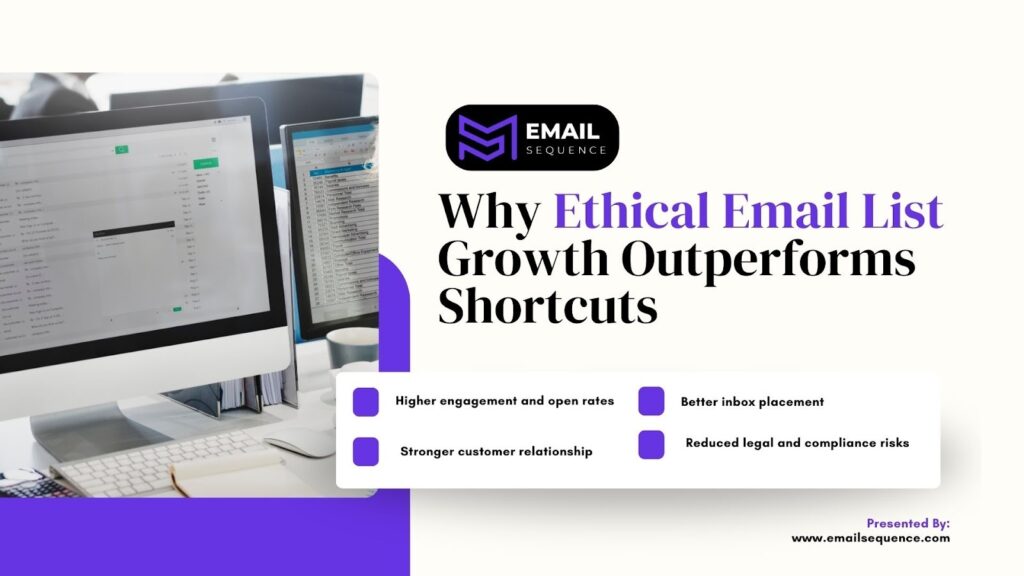
- Higher engagement and open rates: Permission-based subscribers actually want your content
- Better inbox placement: Email providers track engagement signals and reward genuine interest
- Stronger customer relationships: Trust forms the foundation of lasting connections
- Reduced legal and compliance risks: Avoid fines and legal complications from unauthorized contact
Core Principles of Ethical Email List Acquisition
Ethical email collection rests on several fundamental principles. These guidelines ensure you build trust while staying compliant with legal requirements.
What separates ethical list building from questionable tactics? The answer lies in how you obtain and use subscriber information.
- Explicit user consent: Subscribers must actively choose to join your list. This means they need to take a clear action, like ticking an unchecked box or clicking a “Subscribe” button. Never assume consent or use pre-checked boxes, as this violates trust and regulations like GDPR.
- Transparency in data use: Clearly explain what subscribers will receive and how often. If they sign up for a weekly newsletter, don’t start sending them daily promotional emails. Honesty builds a strong foundation for a lasting relationship with your audience.
- Easy unsubscribe access: Every email must include a simple, one-click way to opt out. Making it difficult to unsubscribe not only frustrates users but can also lead to your emails being marked as spam, which damages your sender reputation.
- Respect for privacy: Protect subscriber data and never sell or share it without explicit permission. Your privacy policy should be easy to find and understand, outlining exactly how you store and handle their personal information.
- Clear value exchange: Communicate what subscribers gain by joining your list, whether it’s exclusive content, discounts, or expert insights. People are more willing to share their email address when they know they’re getting something worthwhile in return.
Getting clear consent means avoiding deceptive opt-ins. Pre-checked boxes, hidden terms, or misleading signup forms damage trust before you send a single email. Your subscribers should understand exactly what they are signing up for and feel good about that decision.
Proven Ethical Email List Acquisition Strategies
Growing your email list ethically requires offering genuine value and making signup easy. The following strategies have proven effective across industries and audience types.
1. Create High-Value Lead Magnets
People will exchange their email address for something they perceive as valuable. The key is understanding what your specific audience needs and delivering it in a convenient format.
What typea onsistently drive signups?
- Free ebooks and guides: In-depth resources that solve specific problems
- Checklists and templates: Practical tools subscribers can use immediately
- Exclusive research: Original data or insights not available elsewhere
- Discount codes: Immediate financial value for potential customers
- Free tools or calculators: Interactive resources that provide personalized results
Lead magnets significantly increase opt-in rates when they address real pain points. A generic “newsletter signup” converts far less effectively than a targeted resource that solves an immediate problem.
2. Use Optimized Opt-In Forms
Your signup form design directly impacts conversion rates. The best forms balance collecting necessary information with reducing friction.
How can you optimize forms for better performance?
- Keep forms short: Request only essential information upfront
- Ask only essential info: Name and email are often sufficient initially
- Add a clear value statement: Explain exactly what subscribers will receive
- Use trust signals and privacy assurance: Address concerns about data security
Asking only essential info reduces friction and increases completion rates. You can always collect additional details later, once you have established trust and demonstrated value.
3. Offer Opt-In Incentives That Match Audience Needs
Opt-in incentives work best when they align with subscriber interests and stage in the customer journey. Generic offers produce generic results.
Consider these targeted incentive options:
- First-time purchase discounts: Encourage immediate conversion for new customers
- Free shipping offers: Remove a common barrier to online purchases
- VIP access and early launches: Appeal to subscribers who value exclusivity
- Exclusive content access: Provide information available only to subscribers
Match your incentive to your audience demographics and preferences. B2B audiences might value industry reports, while B2C customers might prefer discount codes.
4. Place Signup Opportunities Strategically
Visibility matters. Your irresistible offer is useless if no one ever sees it. Make it easy for potential subscribers to join your list by placing signup forms where they’re most likely to see them.
Where should you position signup forms for maximum impact?
- Homepage and blog sidebar: Capture interest from your most visited pages
- Exit-intent popups: Engage visitors who are about to leave your site
- Content upgrades: Offer enhanced versions of content readers already enjoy
- Checkout and account pages: Convert buyers into long-term subscribers
Strategic placement improves signup rates without being intrusive. Test different locations to identify which positions work best for your specific audience and website layout.
5. Use Double Opt-In for Quality Subscribers
Double opt-in requires subscribers to confirm their email address after initial signup. While this adds an extra step, it dramatically improves list quality.
Why does double opt-in benefit your list-building efforts?
- Confirms real email addresses: Eliminates typos and fake addresses
- Reduces spam and fake signups: Blocks automated bots and malicious actors
- Improves engagement quality: Only interested subscribers complete confirmation
- Strengthens compliance: Provides clear proof of consent
Double opt-in verifies intent and improves list quality. The slight reduction in raw subscriber numbers is offset by substantial improvements in engagement metrics and deliverability.
6. Capture Emails Through Content Marketing
Content marketing naturally attracts subscribers who are interested in your expertise. The content itself demonstrates value before asking for an email address.
Effective content-based acquisition methods include:
- Gated premium guides: Offer comprehensive resources in exchange for contact information
- Webinar registrations: Live or recorded educational sessions
- Resource libraries: Collections of valuable tools or templates
- Newsletter subscriptions: Regular updates featuring your best content
Educational content builds credibility while simultaneously growing your list. Subscribers who join through content typically have higher engagement rates because they have already experienced your value.
7. Leverage Social Media and Community Channels
Your social media presence can feed your email list when you promote signup opportunities effectively. Social platforms excel at awareness, while email excels at conversion.
How can you use social channels for subscriber growth?
- Promote lead magnets: Share valuable resources that require email signup
- Add signup links to bios: Make subscription easy from profile pages
- Run subscriber-only campaigns: Create exclusive offers for email list members
- Use social contests responsibly: Ensure contest rules comply with platform policies
Social media reaches people where they already spend time. Converting followers into email subscribers gives you a direct line of communication that algorithms cannot interrupt.
8. Grow Lists Through Events and Offline Channels
Digital tactics dominate most acquisition strategies, but offline opportunities remain valuable. In-person interactions often create stronger initial connections.
Offline collection methods worth considering:
- QR code signups: Bridge physical and digital experiences seamlessly
- Workshop registrations: Capture contacts from educational events
- Trade show lead capture: Convert booth visitors into subscribers
- In-store subscriptions: Offer exclusive perks for retail customers who sign up
Offline and QR capture increases accessibility for audiences who prefer face-to-face interactions. These methods work particularly well for local businesses and B2B companies.
Are You Making These Email List Building Mistakes?
Even well-intentioned marketers sometimes adopt practices that undermine their goals. Recognizing these mistakes helps you avoid them.
Which tactics should you never use, regardless of promised results?
- Buying email lists: Purchased contacts have not consented and will not engage
- Pre-checked opt-ins: Boxes must be unchecked by default to ensure active consent
- Misleading incentives: False promises destroy trust immediately
- Over-emailing new subscribers: Bombarding new contacts leads to unsubscribes
- Ignoring unsubscribe requests: Required by law and essential for maintaining trust
Misleading opt-ins damage trust and engagement from the very beginning. Recovery from a poor first impression is difficult and sometimes impossible.
How to Maintain Subscriber Trust After Acquisition
Acquiring subscribers ethically is just the beginning. Maintaining their trust determines whether they remain engaged or eventually unsubscribe.
How do you keep subscribers happy after they join your list?
- Send value-first emails: Prioritize helpful content over constant sales pitches
- Set expectations for frequency: Tell subscribers how often they will hear from you
- Personalize content: Use subscriber data to make emails more relevant
- Respect subscriber preferences: Honor frequency and content preferences when provided
Building a relationship takes time and consistency. Every email should reinforce the decision to subscribe rather than cause regret.
Conclusion
Email list acquisition delivers its full potential only when built on a foundation of trust and transparency. The strategies outlined here prioritize subscriber growth that lasts rather than numbers that quickly decay.
Ethical acquisition builds long-term growth that compounds over time. Lead magnets and opt-in incentives work because they respect the subscriber relationship from the very first interaction. Trust drives engagement and conversions far more effectively than any manipulative tactic.
When people feel they receive genuine value from being on your list, they are more likely to become customers. Ethical list building is not an obstacle to growth—it’s the foundation of sustainable marketing success.
Start implementing these strategies today. Your future subscribers will thank you, and your business will thrive with an engaged, permission-based email list. For expert guidance and tools, visit emailsequence.com and take your email marketing to the next level!
Frequently Asked Questions
What is ethical email list acquisition?
Ethical email list acquisition is the practice of collecting email addresses only from individuals who have explicitly consented to receive communications. This approach prioritizes transparency, respect for privacy, and compliance with regulations like GDPR and CAN-SPAM.
Why should businesses avoid buying email lists?
Purchased email lists contain contacts who have not agreed to hear from your business. These subscribers have low engagement rates, generate spam complaints, damage sender reputation, and violate regulations in many jurisdictions. Building your own list yields far better results.
How can I grow my email list quickly but ethically?
Focus on high-value lead magnets, optimize your signup forms, place signup opportunities strategically throughout your website, and promote your list through content marketing and social media. Double opt-in ensures quality while you scale. Consistency across multiple channels accelerates growth without compromising ethics.