Advanced Email Segmentation: Strategies Beyond Demographics
Many marketers believe that knowing a subscriber’s age and location constitutes a personalized strategy. While demographic data provides a starting point, it rarely tells you what a customer truly wants or when they are ready to buy. To achieve higher conversion rates and build lasting loyalty, you must move toward advanced email segmentation.
Sending the same message to everyone on your list is a fast way to lose engagement. Subscribers today expect brands to understand their specific needs and preferences. When you rely solely on surface-level data, you miss the nuances of customer behavior that drive revenue.
In this guide, we will explore how to implement data-driven strategies that go far deeper than zip codes and birthdays.
Why Advanced Segmentation is Non-Negotiable
Relevance is the primary driver of email marketing success. When a subscriber receives content that aligns with their current interests or problems, they are more likely to open, click, and purchase. Advanced email segmentation allows you to deliver this relevance at scale.
- Improved Deliverability: Precise segmentation boosts your sender reputation. ISPs favor senders with high engagement, keeping your emails out of the spam folder.
- Enhanced Business KPIs: Identifying high-value customers allows you to nurture them differently from one-time buyers.
- Increased Retention and Revenue: Targeted strategies for specific audience segments lead to higher customer loyalty and maximized profits.
- Better Campaign Performance: Tailored messaging ensures higher open and click-through rates, resulting in more successful campaigns.
- Cost Efficiency: By focusing resources on specific audience segments, you reduce wasted spend and maximize your marketing ROI.
Categories of Advanced Segmentation
To build a robust strategy, you must understand the different layers of customer data available to you. These categories allow you to slice your audience in ways that reveal intent and preference.
We will categorize these methods into four distinct pillars:
- Behavioral grouping: This involves analyzing actions taken by the user, such as their browsing history, purchase patterns, and feature usage. By understanding what users do, you can tailor your marketing messages to their specific behaviors and interests.
- Psychographic targeting: Going beyond actions, this method seeks to understand the “why” behind them by looking at a user’s lifestyle, values, and personality traits. This allows for more emotionally resonant and persuasive marketing campaigns.
- RFM analysis: This model evaluates customer value based on three key metrics: recency (how recently they purchased), frequency (how often they purchase), and monetary spend (how much they spend). It helps identify your most valuable customers so you can focus retention efforts effectively.
- Lifecycle & engagement: This approach maps the customer journey from their first point of contact (awareness) through to becoming a loyal, repeat customer. Understanding where each customer is in their lifecycle allows you to send targeted communications that guide them to the next stage.
Behavioral Segmentation
Behavioral segmentation is the practice of grouping subscribers based on the actions they take, or fail to take. This method is often more powerful than demographic data because it reflects actual interest and intent rather than assumptions. Effective behavioral grouping turns passive data into active revenue opportunities.
Click and Engagement Patterns
Tracking what links a user clicks provides a direct window into their specific interests. If a subscriber consistently clicks on links related to “men’s running shoes” but ignores “casual wear,” you have a clear signal for future content.
How can you leverage click data to refine your messaging? Consider these specific triggers:
- Tag subscribers based on the specific product categories they browse.
- Trigger follow-up emails that feature content related to their last clicked link.
- Adjust send frequency based on how often a user engages with your messages.
Purchase & Browsing Behavior
Purchase history is the most reliable predictor of future buying behavior. Browsing data, however, is equally valuable as it indicates intent before a transaction occurs. Combining these data points allows you to send highly targeted recommendations.
Product or Feature Interaction
For SaaS companies or app-based businesses, tracking feature usage is essential. You can identify power users who might be ready for an upsell or struggling users who need educational content to prevent churn.
Inactivity & Re-engagement Segments
Subscribers who stop engaging are not necessarily lost causes. By isolating users who have not opened or clicked in a specific timeframe, you can deploy re-engagement campaigns designed to win them back without annoying your active list.
Psychographic Targeting
While behavior tells you what a customer does, psychographics explain why they do it. Psychographic targeting involves segmenting based on values, lifestyle, personality, and attitudes. This approach helps you craft emotional hooks that resonate on a deeper level than transactional emails.
Creating Psychographic Subscriber Profiles
To build robust customer personas, you need to look beyond the data dashboard and tap into the core motivations driving your audience. Understanding these “why” factors allows you to move past generic marketing and create messaging that feels personally tailored to their worldview.
For instance, a segment driven by sustainability will ignore high-status luxury claims but will engage deeply with content about eco-friendly sourcing and minimal packaging.
To create detailed psychographic profiles for your segments, follow these steps:
- Identify core values: Determine if your audience prioritizes cost-savings, environmental impact, convenience, or social status.
- Analyze lifestyle patterns: Map out their daily routines and how your product fits into their existing habits.
- Pinpoint pain points and fears: Document the specific frustrations they face and the emotional relief your solution provides.
- Monitor social sentiment: Use social listening tools to see how your target audience talks about your industry and what topics they are passionate about.
Using Surveys and Preference Centers
The most direct way to gather psychographic data is to ask for it. Interactive emails and preference centers allow subscribers to self-segment based on their interests and needs.
Why should you prioritize zero-party data collection? It builds trust and ensures accuracy:
- Send a welcome survey asking subscribers what their biggest challenge is.
- Use a preference center that allows users to select content topics they care about.
- Ask for feedback after a purchase to gauge satisfaction and brand sentiment.
Content Performance as Psychographic Signals
Even without surveys, your content performance offers clues. High engagement with blog posts about “budget tips” versus “premium upgrades” reveals the financial mindset of your audience, enabling more precise psychographic targeting.
RFM Analysis (Recency, Frequency, Monetary)
RFM analysis is a proven marketing model that evaluates how recently a customer purchased, how often they purchase, and how much they spend. This quantitative approach helps you identify your best customers and those who require attention.
RFM Scoring Method
To implement RFM analysis, you assign a score (typically 1 to 5) for each of the three metrics. A customer who bought yesterday (Recency 5), buys every month (Frequency 5), and spends significantly (Monetary 5) is your ideal “Champion.”
Translating RFM Segments into Campaigns
Once you have scored your list, you can create distinct strategies for each group. You do not want to send a steep discount to a customer who already pays full price happily.
How do you tailor your messaging for different RFM scores?
- Champions (High R, High F, High M): Offer exclusive access, early product releases, and referral bonuses.
- Loyalists (Moderate R, High F, Moderate M): Upsell higher-value products to increase their monetary value.
- At-Risk (Low R, High F, High M): Send urgent win-back offers to prevent them from churning.
RFM & Lifecycle Mapping
When you combine RFM scores with lifecycle stages, you get a much clearer picture of your customers. This helps you find high-value users early and reach out with the right message before they stop buying.
- Predictive Retention: If a “Champion” starts shopping less often, you can send them loyalty rewards immediately to keep them from leaving.
- Strategic Migration: Spot “Potential Loyalists” early in their journey and use personalized offers to turn them into long-term, high-spending customers.
- Resource Optimization: Spend your time and budget on the customer groups most likely to bring in the most revenue over time.
Lifecycle & Engagement Segmentation
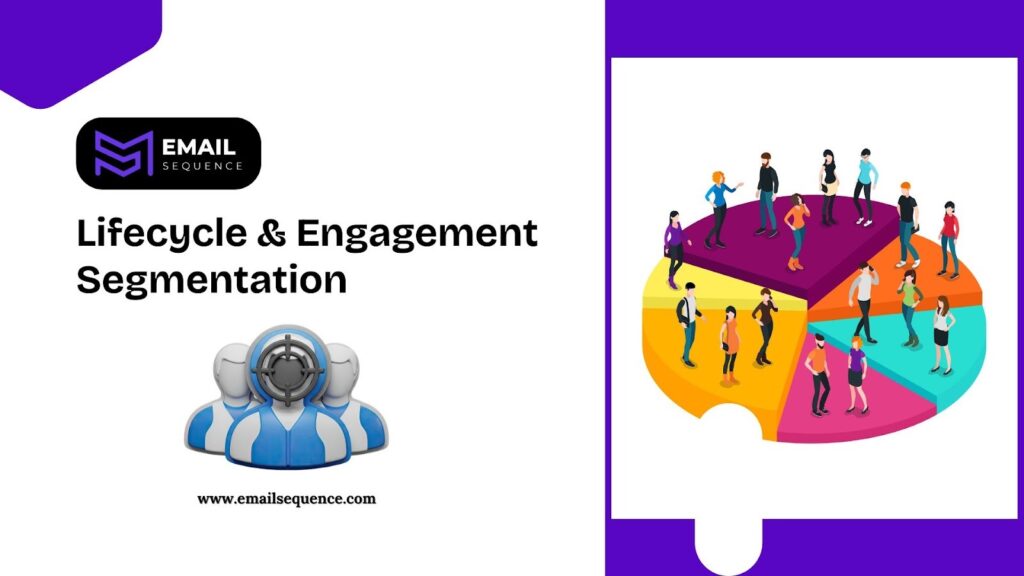
Every customer exists somewhere on a journey with your brand. Lifecycle segmentation ensures that you speak to them appropriately based on whether they are new, active, or lapsing. This helps you maintain relevant customer personas throughout the relationship.
Mapping Engagement to Lifecycle Stages
A new subscriber is like a first date; they need education and trust-building content to feel comfortable with your brand. On the other hand, a long-time customer is like a loyal friend who expects appreciation and exclusive rewards.
Mismatching these messages creates friction. Imagine sending a “10% off your first order” coupon to a customer who has been buying from you for five years; it makes them feel like a stranger rather than a valued partner.
Conversely, hitting a brand-new lead with a high-pressure “refer a friend” campaign before they’ve even tried your product can feel overwhelming and premature. Messaging must evolve as the relationship matures to keep the engagement natural and effective..
Best Practices for Lifecycle Campaigns
Lifecycle campaigns must be automated yet feel personal. The goal is to move the subscriber to the next stage of value.
What are the key touchpoints you must automate?
- Onboarding: Welcome series that educates the user on brand values.
- Nurturing: Educational content that solves problems without a hard sell.
- Retention: Milestone emails celebrating anniversaries or purchase achievements.
Automation Recipes for Each Stage
Streamline your email marketing by automating subscriber management. With the right triggers in place, you can ensure your prospects and customers receive timely, relevant communication without manual effort.
Here’s how to set it up:
- Create a trigger for when a prospect makes their first purchase.
- Set up automation to remove them from the “prospect” workflow.
- Add them to the “new customer” workflow immediately for personalized follow-up.
Predictive & AI-Driven Segmentation
The future of advanced email segmentation lies in prediction. Machine learning algorithms can analyze vast datasets to forecast future behavior, allowing you to act before the customer even makes a decision.
Predicting Purchase Propensity
AI tools can analyze past behavior to determine the likelihood of a customer buying in the next 7 to 30 days. You can focus your ad spend and aggressive email offers on this high-propensity segment.
Churn & Retention Predictions
Predictive models can flag customers who exhibit patterns associated with churning. This allows you to intervene with a retention offer before they unsubscribe or stop purchasing.
LTV & Value-Based Segmentation
By predicting the Lifetime Value (LTV) of a new subscriber, you can determine how much to invest in acquiring and retaining them. High-LTV segments warrant more expensive, high-touch marketing efforts.
- Acquisition: Tailor your ad spend to target audiences that mirror your high-LTV customer profiles.
- Retention: Allocate premium support and exclusive offers to high-LTV customers to foster loyalty.
- Upselling: Identify high-value customers who are most likely to purchase premium products or add-ons.
Conclusion
Moving from basic demographics to advanced email segmentation is a necessary evolution for modern businesses. By leveraging behavioral grouping, psychographic targeting, and RFM analysis, you create a marketing ecosystem that feels personal and relevant to every subscriber.
The result is not just better metrics, but a stronger relationship with your audience. Start small, measure your segment performance, and iterate on your strategy. The deeper you understand your data, the more effectively you can grow your revenue.
Ready to turn your data into revenue? Visit emailsequences.com and start building more profitable email campaigns today.
Frequently Asked Questions
What is advanced email segmentation?
Advanced email segmentation is the practice of dividing your email list into smaller, targeted groups based on complex data such as behavior, purchase history, psychographics, and engagement levels, rather than just basic demographics like age or location.
How does behavioral segmentation improve campaigns?
Behavioral segmentation ensures that subscribers receive content based on actions they have actually taken, such as clicking a link or abandoning a cart. This high relevance typically leads to increased open rates, click-through rates, and conversions.
Why use RFM analysis for email lists?
RFM analysis allows you to identify your most valuable customers objectively. By scoring subscribers on Recency, Frequency, and Monetary value, you can prioritize marketing efforts toward those who are most likely to generate revenue.
What is the difference between psychographic and demographic segments?
Demographics describe who the customer is (age, gender, location), while psychographics describe why they buy (values, interests, personality, lifestyle). Psychographics allow for deeper emotional connections in your copy.
How do I measure segment performance?
You measure performance by tracking KPIs specific to each group, such as conversion rate, revenue per email, and unsubscribe rate. Comparing these metrics against your list average reveals the effectiveness of your segmentation strategy.