The Ultimate Guide to Building Data-Driven Email Lists (2026)
Marketing has changed. Sending the same message to every person on your list is no longer an effective strategy. In fact, it is often the fastest way to increase your unsubscribe rate. Modern consumers expect hyper-relevance. They demand that brands understand their needs, preferences, and behaviors. This is where leveraging data-driven strategies in email marketing becomes essential.
By leveraging customer data, you transform your marketing efforts from a guessing game into a precision engine. This guide will walk you through exactly how to build, manage, and monetize data-driven email lists. We will move beyond basic demographics and dive into actionable strategies that drive revenue.
Why Data-Driven Email Marketing Matters
A data-driven email marketing strategy relies on hard evidence rather than intuition. It utilizes data points gathered from users interacting with your brand to deliver the right message at the right time.
When you base your email campaigns on data, you unlock significant benefits:
- Higher Engagement: Relevant communication leads to better open rates and click-through rates.
- Increased Revenue: By understanding purchase history and average order value, you can present offers that convert.
- Better Retention: Personalized email content fosters loyalty and extends the customer lifetime.
Do not treat your subscribers as just email addresses. Treat them as individuals with specific desires.
The Metrics That Actually Matter
Many marketers obsess over vanity metrics. However, to build a truly successful email marketing strategy, you must focus on key metrics that impact your bottom line.
Click-Through Rate (CTR)
This metric indicates whether your content resonates. High click-through rates prove that your content relevance is strong and your call to action is compelling.
Customer Lifetime Value (CLV)
Customer lifetime value is the total revenue a customer generates over their relationship with you. Data-driven insights allow you to identify your VIP customers and tailor campaigns to retain them.
Conversion Rates
Ultimately, you want sales. Tracking conversion rates from specific emails helps you understand which email strategies drive profit and which do not.
Revenue Per Recipient (RPR)
This often-overlooked metric tells you exactly how much each email sent is worth. It is a powerful way to measure overall campaign performance.
Zero-Party vs. First-Party Data: A Crucial Distinction
Most email strategies rely heavily on first-party data. This includes purchase behavior, past interactions, and pages visited. While valuable, this is passive data. You are inferring intent based on action.
To truly excel, you must incorporate zero-party data. This is data that a customer gives you intentionally and proactively. It includes explicit consent, preferences, and personal context.
Examples of Zero-Party Data Collection:
- Preference Centers: Asking subscribers how often they want to hear from you.
- Onboarding Quizzes: Asking new users about their specific goals or challenges.
- Polls: Asking about product preferences directly in the email.
By combining zero-party data with historical data, you create a complete picture of the customer.
The “Data-Minimum” Framework for Beginners
You do not need a massive data science team to start. If you are overwhelmed, focus on the “Data-Minimum” framework. You only need three core data points to launch effective data-driven email campaigns:
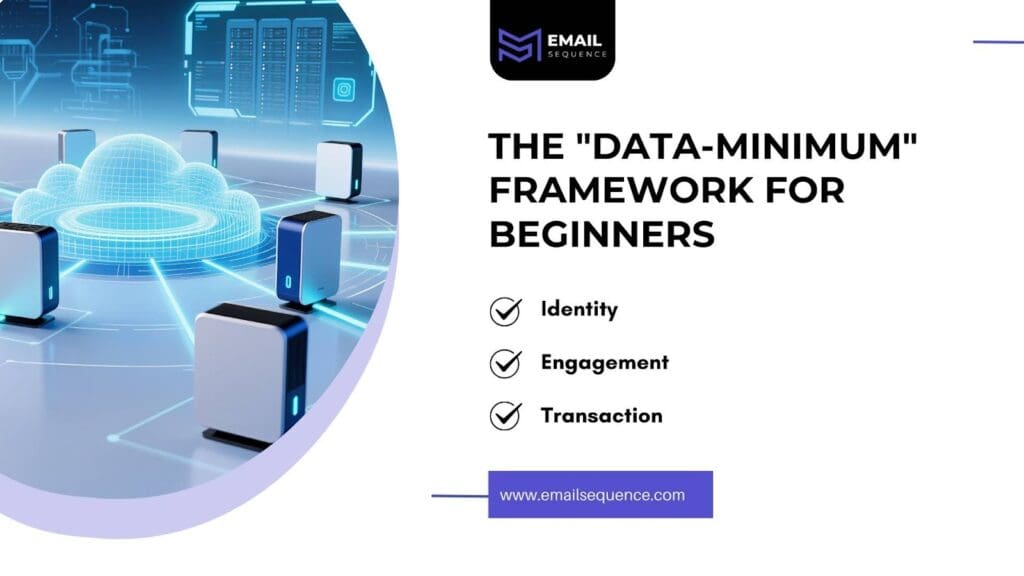
- Identity: Name and email address.
- Engagement: When they last opened or clicked (to track engagement data).
- Transaction: Has the user purchased before? (Yes/No).
Once you master these, you can expand into demographic data, job titles, and complex behavioral triggers.
Advanced Segmentation and Targeting
Segmenting your audience is the heartbeat of data-driven marketing. Sending a blast to your entire list usually results in low engagement. Instead, use advanced segmentation to create specific audience segments.
Behavioral Triggers
Do not wait for a scheduled newsletter. Set up automated email sequences based on user actions.
- Browse Abandonment: If a user views a product but does not add it to their cart, send a reminder. This utilizes browse behavior to recover lost interest.
- Post-Purchase Upsells: Use past purchases to recommend complementary products.
- Churn Prevention: Identify users who have not engaged in 60 days and trigger a re-engagement flow.
Self-Segmenting Lead Magnets
Improve your data quality at the source. Instead of a generic “Subscribe for updates” form, use a quiz. For example, a skincare brand could ask, “What is your skin type?”
If a user selects “Dry Skin,” you tag them immediately. Your welcome sequence then focuses entirely on dry skin products. This ensures targeted messaging from day one.
Dynamic Content: One Email, Many Versions
Dynamic content allows you to show different images, text, or offers to different people within the same email. This is the pinnacle of personalization.
Imagine sending one newsletter to your whole list, but:
- New subscribers see a “Welcome” banner.
- New customers receive a coupon offering 10% off their first purchase.
- VIP customers see an invitation to a loyalty program.
This approach saves time while maximizing content relevance. Your email service providers (ESPs) likely support this feature, so ensure you utilize it.
The Tech Stack Checklist
To execute this, your tools must communicate with each other. A disjointed stack leads to data silos.
Make sure your email marketing platform connects effortlessly with your:
- Website analytics tools: To track on-site behavior.
- CRM: To manage customer data.
- eCommerce platform: To sync transactional data.
Popular tools like Klaviyo, HubSpot, or ActiveCampaign specialize in unifying these data streams to provide actionable insight.
Data Hygiene: Quality Over Quantity
A massive list full of invalid email addresses helps no one. It damages your sender reputation and skews your performance metrics.
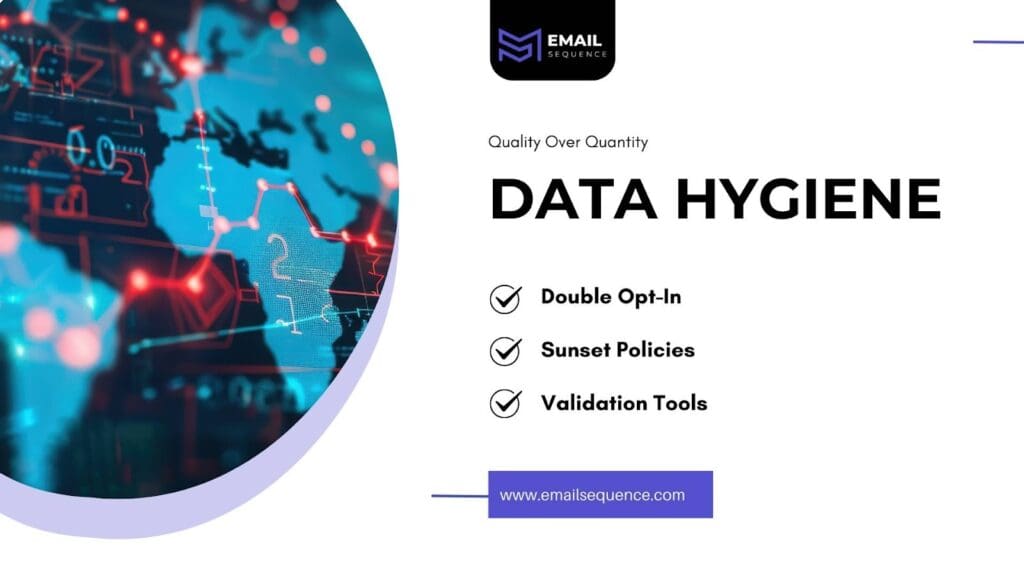
List Hygiene Best Practices:
- Double Opt-In: Ensure valid emails by requiring confirmation.
- Sunset Policies: Automatically unsubscribe users who have not opened an email in 6 months.
- Validation Tools: Use tools to strip out fake emails upon entry.
Focus on data quality. A list of 5,000 engaged buyers is infinitely more valuable than a list of 50,000 unengaged strangers.
Compliance and Trust
Building data-driven email lists requires trust. You are handling sensitive information. You must strictly adhere to regulations like the CAN-SPAM Act and GDPR.
- Always obtain explicit consent.
- Make the unsubscribe process easy.
- Be transparent about how you use their data.
When users trust you, they provide more accurate data. This creates a positive feedback loop that improves your future strategies.
Conclusion
Building data-driven email lists is not a one-time task. It is an ongoing process of collection, analysis, and optimization. By moving away from generic blasts and embracing valuable insights, you create a better experience for your subscribers and a more profitable channel for your business.
Start small. Implement the “Data-Minimum” framework today. Collect zero-party data through a simple poll with an email sequence. As you gather more data-driven insights, your email marketing campaigns will become your most powerful asset.
Frequently Asked Questions (FAQs)
What is a data-driven email list?
A data-driven email list uses customer data, such as engagement, purchase history, and preferences, to create targeted and personalized email campaigns.
Why is data-driven email marketing important?
Data-driven email marketing improves click-through rates, conversion rates, and customer lifetime value by delivering relevant communication based on actionable insights.
How can I collect zero-party data for email campaigns?
You can collect zero-party data through preference centers, onboarding quizzes, and polls where users provide explicit consent and share their preferences directly.
What are the key metrics to track in email marketing?
Focus on click-through rates, customer lifetime value, conversion rates, and revenue per recipient to measure email campaign effectiveness.
How do I improve email list quality?
Use double opt-in, remove invalid email addresses, and implement sunset policies to maintain a clean and engaged email list.