Multi-Language Automation: Reaching Global Audiences Effectively
Imagine this: your product is a game-changer, solving a problem that knows no borders. You’re ready to take it global. But as you expand, something feels off; your message isn’t resonating. Why? Because it’s stuck in one language, unable to truly connect with diverse audiences.
Crossing borders takes more than a great product; it takes communication that speaks to everyone. Marketing teams often assume that English is sufficient for international commerce, yet data consistently shows that customers prefer to buy in their native tongue. To bridge this gap without tripling your workload, you need a scalable solution. This solution is multi-language automation.
In this blog post, we will explore the strategies, localization nuances, and workflows required to implement this technology successfully. You will learn how to set up automated systems that deliver the right message, in the right language, at the right time.
What Is Multi‑Language Automation?
Multi-language automation refers to the use of technology to deliver content in various languages automatically, triggered by user data or behavior. It combines the efficiency of marketing automation platforms with the personalization of multilingual content.
Rather than manually sending separate email blasts for every region, this approach uses dynamic workflows to route users down the correct linguistic path.
To implement multi-language automation effectively, it is helpful to understand its core components:
- Translation vs. Automation: While translation converts the text, automation ensures it reaches the right inbox without manual effort.
- CRM Integration: Uses language triggers and data within your CRM to route users automatically.
- Dynamic Content: Employs specific content blocks within emails to swap languages based on recipient data.
- Global Scalability: Allows a single marketing strategy to be deployed across dozens of different regions simultaneously.
Why Multi‑Language Automation Matters
The primary reason to invest in multi-language automation is the undeniable impact on engagement metrics. When a recipient sees a subject line in their native language, open rates increase significantly.
Click-through rates follow suit because the content resonates on a deeper, more personal level. This signals that the brand respects its identity and understands its context.
Here’s why multi-language automation matters:
- Higher Retention and Increased LTV
Localized automation improves customer retention and boosts lifetime value (LTV) by tailoring content to specific audiences. Why it matters: Customers are more likely to stay loyal to brands that feel relevant to their needs and preferences.
- Eliminates Mental Translation for Users
By speaking your customer’s language, you reduce the cognitive effort required for mental translation. Why it matters: Less friction means smoother user experiences, leading to higher conversion rates.
- Drives Effective Brand Expansion
Localized strategies make customers in new markets feel valued and understood rather than overlooked. Why it matters: This builds trust and connection with international audiences, fostering long-term customer loyalty.
- Turns International Traffic into Local Communities
Global automation transforms broad, international audiences into engaged, local customer bases. Why it matters: Strong local communities increase brand presence and drive sustainable growth in new markets.
Key Concepts in International Email Automation
To execute this strategy effectively, you must understand the foundational concepts that separate successful international campaigns from those that feel generic.
Multilingual Sequences vs Single Language
Operating multilingual sequences requires a shift in how you architect your customer journeys. A single-language approach forces all users into one funnel, potentially alienating non-native speakers.
Do you know when to split your traffic into distinct flows?
- Language-Specific Flows: These are necessary when the offer, cultural context, or product availability differs by region.
- Universal Messaging: This works for transactional updates but often fails for nurturing sequences where nuance is key.
Language Localization vs Translation
There is a profound difference between translating a sentence word-for-word and localizing a message for a specific culture. Language localization involves adapting the content to fit the target market’s cultural expectations.
Have you considered the non-textual elements of your message?
- Cultural Adaptation: This involves changing idioms that do not make sense in other languages.
- Formatting Nuances: You must adjust date formats (DD/MM vs MM/DD), currency symbols, and units of measurement to match local standards.
Cross‑Cultural Email Considerations
Sending cross‑cultural email campaigns demands high emotional intelligence and awareness of regional norms. A tone that sounds professional in Germany might sound stiff in Brazil, while a casual American tone could be perceived as disrespectful in Japan.
Are you respecting the visual and tonal preferences of your audience?
- Tone and Norms: Adjust your level of formality based on regional expectations.
- Imagery: Ensure photos and icons are culturally appropriate and representative of the target demographic.
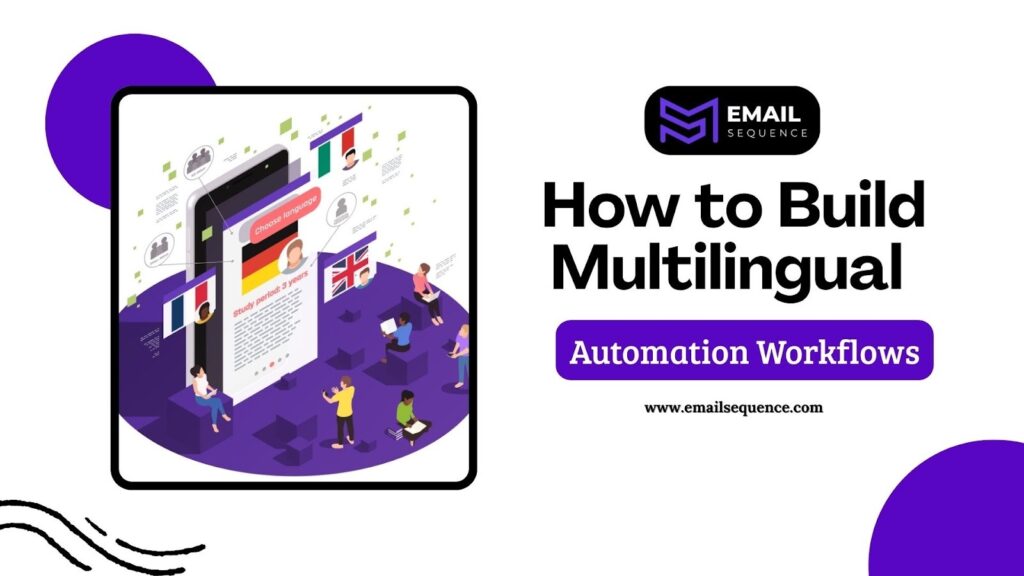
How to Build Multilingual Automation Workflows
Building these workflows requires a systematic approach. You cannot simply guess; you must follow a structured playbook to ensure technical reliability and user satisfaction.
Identify Core Languages
Before building, you must determine where your efforts will yield the highest return. Analyze your current traffic and sales data to find your top-performing non-English markets.
- Prioritize Regions: Focus on the top 2-3 languages that represent the bulk of your international audience.
- Assess Resources: Ensure you can support these languages long-term.
Plan Language Triggers
You need reliable data to tell your automation platform which language to serve. Without accurate triggers, the system will fail to personalize the experience.
- Profile Data: Use the “Language” field in your CRM or signup form.
- Geolocation: Infer language based on IP address, but always ask for confirmation.
- Preference Centers: Allow users to manually select their preferred language.
Structure Language Variants
Designing the architecture of your automation is crucial for manageability. You must decide how to house the different content versions within your platform.
- Modular Sequences: Create master templates that can hold dynamic content.
- Branching Logic: Set up decision trees where the workflow splits based on the language attribute.
Centralize Translations
Managing translations in a decentralized way leads to errors and version control issues. You should establish a single source of truth for all copy.
- Human + AI Review: Use AI for the first draft, but always have a human review for nuance.
- Translation Management Systems (TMS): Integrate a TMS to streamline the update process.
Automate Sequence Delivery
This is the execution phase where international sequences go live. The platform uses the data triggers to insert the correct content dynamically.
- Dynamic Content Insertion: Configure your email template to swap out text blocks based on the user’s language tag.
Fallback and Defaults
Data is rarely perfect, and sometimes a user’s language preference is unknown. You must have a safety net to ensure every user receives a message.
- Default Language: Set English (or your primary market language) as the default if no attribute is found.
- Generic Fallbacks: Ensure the default content is written clearly enough to be understood by a broad audience.
Tools & Platforms That Support Multi‑Language Automation
Not all marketing platforms can handle the complexities of multi-language automation. To operate on a global scale, it’s crucial to select a tool with specific capabilities built for localization.
Before committing to a platform, verify that your tech stack includes the following essential features so you can deliver a seamless, personalized experience to every user.
- Dynamic Content Blocks: Allows you to swap text and images within a single email template based on user attributes like language.
- Language Tags: Provides native support for storing and using your audience’s language preferences.
- API Support: Enables connectivity with translation tools to automate the copy-pasting process and reduce manual work.
- Automation Triggers: Let you launch workflows based on a user’s locale or region.
- Global Compliance Management: Automatically adjusts legal footers and consent checkboxes to meet regional data privacy regulations like GDPR or CCPA.
- Localized Send-Time Optimization: Uses machine learning to deliver messages at the peak engagement time for each specific time zone.
Best Practices for Language Localization in Email
To truly connect with a global audience, your localization strategy must go beyond technical tools. High engagement hinges on a deep respect for cultural nuances and a commitment to quality.
Simply translating your content isn’t enough; you must adapt it to resonate with the specific values, idioms, and expectations of each local market.
Native‑Level Copy
Trust is fragile; broken grammar or awkward phrasing destroys it instantly. You should prioritize native-level fluency in your copy.
- Hire Native Editors: Have a native speaker review the final output to catch subtle errors.
- Avoid Pure Machine Translation: Never rely solely on raw output from translation engines for customer-facing content.
Locale‑Specific Imagery
Visuals speak as loudly as words. Language localization extends to the images you choose for your headers and body content.
- Diverse Representation: Use models and settings that look familiar to the target region.
- Relevant Formatting: ensure screenshots or product images show the local interface or currency.
Respect Cultural Calendars
Timing is everything in automation. A holiday promotion sent on a day that is not a holiday in the recipient’s country shows a lack of awareness.
- Regional Holidays: Adjust send times to account for local bank holidays and festivals.
- Time Zones: Ensure messages arrive at appropriate local times, not 3:00 AM.
Test Before Launch
Complexity increases the chance of error. You must rigorously test every branch of your automation.
- Seed Lists: Create test profiles for each language group.
- Rendering Checks: Verify that special characters (like accents) display correctly in all email clients.
Common Challenges and How to Solve Them
No matter how strong your strategy is, challenges are bound to surface. Challenges with multilingual sequences, such as misaligned translations or cultural nuances, can impact communication. By identifying these challenges early and using tools like localization software or expert reviews, you can ensure smoother execution and better engagement.
Incorrect Segmentation
If your data is bad, your automation fails. Users may be tagged with the wrong language, leading to confusion.
- Solution: Implement a “Update Preferences” link in the footer so users can correct their language settings manually.
Poor Translation Quality
Low-quality translation damages your brand reputation. This usually happens when speed is prioritized over accuracy.
- Solution: Establish a rigorous review process involving human editors before any content is loaded into the automation.
Over‑Automation Without Vetting
Sometimes, automation can be too aggressive. Sending cross‑cultural email content that is technically triggered but culturally insensitive is a major risk.
- Solution: Conduct cultural vetting for all major campaigns to ensure the message aligns with local sensitivities.
Future Trends in Multi‑Language Automation
The landscape of multi-language automation is evolving rapidly. As artificial intelligence becomes more sophisticated, the barrier to entry for global marketing continues to lower.
What technologies will shape the next few years of global marketing?
- Next-Gen Contextual AI: We’re moving beyond word-for-word translation. Future tools will actually grasp nuance and intent, making manual “polishing” a thing of the past.
- Instant Localization: Imagine a world where your content goes global the second you hit publish. Real-time pipelines will handle translation and deployment simultaneously.
- Anticipatory Experience: AI won’t just react to a user’s location; it will predict their preferred tone and dialect based on browsing habits, delivering a localized experience before they even ask for it.
Conclusion
Expanding your reach to global audiences can be challenging, but multi-language automation makes it easier. It enables personalized communication at scale, ensuring your brand connects with people no matter where they are. By focusing on strong localization strategies and carefully measuring results, you can transform a generic international presence into a powerful local one.
Take a closer look at your current workflows. Audit your email sequences for opportunities to localize and align your messaging with diverse audiences. With the right strategy, you can create a truly global automation system that drives engagement and growth.
Ready to take the next step? Visit us at emailsequence.com to learn how we can help make your global strategy a success!
Frequently Asked Questions (FAQs)
What is multi‑language automation?
Multi-language automation is the process of using marketing technology to automatically deliver content in a user’s preferred language based on data triggers, without manual intervention for each send.
How do you trigger language‑specific email sequences?
You trigger these sequences using data fields stored in your CRM or marketing platform, such as “Preferred Language,” “Country,” or data collected from IP geolocation.
Is automated translation sufficient for global campaigns?
No, automated translation alone is rarely sufficient. While it provides a base, it lacks cultural nuance and can contain errors. Human review and professional localization are recommended for accuracy and brand safety.
How does localization improve engagement?
Localization improves engagement by making content relevant and easy to understand. It builds trust, increases open and click-through rates, and reduces the friction that comes with reading a non-native language.
What tools support multilingual email automation?
Many enterprise and mid-market platforms support this, including HubSpot, Marketo, ActiveCampaign, and Braze. Look for features like dynamic content blocks and language tagging.