Master Video Podcasting 2026: Scale Authority & Email Lists
The landscape of business-to-business marketing evolves rapidly. Relying solely on audio content is no longer sufficient for brands aiming to dominate their niche. By 2026, the data is clear: “audio-only” has become a secondary discovery channel. The primary driver of engagement and authority is now video podcasting.
This guide explores the strategic shift towards visual media. We will examine how seeing a founder’s face builds trust and accelerates sales cycles. Most importantly, we will move beyond vanity metrics like “views.” You will learn to leverage a video podcast to build an owned audience and justify the Return on Investment (ROI) of your video setup to stakeholders.
The Strategic Shift: Why B2B Is Going Visual
B2B buyers require trust before they transact. Audio-only podcasts limit your ability to convey emotion and authority fully. When you introduce video content, you humanize the brand. Seeing facial expressions and body language accelerates the “know, like, and trust” factor essential for high-ticket sales.
This shift is not just about aesthetics; it is about user intent. Stakeholders want to see tangible business growth. By linking video podcasting directly to email list growth, you transform a creative endeavor into a revenue-generating asset. Video podcasts offer a unique opportunity to capture attention on platforms where audio cannot compete, such as YouTube and TikTok.
Competitor Gap Analysis: What Is Missing in Current Guides?
Most advice on how to start video podcasting is generic. It fails to address specific B2B needs. We have identified three critical gaps you must exploit to succeed.
The “Vertical Gap”
Many creators focus exclusively on horizontal videos for a YouTube channel. They neglect the power of vertical video for LinkedIn and TikTok. To reach a broader audience, you must produce multimedia assets formatted for mobile-first professionals.
The Conversion Gap
Standard guides teach you how to get views. They rarely teach you how to get subscribers. A view is a vanity metric; an email subscriber is a business asset. Our strategy focuses on converting viewers into leads.
The Analytical Gap
You cannot improve what you do not measure. Simply looking at play counts on Apple Podcasts is insufficient. You need to integrate advanced analytics to measure true B2B attribution. This ensures you understand exactly which podcast episodes drive client acquisition.
The 4 Pillars of a B2B Video Podcast
To video podcast effectively, you must build upon four solid pillars.
- High-Value Visual Content
Do not just record two heads talking. Incorporate visual elements like screen shares, data visualizations, and detailed charts. Use visual storytelling to keep the audience engaged. - Strategic Distribution
Move away from a single platform mindset. Adopt a “Waterfall” method where one core piece of content cascades into dozens of smaller assets for social media platforms. - SEO Integration
Leverage Podcast SEO. Google now indexes video. By optimizing your video assets and transcripts, you can rank for competitive terms in Google Search, driving organic traffic to your video version. - Monetization & ROI
Do not rely on CPM ads. Use podcast monetization strategies focused on high-ticket client acquisition. Your podcast is a networking tool and a proof-of-expertise platform.
B2B Video Podcasting Comparison Table
Choosing the right format is crucial for your production quality and goals.
| Feature | Static Audio-Gram | Remote Video (Zoom/Riverside) | In-Studio Multi-Cam |
| Effort Level | Low | Medium | High |
| B2B Authority | Low | High | Ultra-High |
| Conversion Potent. | Minimal | Strong (Social Clips) | Maximum (YouTube/Web) |
| Primary Goal | Awareness | Guest Networking | Brand Premiumization |
| Best For | News snippets | Weekly Interviews | Flagship Shows |
Converting Video Viewers into Email Subscribers
The ultimate goal is to own your audience. Here is how to turn casual watchers into dedicated subscribers.
The “Visual Lead Magnet”
Create a PDF or whitepaper that summarizes the data discussed in your podcast episodes. When you mention a complex chart in your video feed, tell the audience they can download the high-resolution version via a link in the description.
The YouTube Description Funnel
Optimize the “Above the Fold” area of your video description. The first two lines should contain a direct link to your newsletter signup page. Do not bury this link behind a “show more” click.
Mid-Roll Visual CTAs
Use video editing to insert lower-thirds and QR codes. These can appear on screen while you speak, prompting viewers to scan and subscribe without interrupting the audio flow.
The Multimedia Tech Stack for B2B
You need the right tools to produce professional results. The days of grainy webcams are over.
Recording: The Shift Toward Local 4K
Do not rely on a standard internet connection for recording. Use platforms like Riverside or Zencastr that record video footage locally on each participant’s computer. This ensures high-quality audio and video, regardless of bandwidth fluctuations.
Visual Storytelling Tools
Use video editing software like Descript. This tool allows you to edit audio and video by editing text, making it fairly easy for non-editors to produce polished content. It handles audio and video content seamlessly.
AI Clipping
You can turn one 45-minute episode into 12 snippets for LinkedIn. AI tools identify the most engaging moments and reframe them for vertical screens. This helps you reach new audiences who may not have time for full episodes.
Step-by-Step Implementation Guide
Follow these steps to launch a podcast that drives revenue.
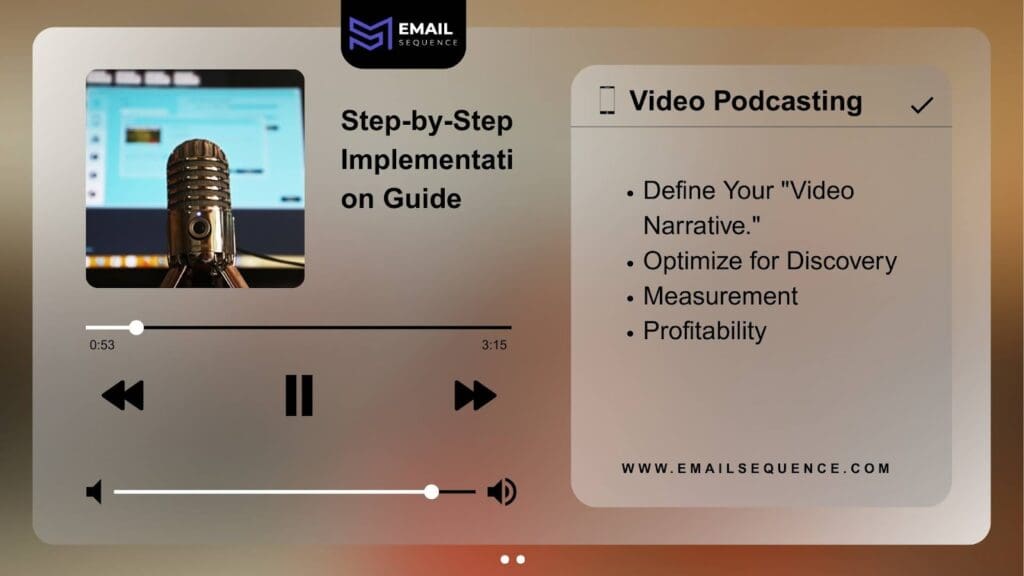
1. Define Your “Video Narrative.”
Do not just film a conversation. Design a visual experience. Plan where you will insert other visual elements or B-roll. Decide if you will use multiple cameras or capture multiple angles to keep the visual pace dynamic.
2. Optimize for Discovery
Understanding the intersection of Podcast SEO and YouTube’s algorithm is vital. Use strategic keywords in your titles and descriptions. Ensure your RSS feed is set up correctly to distribute to Apple Podcasts and other platforms.
3. Measurement
Connect your podcast analytics to your CRM (HubSpot or Salesforce). You must track how many new listeners eventually become leads. This data is critical for proving profitability.
4. Profitability
Understand that B2B Podcast Monetization differs from the “AdSense” model. You are not looking for pennies per view. You are looking for one high-value contract that covers the cost of your video equipment and podcast hosting for a year.
Essential Equipment and Software
To compete, video podcasters must invest in decent gear.
- Video Camera: A DSLR or mirrorless camera provides a professional look that multiple webcams cannot match.
- Audio: High-quality audio is non-negotiable. A dedicated dynamic microphone is essential.
- Lighting: Good lighting can make a cheap camera look expensive.
- Software: Reliable editing software is the final step in ensuring your sound and picture are perfect before you upload and publish.
Conclusion: The Future Is Multi-Channel
We have explored why video podcast content is the ultimate B2B leverage. It allows you to reach a wider audience and repurpose all the videos into hundreds of social posts. Whether you are launching an internal podcast or a public-facing show, adding video creates a richer experience.
The era of traditional podcasts using a static image is fading. To capture attention in 2026, you must embrace the camera. Create content that serves your audience visually and audibly.
Start your video-first journey today to 10x your email reach with an email sequence.
Frequently Asked Questions
What is video podcasting, and how does it differ from audio-only podcasts?
Video podcasting combines audio and video content, offering a visual experience for viewers. Unlike traditional audio-only podcasts, video podcasts use visual elements like facial expressions, screen shares, and data visualizations to engage a broader audience.
How can video podcasting help grow my email list?
Video podcasts offer opportunities to convert viewers into subscribers through lead magnets, optimized YouTube descriptions, and mid-roll visual CTAs. These strategies encourage viewers to sign up for newsletters or download exclusive content.
What equipment is needed to start video podcasting?
Essential equipment includes a high-quality video camera, a dynamic microphone for clear audio, proper lighting, and video editing software. Investing in these tools ensures professional production quality.
Which platforms are best for hosting video podcasts?
Platforms like YouTube, LinkedIn, and TikTok are ideal for video podcasts. They allow you to reach new audiences while podcast hosting services like Riverside or Zencastr ensure high-quality recording and distribution.
How do I optimize my video podcast for SEO?
Use strategic keywords in titles, descriptions, and transcripts. Leverage Podcast SEO to rank video content on Google and ensure your RSS feed is properly set up for distribution across platforms like Apple Podcasts.