How to Create Cold Email Sequence: Complete Step-by-Step Guide
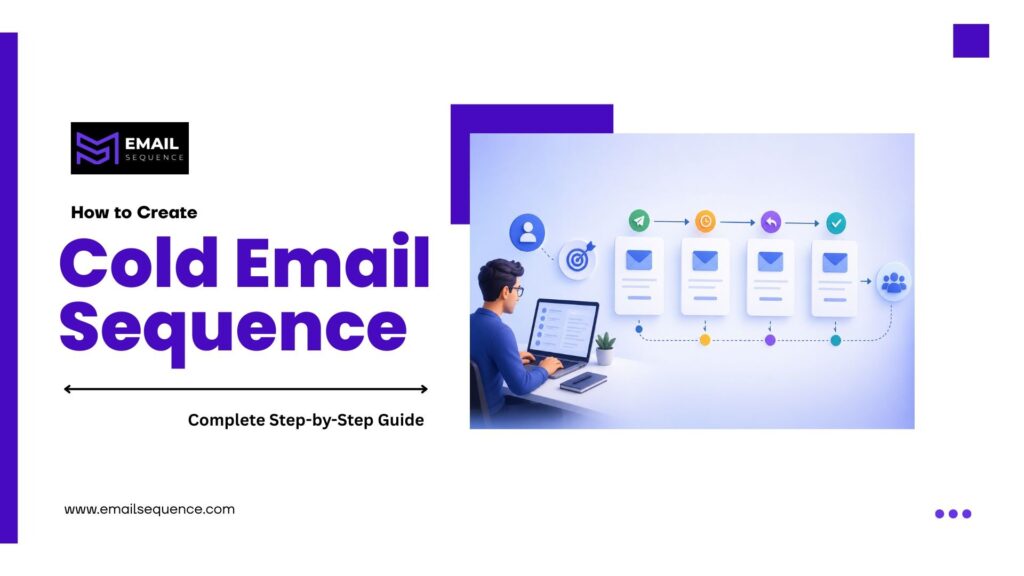
A successful cold email sequence guides prospects from first awareness to a real reply through clear timing, relevance, and value. It does not rely on random follow-ups or repeated “just checking in” emails.
Strong sequences use multi-step campaigns, smart touchpoint planning, natural automated follow-ups, and a focused sequence strategy to start conversations without sounding pushy. When businesses pair strong copy with deliverability control, they improve reply rates, protect sender reputation, and build a more predictable outreach system.
Why Most Cold Email Sequences Fail Before the Second Email
Many outreach campaigns fail because teams treat cold email like a one-time message instead of a structured sales conversation. Prospects receive hundreds of emails every week, so one email rarely earns enough trust or attention.
The “One Email and Hope” Mistake Killing Outreach Campaigns
Many businesses send one cold email and expect a booked meeting. That approach ignores how busy buyers actually respond to new opportunities.
Most prospects need repeated context before they reply. They may notice the first email, ignore the second, and respond when the third message finally connects with their current problem.
A single email often fails because it misses key buyer conditions:
- The prospect has no time when the email arrives
- The offer lacks immediate context
- The CTA feels too heavy
- The sender has not built trust yet
- The message blends into the inbox
A strong cold email sequence solves this by building familiarity step by step.
Why Generic Follow-Ups Damage Reply Rates
Generic follow-ups create fatigue quickly. Messages like “just following up” or “bumping this to the top” give the prospect no new reason to care.
Every follow-up should add a fresh angle, useful insight, or easier way to respond. If the message only repeats the first pitch, it increases spam perception and reduces reply quality.
Better follow-ups should do one clear job:
- Add a new pain-point angle
- Share a relevant result
- Reduce the CTA friction
- Offer a useful idea
- Reframe the problem
This approach makes automated follow-ups feel more human and less robotic..
The Psychology Behind High-Converting Cold Email Sequences
Prospects rarely reply because they need more than information. They need timing, trust, relevance, and a simple reason to respond.
A high-performing cold email sequence respects buyer psychology. It does not push too hard too early, and it does not overwhelm the reader with long explanations.
Why Prospects Rarely Reply to the First Email
The first cold email often reaches someone who does not know the sender, does not expect the message, and may not recognize the problem yet.
That creates a trust gap. Even when the offer sounds useful, the prospect may delay a reply because they need more context.
The first email should not try to close the entire sale. It should open the door with a clear hook and low-pressure CTA.
How Familiarity Increases Reply Probability
Repeated exposure builds recognition. When a prospect sees your name more than once, your message starts to feel less unfamiliar.
This does not mean you should spam them. It means your touchpoint planning should create a natural flow that feels like a helpful conversation.
A good sequence builds familiarity through:
- Consistent sender identity
- Short and useful messages
- Different angles in each email
- Respectful timing gaps
- Clear relevance to the prospect
This structure helps prospects feel more comfortable replying.
The Core Structure of a High-Performing Cold Email Sequence
A strong sequence gives every email a specific role. Each touchpoint should move the conversation forward without repeating the same message.
This structure helps teams build multi-step campaigns that feel thoughtful instead of aggressive.
Step 1 — The Hook Email
The first email should capture attention quickly. It must show that you understand the prospect’s role, company, or problem.
A strong hook email usually includes:
- A short personalized opener
- One clear business problem
- A simple value statement
- One low-friction CTA
- No long introduction
The goal is not to explain everything. The goal is to earn enough interest for a reply.
Step 2 — The Value Expansion Email
The second email should add a fresh reason to care. It should not say “just following up” because that gives the prospect no new value.
Use this email to expand the original idea with a useful insight, practical observation, or stronger business angle.
A strong value expansion email can include:
- New insight: Share a short idea the prospect may not have considered.
- Relevant example: Mention how a similar company handled the same challenge.
- Problem reframing: Show the hidden cost of ignoring the issue.
- Simple next step: Invite them to review an idea, not commit to a call.
- Natural connection: Link the message back to the first email without repeating it.
This step keeps the conversation alive without sounding repetitive.
Step 3 — The Credibility Touchpoint
The credibility email helps reduce doubt. Prospects often ignore cold emails because they do not know whether the sender can actually help.
This touchpoint should prove relevance through evidence, not hype.
Useful credibility elements include:
- Short case study: Mention a result from a similar business or audience.
- Industry proof: Show that you understand the prospect’s market.
- Specific outcome: Use a clear result, such as more replies, more booked calls, or less manual work.
- Process clarity: Briefly explain how your solution works.
- Trust-building CTA: Ask if they want the example or breakdown.
This email should make the prospect feel safer replying.
Step 4 — The Re-Engagement Follow-Up
The re-engagement email gives the prospect another angle when earlier messages did not work. It should not pressure them or sound annoyed.
This email works best when it introduces a new perspective or asks a lighter question.
A good re-engagement follow-up may use:
- Alternative pain point: Approach the same offer from a different problem.
- Curiosity hook: Ask a question that makes the prospect think.
- Mistake angle: Point out a common issue their industry faces.
- Simple resource offer: Offer to send a checklist, example, or idea.
- Easy exit option: Let them say no without feeling pressured.
This step often revives interest because it gives the prospect a new reason to respond.
Step 5 — The Breakup Email
The breakup email closes the sequence respectfully. It should feel polite, simple, and low-pressure. A strong breakup email should include:
- Respectful close: Let the prospect know you will not keep chasing.
- Simple recap: Remind them of the main value in one short line.
- Easy choice: Ask whether the topic is relevant or not a priority.
- No guilt language: Avoid pressure, sarcasm, or fake urgency.
- Future-friendly tone: Keep the door open for later conversations.
The breakup email should protect your brand reputation while giving the prospect one final easy way to respond.
Multi-Step Campaigns: How Many Emails Should You Send?
There is no perfect number for every business. The right length depends on your audience, offer, sales cycle, industry, and deliverability health.
Good multi-step campaigns balance persistence with respect. They stay visible without making prospects feel chased.
The Traditional 5–7 Email Outreach Model
Sales leaders historically taught a standard five-to-seven step framework. This became the standard because older data suggested buyers needed exactly this many touches to convert.
Why Shorter Sequences Sometimes Perform Better
Some modern campaigns perform better with fewer steps because inbox providers watch engagement more closely. Too many low-value emails can increase negative signals.
Shorter sequences work well when the offer is simple, the targeting is strong, and the CTA requires little effort.
A shorter sequence may fit when:
- The audience already understands the problem
- The offer solves a clear pain point
- The list quality is high
- The sales cycle moves quickly
- Deliverability risk matters more than reach
Sequence length should follow buyer behavior, not old outreach rules.
Touchpoint Planning: The Real Secret Behind Consistent Replies
Strong touchpoint planning gives every email a different purpose. It prevents repetition and creates a natural story across the sequence.
Without planning, follow-ups become random reminders. With planning, each message gives the prospect one more reason to engage.
Why Every Email Must Have a Different Job
A sequence should not repeat the same pitch five times. Each email should focus on a new angle that helps the buyer understand the value.
Effective touchpoints often follow a simple journey:
- Awareness of the problem
- Curiosity about the solution
- Trust in the sender
- Comfort with the CTA
- Decision to reply
This journey makes the sequence feel intentional.
Sequencing Different Angles Instead of Repeating the Same Pitch
Different buyers respond to different triggers. Some care about cost, some care about time, and some care about missed growth opportunities.
A strong sequence tests multiple angles without changing the core offer.
Useful angles include:
- Pain-point angle
- Case study angle
- Industry trend angle
- Competitive gap angle
- Risk reduction angle
This variety improves response quality and reduces spam perception.
Automated Follow-Ups Without Sounding Robotic
Automation helps teams scale outreach, but it cannot replace strategy. Robotic automation damages trust because prospects can easily detect generic patterns.
The best automated follow-ups feel timely, personal, and useful.
Why Automation Alone Does Not Scale Outreach
Many teams automate weak emails and then blame the tool when performance drops. Automation only multiplies the quality of the strategy behind it.
If the targeting, offer, or message angle lacks relevance, automation will spread the mistake faster.
Building Personalized Automated Follow-Ups
Personalized automation uses structured variables and relevant triggers. It does not insert fake compliments or awkward AI-generated lines.
Better personalization can include:
- Industry-specific pain points
- Role-based challenges
- Company growth signals
- Recent hiring activity
- Tool or workflow references
This helps the sequence feel useful without requiring full manual writing for every prospect.
Behavior-Based Sequence Logic
Modern tools can adapt follow-ups based on prospect behavior. This makes the sequence feel more relevant and reduces unnecessary emails.
Behavior signals can guide the next message:
- Multiple opens may show interest
- Link clicks may suggest stronger intent
- Replies should stop the sequence
- No engagement may require a different angle
- Negative replies should update targeting rules
Drip Outreach Strategy for Modern Cold Email Campaigns
Drip outreach focuses on gradual relationship-building rather than aggressive pitching. It helps prospects understand your relevance across several useful touchpoints.
This approach works well for B2B offers where trust matters before action.
What Is Drip Outreach?
Drip outreach sends a planned series of emails over time. Each email adds value, context, or proof instead of repeating the same offer.
A good drip approach makes the prospect feel guided, not pressured.
Why Drip Outreach Works Better Than Aggressive Pitching
Aggressive pitches create resistance because they ask for too much too early. Drip outreach lowers resistance by building context first.
This method supports better:
- Trust building
- Reply quality
- CTA acceptance
- Brand perception
- Deliverability signals
It also gives prospects time to respond when the need becomes active.
Combining Email With Multi-Channel Touchpoints
Modern campaigns require more than just email. Integrate these additional channels to surround the buyer:
- LinkedIn profile visits and connection requests.
- Personalized voice notes via social platforms.
- Social engagement on their recent public posts.
Cold Email Sequence Optimization Framework
Optimizing your outreach requires a clear understanding of each step. Review this framework to identify and fix common pipeline leaks:
| Sequence Element | Strategic Goal | Common Mistake | Optimization Strategy | Expected Outcome |
| Initial Email | Capture attention | Long introductions | Use short personalized hooks | Higher open and read rates |
| Follow-Up #1 | Reinforce value | Generic bump email | Add new specific insight | Increased positive replies |
| Follow-Up #2 | Build trust | Repeating same pitch | Introduce proof or case study | Higher credibility perception |
| Breakup Email | Trigger response | Aggressive pressure | Use respectful close | Last-minute conversions |
| Timing Strategy | Maintain visibility | Sending too frequently | Space touchpoints naturally | Lower spam complaints |
| Automation Logic | Scale outreach | Robotic personalization | Use behavior-based triggers | Highly relevant conversations |
Conclusion
A successful cold email sequence does not rely on persistence alone. It uses smart touchpoint planning, concise messaging, thoughtful personalization, and strategic automated follow-ups to create a natural conversation with prospects. Businesses that build intentional multi-step campaigns and a clear sequence strategy generate stronger reply rates, better meeting opportunities, and a healthier sender reputation.
The best outreach systems focus on relevance, timing, deliverability, and buyer psychology. Instead of sending more emails without direction, teams should send better emails with a clear purpose at every step.
Visit emailsequence.com to learn more about winning email sequences and improve your campaign.
Frequently Asked Questions
What is a cold email sequence?
A cold email sequence is a planned series of outreach emails sent to prospects who have not spoken with your business before. It usually includes an initial message, value-based follow-ups, credibility touchpoints, and a respectful closing email. The goal is to build enough relevance and trust to earn a reply.
How many emails should a cold email sequence include?
Most B2B sequences include 3 to 7 emails, but the best number depends on the audience, offer, and sales cycle. Shorter sequences often work better for simple offers, while enterprise campaigns may need more context. Teams should monitor replies, negative responses, and deliverability before adding more steps.
What should the first cold email include?
The first cold email should include a short personalized hook, one clear problem, one value statement, and one easy CTA. It should avoid long introductions and heavy meeting requests. The first message should create enough curiosity for the prospect to reply or continue reading the sequence.
How do automated follow-ups improve outreach?
Automated follow-ups improve consistency by making sure prospects receive timely messages after the first email. Strong follow-ups add new value instead of repeating the same pitch. Behavior-based automation can also adjust messages based on opens, clicks, replies, or non-engagement.
What is touchpoint planning in cold email?
Touchpoint planning means giving every email in the sequence a specific purpose. One email may introduce the problem, another may share proof, and another may reduce CTA friction. This prevents repetition and helps the sequence feel like a structured conversation instead of random follow-ups.