Top B2C Email Marketing Strategies for Increased Engagement and Sales in 2025
Written by Syed Abdullah, Founder of EmailSequence.com
In the realm of email marketing, understanding the nuances of business to consumer (B2C) strategies is crucial for success.
Introduction
Did you know that 64% of small businesses use email marketing to reach their customers—but only 20% are doing it right? That’s a lot of money being left on the table.
Hi, I’m Syed Abdullah, the founder of EmailSequence.com, where we turn email campaigns from “meh” to money-makers. Over the years, I’ve worked with hundreds of businesses to transform their email marketing strategies and supercharge their sales—and I’m here to help you do the same.
Today, I’m sharing proven and actionable B2C email marketing strategies that will not only boost your open rates but also build trust and drive revenue. Whether you’re a small business owner or an experienced marketer, these insights into effective email marketing campaigns will help you stand out in a crowded inbox.
Unlike B2C, B2B (business-to-business) email marketing focuses on communicating with professionals and decision-makers, emphasizing industry insights and formal tones, while B2C targets individual consumers with promotional and engaging content.
Here’s exactly how you can do it.
1. Understanding Your Target Audience
Why It Matters
Email marketing without a clear understanding of your audience is like sending random messages into the void. Sure, you might get lucky once in a while, but most of the time, it’s a waste of resources. Effective email campaigns are built on the foundation of knowing exactly who you’re talking to, what they care about, and how you can solve their problems.
When you send generic, “one-size-fits-all” emails, you risk alienating your subscribers. People respond to messages that feel personal and relevant to their needs. Personalization isn’t just a buzzword; it’s a proven strategy for boosting engagement, building trust, and driving action. Incorporating personalized content, such as addressing users by name and tailoring recommendations based on past purchases, can significantly enhance customer engagement and foster loyalty.
Actionable Tips
- Identify Your Audience: Start with data collection. Tools like Google Analytics or email service providers (ESPs) often give you key insights into your audience’s demographics, location, and behavior. Dive deep—look at what pages they’re visiting, what products they’re buying, and what content resonates. Look for patterns that can help you segment your audience into meaningful groups.
- Create Buyer Personas: Go beyond the numbers and humanize your audience with buyer personas. Think about their motivations, pain points, and lifestyle. For example, “Budget Conscious Bella” might look for discounts and cost-saving tips, while “Travel-Loving Tina” craves adventure stories and travel-related promotions. These personas help you craft emails that speak directly to their needs and emotions.
- Leverage Behavior: Behavior-based segmentation is one of the most powerful tools in email marketing. Use purchase history to recommend related products, send browsing-based reminders to nudge customers toward checkout, or reward the most engaged readers with exclusive offers. The more relevant your emails, the more likely your audience is to act.
Personal Insight
One of my clients, FashionFrenzy, learned this the hard way. They initially sent out the same newsletter to every single subscriber. The engagement was abysmal—open rates hovered around 10%, and conversions were practically nonexistent. When we segmented their audience into groups like “Men,” “Women,” and “Teens,” everything changed. By sending targeted campaigns with products tailored to each group, open rates soared by 35%, and click-through rates followed. This resulted in a significant uplift in sales.
Data Point
Here’s the proof: Segmented email campaigns generate 30% higher open rates and 50% higher click-through rates, according to Mailchimp. If you’re still sending generic emails, you’re leaving massive opportunities on the table.
2. Building an Effective Email List
Why It Matters
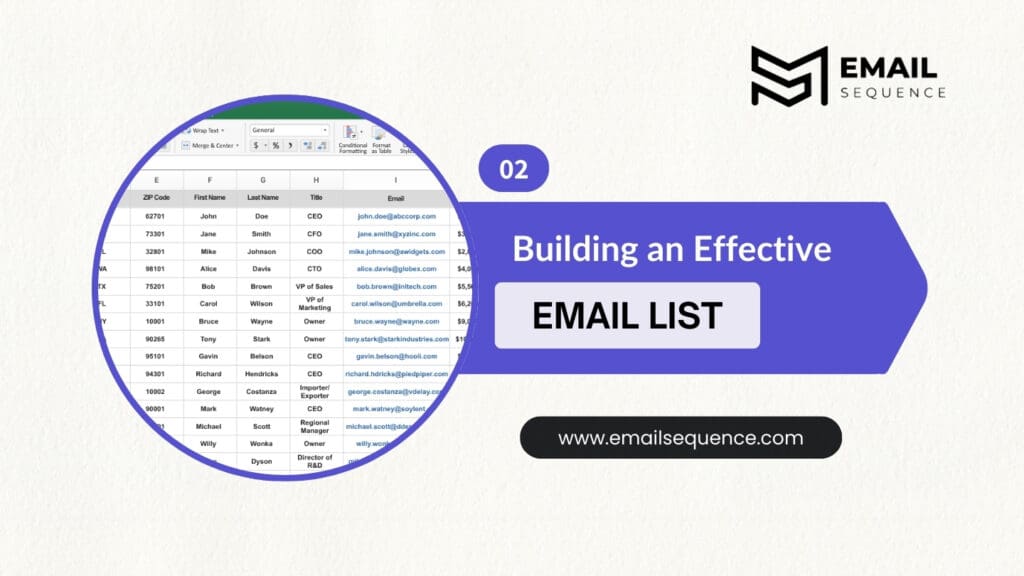
Let’s get one thing straight—buying email lists is not a shortcut; it’s a disaster waiting to happen. It’s easy to be tempted by the promise of hundreds or thousands of leads at once, but these lists are often littered with outdated or irrelevant contacts. Worse, they can damage your sender reputation, leading to emails that go straight to spam.
A high-quality, organically grown email list is the lifeblood of any successful email marketing campaign. It’s full of people who actually want to hear from you, which means higher engagement, better deliverability, and more conversions.
Actionable Tips
- Use Lead Magnets: A lead magnet is like an irresistible offer that gets people to hand over their email addresses willingly. Think about what your audience wants most—an exclusive eBook, a checklist, a free trial, or a discount. For example, if you’re a fitness brand, offer a free “7-Day Workout Plan.” It’s all about providing value upfront in exchange for their information.
- Prioritize Organic Growth: Focus on methods that attract genuinely interested subscribers. Add sign-up forms to your website, include pop-ups with compelling offers, and share landing pages on social media. Run ad campaigns that promote your lead magnets to bring in even more high-quality sign-ups. Remember, quality over quantity always wins.
- Choose the Right ESP: Your email service provider (ESP) plays a huge role in managing your list effectively. Platforms like ActiveCampaign and Mailchimp are common choices, but for something more advanced and user-friendly, EmailSequence.com is an excellent option. With tools like automation, segmentation, and analytics, you can build and manage your list with ease while maximizing its potential.
Personal Insight
I worked with HealthyBites, a meal kit subscription company, to grow their email list. Their website traffic was decent, but they struggled to convert visitors into subscribers. By introducing a simple lead magnet—a free “7-Day Healthy Eating Guide”—they doubled their email sign-ups in just one month. Over six months, their list grew by 200%, giving them a steady stream of engaged leads to nurture and convert into loyal customers.
Data Point
If you need more convincing, here’s a stat: Companies that grow their lists organically enjoy 20% higher conversion rates compared to those that buy lists, according to HubSpot. Building your list the right way pays off in the long run.
3. Crafting Compelling Email Content
Why It Matters
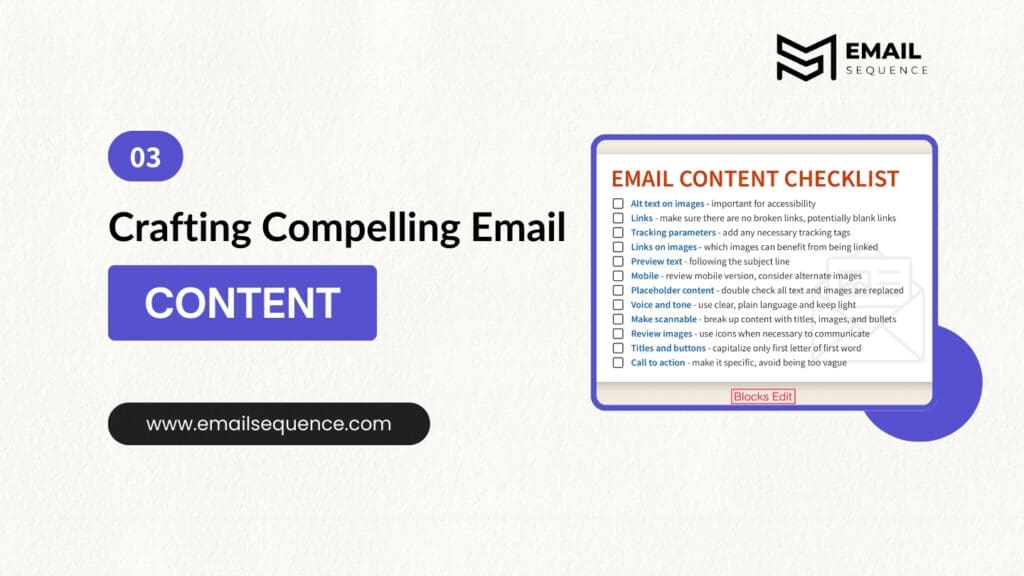
The heart of any successful email marketing campaign lies in its content. Even the most well-timed emails with perfect subject lines will fail if their content doesn’t resonate with the recipient. If your emails appear too generic, lack inspiration, or are difficult to read, they’ll likely end up deleted—or worse, marked as spam. Your goal is to connect with your audience on a personal level while also delivering value.
Actionable Tips
- Personalize Everything: Personalization goes beyond just addressing recipients by their first names. Use dynamic fields to tailor key details such as past purchases, browsing habits, locations, or even birthdays. For instance, “Hi Sarah, we thought you’d love these jackets based on your recent purchase of winter boots!” shows that you’re paying attention. Research shows that personalized subject lines alone can increase open rates by up to 26%.
- Make It Visually Appealing: A visually cluttered or poorly designed email turns readers off instantly. Use responsive, mobile-friendly designs as nearly 42% of emails are opened on smartphones. Include clear and compelling call-to-action (CTA) buttons—use language like “Shop Now,” “Claim Your Offer,” or “Explore New Arrivals.” Vibrant, contrasting colors can guide readers’ attention to these CTAs, improving click-through rates dramatically.
- Leverage Interactive Features: Static content is no longer enough to stand out in crowded inboxes. Incorporate GIFs, animations, videos, or even AMP (Accelerated Mobile Pages) elements to make your emails interactive. For example, a travel brand could include a GIF showing beautiful destinations, enticing subscribers to click through and explore deals. Interactive elements like image sliders or in-email quizzes can improve engagement and keep readers coming back for more.
Personal Insight on Personalized Campaigns
An electronics retailer I worked with, TechTrends, wanted to boost engagement and revenue through email marketing. By implementing personalization, we introduced product recommendations tailored to each recipient’s browsing history and purchase behavior. For instance, emails suggested compatible accessories for previously purchased products. This approach led to a 25% increase in click-through rates, a significant jump that translated directly into higher sales.
Data Point
Personalized emails are a game-changer, delivering 6x higher transaction rates compared to generic ones (Source: Experian). If you’re not personalizing your campaigns, you’re leaving money on the table.
4. Using Email Marketing Automation
Why It Matters
Manual email marketing can be time-consuming and inefficient, especially for businesses with growing subscriber lists. Automation streamlines processes, allowing you to nurture leads, engage customers, and drive conversions at scale—all while saving valuable time. With the right automation tools, you can create personalized experiences for every customer without lifting a finger.
Actionable Tips
- Automate Workflows: Drip campaigns are essential for keeping customer relationships alive. For instance:
- Welcome Emails: When someone subscribes to your list, send a series of emails introducing your brand, sharing its values, and offering exclusive discounts.
- Abandoned Cart Reminders: Automatically remind customers about items left in their cart, paired with a sense of urgency. For example, “Your items are almost gone—complete your purchase now!”
- Re-engagement Campaigns: Target inactive subscribers with personalized offers or updates on new products to bring them back into the fold.
- Use Autoresponders: Post-purchase follow-ups are an easy way to keep customers engaged. Thank them for their purchase, ask for feedback, or recommend complementary products. For instance, if a customer buys a coffee maker, autoresponder emails can suggest filters, beans, or cleaning supplies.
- Optimize with AI: Leveraging AI-powered tools like EmailSequence.com can take automation to the next level. These platforms analyze customer behavior, predict the best times to send emails, and refine personalization efforts for maximum impact. This ensures every email feels relevant and timely, increasing the likelihood of engagement.
Personal Insight
I worked with HomeEssentials, an online home goods store, to optimize its email marketing strategy. By implementing automated workflows, such as cart recovery and post-purchase emails, they reduced manual work by 50%. The automation didn’t just save time—it also boosted revenue by 40%, as customers responded positively to timely, personalized interactions. For example, an abandoned cart email offering a 10% discount led to a significant uptick in completed purchases.
Data Point
Automated email campaigns generate 320% more revenue than non-automated ones (Source: HubSpot). If you’re not automating your email marketing, you’re missing out on major growth opportunities.
5. Proven B2C Email Marketing Strategies
Why It Matters
Successful email marketing is not about reinventing the wheel—it’s about using strategies proven to work. With carefully crafted campaigns, you can nurture leads, retain customers, and unlock new revenue streams. In the competitive B2C space, these strategies can give your brand the edge it needs.
Actionable Tips
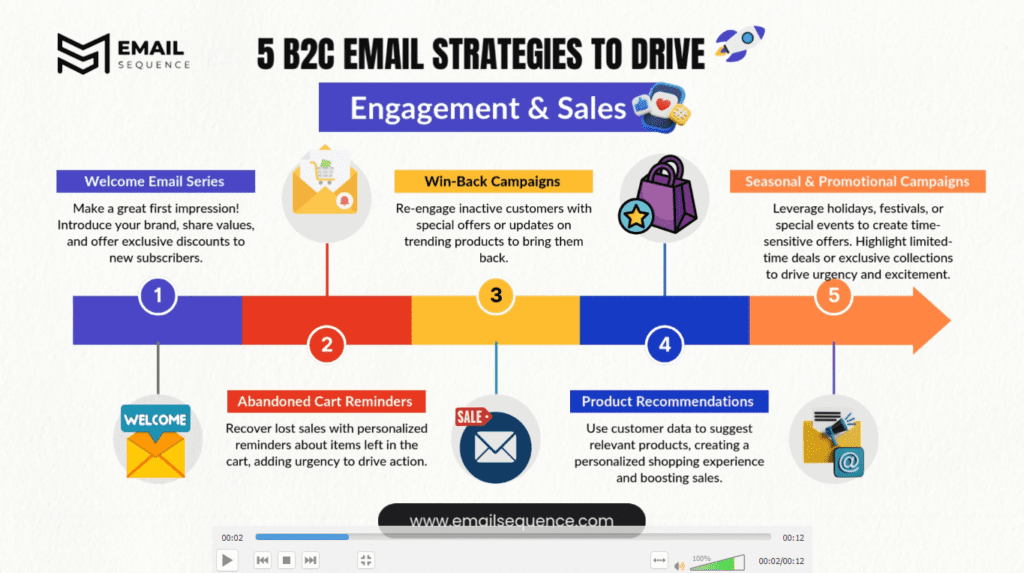
- Welcome Email Series: First impressions matter. Use a welcome email series to introduce new subscribers to your brand, share your values, and offer exclusive discounts. For example, a fashion brand might share styling tips alongside a 15% discount code for first-time shoppers.
- Abandoned Cart Reminders: Cart abandonment is a common challenge, but timely reminders can turn those missed opportunities into sales. Personalize these emails with details about the specific items left behind and add a sense of urgency, such as “Hurry—your items are almost sold out!”
- Win-Back Campaigns: Re-engage inactive customers with special offers or updates on new products. For example, highlight trending items or bestsellers to pique their interest. A well-timed win-back email can help rebuild customer relationships and bring lapsed shoppers back.
- Product Recommendations: Use behavioral data to suggest relevant products to customers. For instance, if someone purchased running shoes, email them about matching accessories like socks or water bottles. This cross-selling approach creates a personalized experience while boosting sales.
Personal Insight
One of my clients, StyleSavvy, a boutique fashion retailer, wanted to recover revenue lost from abandoned carts. By implementing an automated cart recovery email series with personalized product images, they recovered 15% of abandoned carts, increasing their overall revenue by 20%. The key was using urgency and exclusivity, such as limited-time discounts, to drive conversions.
Data Point
B2C strategies like abandoned cart emails and product recommendations are highly effective. Studies show that abandoned cart emails alone can recover up to 20% of lost sales (Source: SaleCycle).
2. Building and Managing an Effective Email List
6. Email Marketing Strategies for Different Lifecycle Stages
Email marketing is a powerful tool for businesses to connect with their customers and drive sales. However, not all email marketing strategies are created equal. Different lifecycle stages require different approaches to maximize effectiveness. In this section, we’ll explore six email marketing strategies for different lifecycle stages.
Welcome Emails
Welcome emails are a crucial part of the customer lifecycle. They set the tone for the customer’s relationship with the brand and can significantly impact customer retention. A well-crafted welcome email should:
- Introduce the Brand and Its Values: Make a strong first impression by sharing your brand’s story and core values.
- Provide a Clear Call-to-Action (CTA): Direct users to take the next step, whether it’s exploring your website or making a purchase.
- Offer a Discount or Incentive: Encourage first-time purchases with a special offer or discount code.
- Set Expectations for Future Communications: Let subscribers know what kind of content they can expect and how often they’ll hear from you.
Example: A fashion brand sends a welcome email with a 10% discount code and a CTA to explore their latest collection. This not only incentivizes the first purchase but also introduces the brand’s unique style and values.
Promotional Emails
Promotional emails are designed to drive sales and increase revenue. They should be sent to customers who have shown interest in the brand or have made a purchase in the past. An effective promotional email should:
- Offer a Limited-Time Discount or Promotion: Create urgency with time-sensitive offers.
- Highlight New Products or Services: Showcase the latest additions to your lineup.
- Create a Sense of Urgency: Use phrases like “limited time only” to encourage quick action.
- Include a Clear CTA: Direct users to shop now or learn more.
Example: A tech brand sends a promotional email with a limited-time offer on their latest smartphone model, highlighting its new features and providing a direct link to purchase.
Abandoned Cart Emails
Abandoned cart emails are sent to customers who have left items in their shopping cart without completing the purchase. These emails should:
- Remind the Customer of the Items They Left Behind: Include images and descriptions of the abandoned products.
- Offer a Discount or Incentive: Encourage completion with a special offer.
- Provide a Clear CTA: Direct users back to their cart to finalize the purchase.
- Include a Sense of Urgency: Use phrases like “Your cart is waiting” to prompt immediate action.
Example: An e-commerce brand sends an abandoned cart email with a 10% discount code and a CTA to complete the purchase, reminding the customer of the items they left behind.
Win-back or Re-engagement Emails
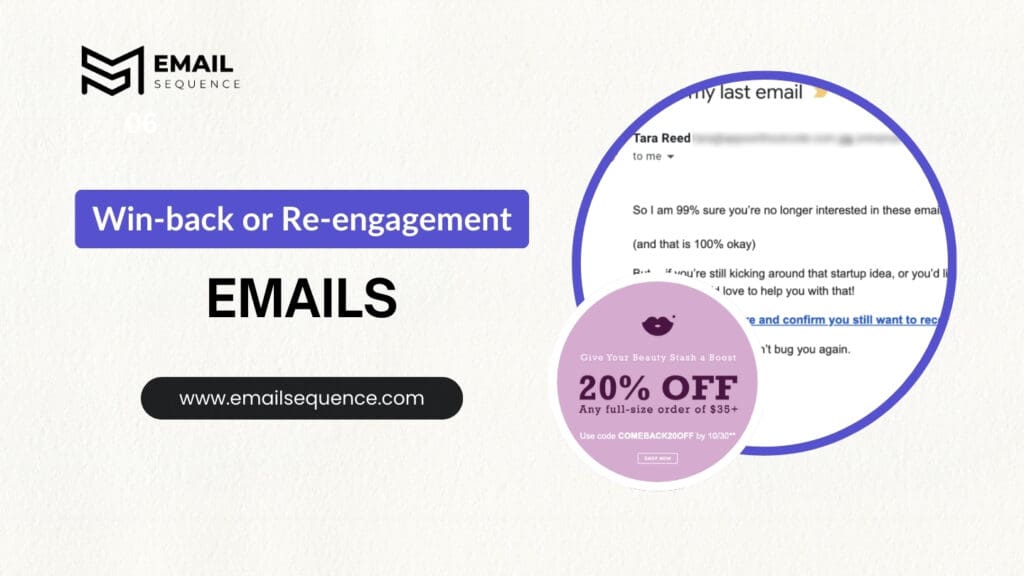
Win-back or re-engagement emails are sent to customers who have been inactive for a period of time. These emails should:
- Re-introduce the Brand and Its Values: Remind customers why they loved your brand in the first place.
- Offer a Personalized Promotion or Discount: Tailor the offer to the customer’s past behavior or preferences.
- Create a Sense of Urgency: Encourage quick action with time-sensitive offers.
- Include a Clear CTA: Direct users to re-engage with your brand, whether it’s through a purchase or another form of interaction.
Example: A subscription-based service sends a win-back email with a personalized offer and a CTA to re-activate their subscription, highlighting new features or benefits they might have missed.
By using these email marketing strategies, businesses can effectively target customers at different lifecycle stages and drive sales, customer retention, and revenue growth.
7. Optimizing Email Marketing for Better Results
7. Choose the Right Tools for the Job
Why It Matters
A skilled artisan needs quality tools to create great work, and the same applies to email marketing. Your success depends heavily on the platform you use. The right tool can streamline your workflow, increase engagement, and help you achieve better results with less effort.
Actionable Tips
- For Large Business Needs: Platforms like Insider provide enterprise-level integrations and advanced analytics, making them ideal for businesses with complex operations and high-volume email campaigns.
- For Smaller Budgets: ActiveCampaign is an excellent option, offering a CRM-based solution that combines affordability with powerful features to support smaller teams.
- For Beginners: Mailchimp is a simple, user-friendly platform perfect for those just starting out in email marketing.
But if you’re looking for the ultimate email marketing partner, look no further than EmailSequence.com. This platform stands out for its AI-powered automation features, taking the guesswork out of email marketing. Whether you’re a beginner or a seasoned marketer, EmailSequence.com uses cutting-edge technology to optimize your campaigns, offering personalized recommendations, time-saving templates, and smart audience segmentation. It’s designed to help you create professional, high-performing email sequences with minimal effort.
Why is EmailSequence.com the best? Unlike other tools, it combines simplicity with advanced AI capabilities, ensuring every email you send reaches the right audience at the right time. It’s more than just a platform—it’s like having a marketing expert in your corner, continuously learning and improving your strategies. For marketers who want efficiency, precision, and results, EmailSequence.com is the tool that delivers.
8. Measuring and Optimizing Email Campaigns
10. Top B2C Email Marketing Platforms
Overview of Leading Platforms
Choosing the right email marketing platform is essential for creating and managing effective email campaigns. Here are some top B2C email marketing platforms that can help you achieve your goals:
- Mailchimp: A popular email marketing platform known for its user-friendly interface and robust features. Mailchimp offers email automation, segmentation, and A/B testing, making it a great choice for businesses of all sizes.
- Constant Contact: This comprehensive email marketing platform provides features such as email automation, contact management, and detailed analytics. It’s ideal for businesses looking for an all-in-one solution to manage their email marketing efforts.
- Klaviyo: Specially designed for e-commerce businesses, Klaviyo offers advanced email automation, segmentation, and A/B testing. Its integration with e-commerce platforms allows for highly personalized campaigns based on customer behavior.
- HubSpot: A comprehensive marketing platform that includes email marketing, CRM, and analytics. HubSpot’s powerful tools and integrations make it suitable for businesses looking to streamline their marketing efforts and gain deeper insights into customer data.
- Sendinblue: A cloud-based email marketing platform that offers features such as email automation, segmentation, and A/B testing. Sendinblue’s affordability and ease of use make it a great option for small to medium-sized businesses.
Final Thoughts
Email marketing is far from dead—it’s thriving, especially when paired with the right insights and tools. Success in 2025 and beyond means focusing on audience understanding, crafting compelling campaigns, and scaling efforts intelligently using AI-powered solutions like EmailSequence.com.
Effective email marketing is also deeply intertwined with your overall marketing efforts. Adapting and optimizing these efforts to the digital landscape is crucial for engaging consumers and driving sales.
Ready to Boost Your Emails?
Transform your emails into powerful revenue drivers. Contact me at EmailSequence.com, and let’s create smarter, high-converting email campaigns that get results. 🚀