How Email Marketing Can Help SEO | EmailSequence.com
When it comes to executing a killer digital strategy, email marketing and SEO usually sit in separate meetings. But what if I told you that together, they could supercharge your results? Combining email marketing with SEO isn’t just an option anymore—it’s a necessity for businesses looking to dominate the digital space and enhance their digital marketing efforts.
Here at EmailSequence.com, we’ve helped countless businesses seamlessly integrate these two powerful tools using AI-powered precision. The result? Better content visibility, increased website traffic, and higher ROI. Let’s explore how email marketing can become your secret weapon for SEO success.
Understanding the Basics – SEO and Email Marketing
1. What is SEO?
Search Engine Optimization, or SEO, is the foundation of digital visibility. Want your website to rank higher on Google? That’s SEO at work.
Key pillars of SEO include:
- Keywords: The building blocks of online search.
- On-page & Off-page SEO: From meta tags to backlinks.
- High-quality content: Content that drives engagement and trust.
- E-E-A-T: Expertise, experience, authoritativeness, and trustworthiness—all signals search engines love.
- Keyword Research: The process of identifying and using relevant keywords to improve content visibility and engagement.
SEO ensures you’re not lost in the digital noise by connecting you with the right audience.
2. How Search Engines Work
Search engines are complex systems that play a crucial role in the digital landscape. Understanding how they work is essential for effective SEO and email marketing strategies. Here’s a simplified overview:
- Crawling: Search engines use software programs called “crawlers” or “spiders” to continuously scan and index web pages. These crawlers follow links from one page to another, discovering new content and updating existing entries.
- Indexing: When a crawler finds a new page, it adds it to a massive database called an index. The index is essentially a vast library of web pages that search engines use to generate search results. Proper indexing ensures that your content is available for retrieval when users search for relevant keywords.
- Retrieval: When a user submits a search query, the search engine’s algorithm retrieves a list of relevant web pages from the index. This process involves matching the query with the most appropriate content based on various factors like keywords, relevance, and user intent.
- Ranking: The algorithm then ranks the retrieved pages in order of relevance, authority, and user experience. The top-ranked pages are displayed on the search engine results page (SERP). Factors like high-quality content, backlinks, and user engagement play a significant role in determining these rankings.
Understanding these steps helps you optimize your web pages and email marketing strategies to align with how search engines operate, ultimately improving your visibility and search engine rankings.
2. What is Email Marketing?
Email marketing, on the other hand, is all about hitting the inbox jackpot. It’s how you deliver content, offers, and updates directly to those who already care about your brand.
Key features of high-performing email strategies:
- Audience segmentation for personalized outreach.
- Dynamic subject lines optimized for clicks.
- Unbeatable open rates, thanks to tools like domain authority and IP whitelisting.
3. The Connection Between SEO and Email Marketing
SEO and email marketing are often treated as separate strategies, but combining them can supercharge your results. Here’s why they work so well together:
- SEO helps your content rank high in search results, making it easier for people to find your brand. Since 68% of all online experiences start with a search engine, strong SEO is essential.
- Email marketing ensures your audience sees and engages with your content. With an average ROI of $42 for every $1 spent, it’s one of the most cost-effective ways to reach people directly.
When used together, these two strategies create a powerful loop. SEO attracts new visitors to your site, while email marketing re-engages them and drives them back to your content or products.
Here’s how to align them:
- Use email campaigns to share SEO-optimized blog posts or resources. This boosts traffic and signals to search engines that your site is valuable, improving your rankings.
- Use SEO to grow your email list by driving traffic to lead magnets like newsletters or downloadable content.
Together, SEO and email marketing build traffic, engagement, and conversions. Aligning these strategies helps you increase content visibility, strengthen audience relationships, and achieve sustainable growth.
How Email Marketing Supports SEO
1. Driving Traffic & Boosting On-Site Engagement
Think of each email you send as a one-way ticket to your website. Emails with clickable links and strong CTAs channel high-quality traffic directly to your blog posts, landing pages, and product pages, engaging site visitors effectively. Better yet, these users are already interested in your content, reducing bounce rates and increasing time spent on site.
Here’s an example from EmailSequence.com. Using AI-backed segmentation, one client achieved a 35% traffic spike to their blog posts by targeting niche audiences through email. Stronger site metrics like these send positive signals to search engines, boosting your rankings.
2. Building Trust & Authority (E-E-A-T)
Email marketing isn’t just about promotions; it’s about building relationships. By regularly sharing expert insights, curated content, and relevant news, you establish yourself as an industry authority. Increased trust with your audience translates to more backlinks, mentions, and higher credibility—all of which fuel SEO success and improve search rankings.
3. Natural Link Building via Email
Promoting blog content in your newsletters or drip campaigns creates opportunities for organic shares and backlinks. Encourage your readers to forward your emails or share the links with their networks, and watch your SEO improve as your content gains traction.
4. Refining Your Content Strategy
Email analytics are a goldmine. Metrics like click-through rates and open rates tell you exactly what your audience wants. Tools like AI segmentation at EmailSequence.com help you refine your SEO content strategy to match intent, ensuring every blog post resonates with your audience and aligns with effective SEO strategies.
5. Crafting Compelling Subject Lines for Visibility
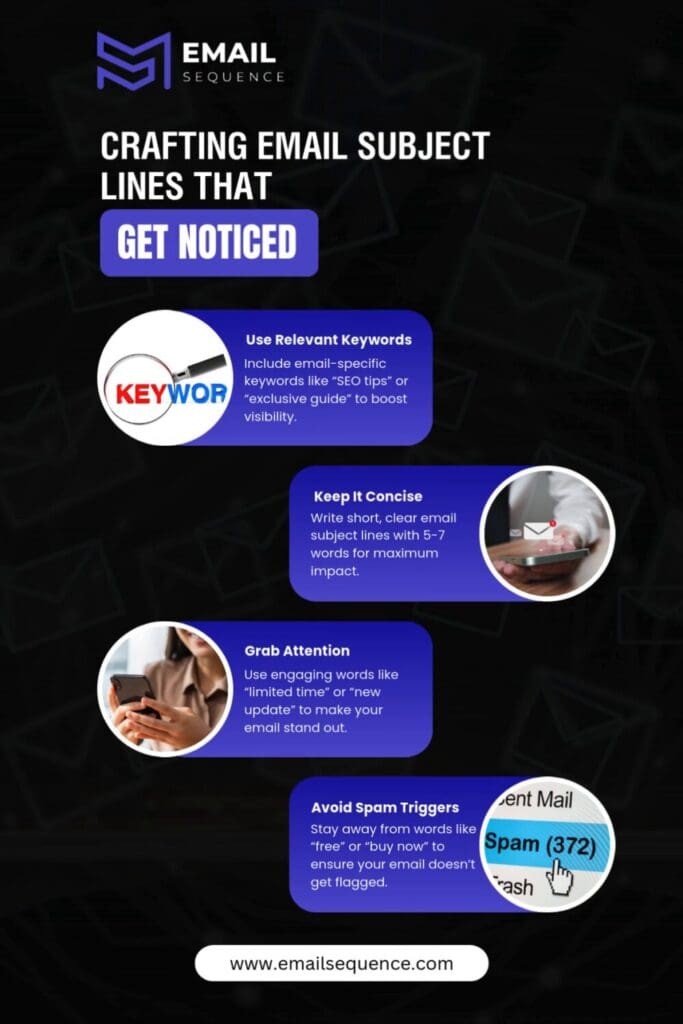
Crafting compelling subject lines is crucial for email marketing campaigns. A well-crafted subject line can increase open rates, boost engagement, and even improve SEO visibility. Here are some tips:
- Use Relevant Keywords: Incorporate relevant keywords from your email content into your subject line. This helps search engines understand the content of your email and can improve visibility in search results. For example, if your email is about SEO tactics, include keywords like “SEO” or “search engine optimization” in the subject line.
- Keep It Concise: Keep your subject line short and to the point. Aim for 5-7 words that accurately summarize the content of your email. Concise subject lines are more likely to catch the reader’s attention and avoid being truncated in the inbox.
- Use Attention-Grabbing Language: Use action-oriented language that encourages the reader to open the email. Words like “exclusive,” “limited time,” or “new” create a sense of urgency and entice readers to click. For instance, “Exclusive SEO Tips Inside” can be more compelling than a generic subject line.
- Avoid Spam Triggers: Avoid using spam triggers like “free,” “discount,” or “buy now” in your subject line. These words can trigger spam filters and reduce deliverability. Instead, focus on creating value-driven subject lines that resonate with your audience.
By following these tips, you can craft subject lines that not only boost your email open rates but also enhance your overall email marketing strategy.
How SEO Supports Email Marketing
1. Organic Traffic for List Building
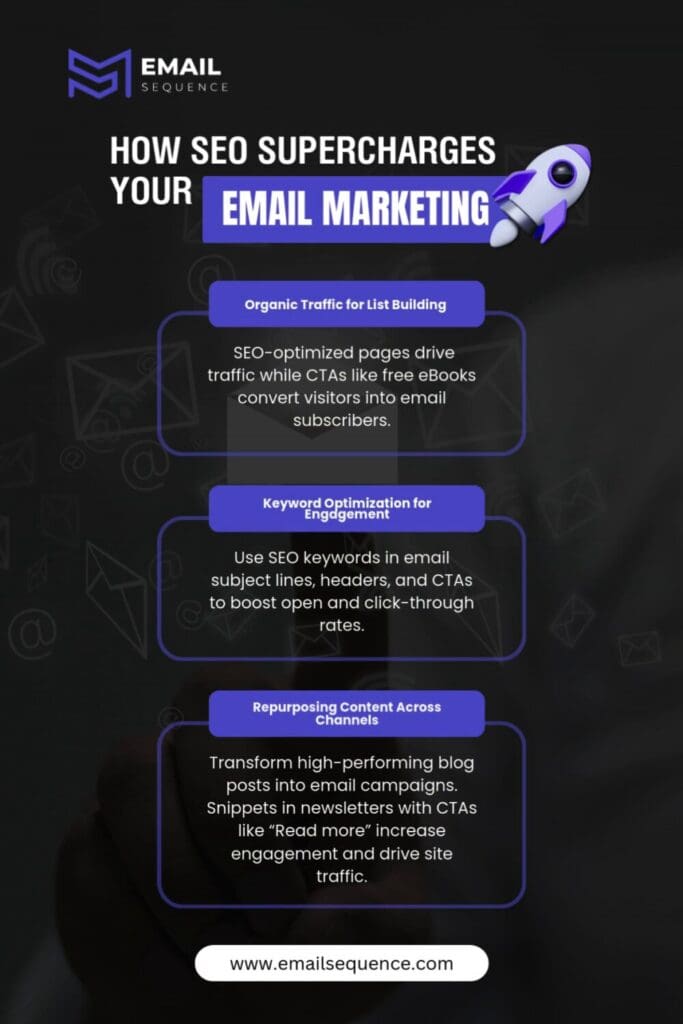
SEO-optimized blog posts and landing pages don’t just drive readers—they help you grow your email list by improving visibility in Google search. By including irresistible CTAs on high-traffic pages (like free eBooks or exclusive offers), your organic visitors can seamlessly convert into email subscribers.
Pro tip from Syed Abdullah: “Your signup forms must align with a clear, value-packed offer. Think seasonal guides, rare discounts, or exclusive whitepapers.”
2. Keyword Optimization for Better Email Engagement
SEO research often uncovers high-impact keywords. Use these in your email subject lines, headers, and CTA buttons to increase open rates and boost click-throughs. Imagine an email header like, “The 5 Proven LinkedIn SEO Tactics You Need”—that’s pure clickbait magic.
3. Repurposing Content Across Channels
Got a killer blog post? Repurpose sections of it into email campaigns to bring readers back to your site. For instance, highlight the juiciest snippets in a newsletter and add a CTA prompting users to “Read more.” This cross-channel engagement benefits both your SEO and email metrics.
Technical Synergies Between SEO and Email
1. Domain Authority, IP Whitelisting, & Deliverability
Build Domain Authority and Keep Your Emails Out of Spam
A strong domain authority is crucial for ensuring your emails land in inboxes instead of being flagged as spam. Think of it as SEO for your email address—just like how a high-ranking website is more likely to appear on Google’s first page, a trusted domain ensures successful email delivery.
At EmailSequence.com, our AI tools do more than enhance your SEO strategy—they actively improve your email deliverability.
Why Domain Authority Matters
- E-commerce Businesses: Promotional emails like “20% Off This Weekend” or “New Arrivals Just Dropped” can often get flagged as spam. Our AI optimizes your campaigns to ensure they land in your customers’ primary inbox, boosting visibility and click-through rates.
- B2B Sales: Poor domain reputation can send crucial follow-ups or proposals straight to spam. Our tools help maintain a strong domain reputation, ensuring your emails reach decision-makers.
How We Help
Our AI-driven platform improves domain authority by:
- Implementing best authentication practices (SPF, DKIM, DMARC)
- Cleaning and managing email lists
- Crafting engaging, spam-compliant content
Whether you’re reaching out to prospects, nurturing leads, or sending newsletters, domain authority is the key to higher open rates and better engagement. Let EmailSequence.com ensure your messages always make it to inboxes—not spam folders.
2. Technical SEO & User Experience
Key SEO Factors for Seamless Post-Click Interactions
Improving post-click interactions starts with addressing key SEO elements like site speed, mobile responsiveness, and user experience. Here’s how these factors can make or break your efforts:
1. Site Speed
- Why it matters: Studies show users abandon pages that take more than a few seconds to load.
- Example: If your blog post or product page loads slowly, visitors may leave before engaging with your content.
- Tip: Optimize your page speed to ensure users stay and explore.
2. Mobile Responsiveness
- Why it’s critical: A growing number of users browse on their phones, and clunky, poorly designed pages can drive them away.
- Example: Imagine a user clicking on an email link to a webinar sign-up page. If the page doesn’t adapt to their phone’s screen—requiring endless zooming or scrolling—they’ll likely give up.
- Tip: Design pages that fit smaller screens without sacrificing usability. Buttons like “Add to Cart” or “Sign Up” should be easy to see and click.
3. Consistent User Experience
- Why it builds trust: When a landing page mirrors the design, tone, and offer from an email, users feel confident they’re in the right place.
- Example: An email promoting a seasonal sale leads to a fast, mobile-friendly landing page with matching deals. This cohesive experience encourages users to browse and complete actions like purchasing or subscribing.
4. Domain and IP Whitelisting
- Why it matters for SEO and Email: This is crucial, listen up! If your domain and IP addresses aren’t whitelisted, you’re risking your emails landing straight in spam folders—that’s lost opportunities right there. For email campaigns, whitelisting ensures that your messages are seen by your audience, not flagged as junk. It signals to ISPs and spam filters that your domain is trusted and legitimate. Plus, search engines favor legitimate and whitelisted domains, which means better SEO rankings. This two-fold benefit not only boosts visibility but also strengthens your reputation online, helping you earn trust from your users and reach them without unnecessary interruptions.
By addressing site speed, mobile responsiveness, domain and IP whitelisting, and creating a consistent user experience, you can bridge the gap between your email campaigns and website. This ensures your marketing and SEO efforts work together seamlessly, building trust, boosting deliverability, and driving meaningful conversions.
Actionable Strategies to Align Email Marketing & SEO
- Leverage Seasonal and Cultural Moments
- Plan email campaigns around major holidays, cultural events, or trending topics relevant to your audience. For example, align with events like World Environment Day for eco-conscious brands or National Dog Day for pet products.
- Incorporate emotionally resonant themes and time-sensitive phrases like “Celebrate the Season” or “Limited-Time Festive Deals.”
- Action Step: Check platforms like Google Trends, Twitter, and Pinterest to identify upcoming events and plan creative campaigns around them.
- Craft Data-Driven Subject Lines
- Use A/B testing to find subject lines that resonate best with your audience. Experiment with emojis, urgency, or personalization (e.g., “John, Your Exclusive Deal Ends Tonight!”).
- Use AI tools like ChatGPT or Phrasee to create optimized, catchy subject lines that drive higher open rates.
- Action Step: Analyze past email performance and identify trends in subject lines that achieved the best results.
- Personalization Beyond the Basics
- Go beyond using names in emails—tailor content based on location, browsing history, or previous purchases. For example, recommend products based on recent views or highlight local events.
- Use dynamic content blocks to customize offers, images, and even CTAs based on user behavior.
- Action Step: Work with your email marketing tool to segment your audience and create personalized content for each group this week.
- Create Irresistible Offers with Urgency
- Offer highly tailored deals like personalized bundles, first-purchase discounts, or VIP perks to specific customer segments.
- Use urgency strategically—pair countdown timers or “Only X Left” banners with exclusivity to create FOMO (fear of missing out).
- Action Step: Test one high-value, time-sensitive offer this week and track the conversion rates to refine future campaigns.
- Make Emails Interactive
- Add interactive elements like polls, quizzes, or carousels to boost engagement and make your emails stand out. For example, a fitness brand could include a “Find Your Perfect Workout” quiz.
- Use gamification (e.g., spin-to-win discounts or loyalty point challenges) to excite readers and encourage action.
- Action Step: Explore tools like AMP for Email or Stripo to create interactive templates for your next campaign.
Pro Tip from Marketing Expert Alex:
“Focus on behavior-based triggers for your automated campaigns. Sending the right email at the right time—like abandoned cart reminders or post-purchase thank-yous—can significantly increase engagement and sales.”
Action Step: Set up or refine automated workflows this week for key moments, such as welcome emails, cart recovery, and post-purchase upsells.
Follow the Pros of SEO and email marketing strategy
1. Creating Segmented Email Lists
Creating segmented email lists is essential for effective email marketing campaigns. Segmentation allows you to tailor your content to specific groups of subscribers, increasing engagement and conversion rates. Here are some tips:
- Use Data to Segment: Use data from your email marketing platform to segment your list based on demographics, behavior, or preferences. For example, you can create segments based on age, location, purchase history, or engagement levels.
- Create Targeted Content: Create targeted content that resonates with each segment. Use language, imagery, and offers that speak directly to each group. For instance, a segment of frequent buyers might receive exclusive discounts, while new subscribers get a welcome series introducing your brand.
- Use Automation: Use automation tools to streamline your segmentation process. Set up automated workflows that trigger specific emails based on subscriber behavior or preferences. For example, an abandoned cart email can be automatically sent to users who leave items in their shopping cart without completing the purchase.
By implementing these strategies, you can ensure that your email marketing campaigns are more personalized and effective, leading to higher engagement and better results.
2. Encouraging Social Sharing
Encouraging social sharing is a powerful way to amplify your email marketing campaigns. Social sharing can increase visibility, drive traffic, and even improve SEO rankings. Here are some tips:
- Add Social Sharing Buttons: Add social sharing buttons to your email content. Make it easy for subscribers to share your content on social media platforms like Facebook, Twitter, and LinkedIn. This not only increases your reach but also drives more traffic to your website.
- Use Compelling Visuals: Use compelling visuals like images, videos, or infographics to make your content more shareable. Visual content is more likely to be shared on social media, increasing your chances of reaching a broader audience.
- Incentivize Sharing: Incentivize sharing by offering rewards or discounts to subscribers who share your content on social media. For example, you can offer a discount code to users who share your email on their social media profiles.
By encouraging social sharing, you can extend the reach of your email marketing campaigns, drive more traffic to your site, and improve your overall SEO efforts.
3. Understanding the Audience through Email Marketing
Understanding your audience is crucial for effective email marketing campaigns. Email marketing provides a wealth of data that can help you understand your audience’s preferences, behavior, and interests. Here are some tips:
- Use Analytics: Use analytics tools to track subscriber behavior, such as open rates, click-through rates, and conversion rates. This data can provide valuable insights into what content resonates with your audience and what doesn’t.
- Conduct Surveys: Conduct surveys to gather feedback and insights from your subscribers. Use this data to refine your content and targeting. For example, you can ask subscribers about their content preferences, interests, and pain points.
- Use Segmentation: Use segmentation to tailor your content to specific groups of subscribers. This helps you understand their preferences and interests better. For instance, you can create segments based on engagement levels and send more personalized content to highly engaged subscribers.
By leveraging these strategies, you can gain a deeper understanding of your audience, allowing you to create more effective and targeted email marketing campaigns.
Email Marketing – Beyond SEO
Emails have long-term powers that go beyond SEO:
- Building Trust and loyalty with your audience.
- Community Engagement through authentic conversations.
Pro tip from Syed Abdullah:“Storytelling isn’t just for blogs. Use your emails to tell stories about your brand’s mission, and your customers will do the rest—spreading the word!”
Looking Ahead – AI’s Role in Blending SEO & Email
Email and SEO are powerful enough separately—but with AI? Game over. EmailSequence.com uses AI to:
- Predict the best timing for email dispatches.
- Match user preferences with content type.
- Optimize both emails AND the landing pages they point to.
Final Thoughts
Integrating SEO and email marketing isn’t just smart—it’s essential. With tools like EmailSequence.com, you can align these two strategies seamlessly to maximize engagement, visibility, and conversions.
What’s your next move?
Try EmailSequence.com powered by AI—for free—and transform how you connect, rank, and convert.