How to Set Up a Lead Magnet (Step-by-Step Guide for Beginners)
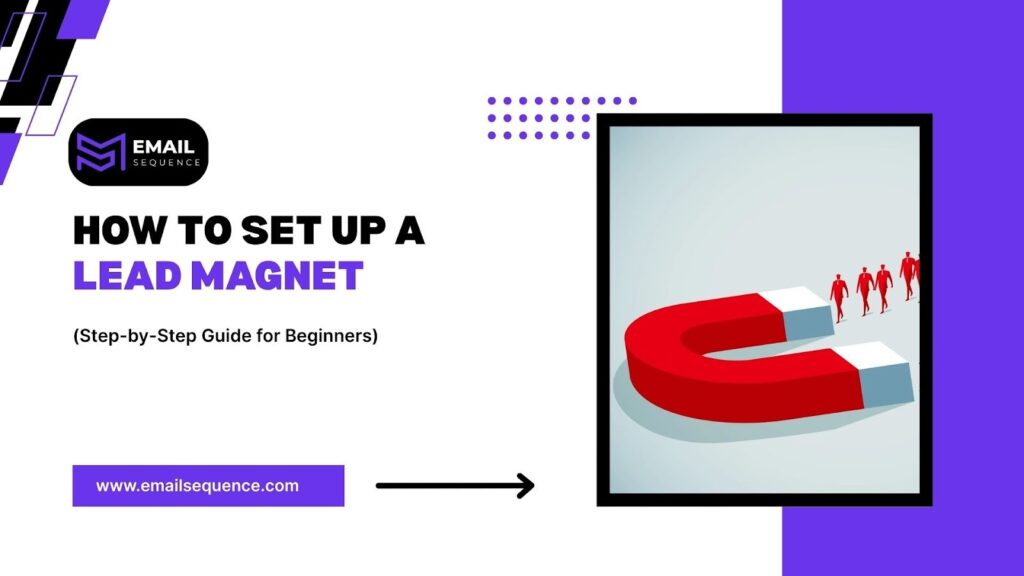
Growing an email list from scratch is one of the most common challenges marketers and business owners face. You can drive traffic to your website, but if visitors leave without sharing their contact information, that opportunity is gone. That is where knowing how to set up a lead magnet becomes a game-changer.
A lead magnet is a free resource or incentive you offer to potential customers in exchange for their email address. It is a foundational tool in email list building and lead generation strategy, used by businesses of every size to attract, capture, and convert the right audience. When executed well, it bridges the gap between a first-time visitor and a loyal customer.
In this guide, we’ll cover everything you need to know—from what a lead magnet is, to how to build one that actually converts. You will also find practical lead magnet examples, common mistakes to avoid, and proven best practices to maximize your results.
What Is a Lead Magnet?
A lead magnet is any piece of value, such as content, a tool, a discount, or an experience, that you offer for free in exchange for a visitor’s contact details, typically their email address.
The term “lead” refers to a potential customer who has shown interest in your business. A magnet, naturally, is what draws them in. Together, they form one of the most effective mechanisms in email marketing lead generation.
Common lead magnet examples include:
- PDF guides or eBooks
- Checklists and templates
- Free mini-courses or webinars
- Discount codes or free trials
- Quizzes with personalized results
In the context of email marketing, a lead magnet serves as the entry point into your sales funnel. Once someone opts in, you can nurture that relationship through targeted email sequences, ultimately converting a subscriber into a paying customer.
Why Do Lead Magnets Convert So Well?
Most website visitors are not ready to buy on their first visit. They need time, trust, and relevant information before making a decision. Lead magnets address all three.
Build trust with potential customers
Offering something genuinely useful before asking for anything in return is a powerful way to signal credibility. It shows your audience that you understand their challenges and have the expertise to solve them.
Grow your email list
Unlike the unpredictable reach of organic social media or fluctuating search traffic, your email list is an asset you own and control. Lead magnets provide a tangible reason for people to subscribe. This turns passive website visitors into active contacts you can communicate with directly.
Increase marketing conversions
A targeted lead magnet naturally attracts individuals who are already interested in what you have to offer. This ensures your email list is not just large, but also highly qualified. Qualified subscribers are far more likely to engage with your content and ultimately convert into paying customers.
Improve audience targeting
Creating lead magnets based on specific topics or pain points gives you direct insight into what your audience values most. This data is invaluable for refining your marketing efforts.
- It allows you to segment your email list effectively.
- You can personalize your messaging for greater impact.
- It helps you deliver the right offer to the right person at the right time.
Segment your audience effectively
By offering different lead magnets for different problems, you can automatically categorize subscribers based on their interests. This allows for more precise and relevant communication.
- A subscriber who downloads a “Beginner’s Guide to SEO” can be tagged differently from one who downloads an “Advanced Link-Building Checklist.”
- This segmentation helps you tailor future content and offers, increasing engagement and conversion rates.
Establish authority in your niche
Consistently providing high-quality, valuable resources positions you as an expert in your field. A well-crafted lead magnet showcases your knowledge and demonstrates your ability to deliver results.
- This builds your brand’s reputation and makes potential customers more likely to turn to you when they’re ready to make a purchase.
- It sets you apart from competitors who may only offer surface-level content.
How Lead Magnets Work in a Marketing Funnel
Understanding the role of a lead magnet within a broader marketing funnel is a key part of how to set up a lead magnet that performs.
Here is how the flow typically works:
- Traffic: A potential customer discovers your brand through a blog post, social media, paid ad, or search result.
- Lead magnet: They land on a page promoting a free resource that solves a specific problem they have.
- Email capture: They submit their name and email via an opt-in form to access the resource.
- Email sequence: An automated sequence delivers the lead magnet and follows up with relevant, value-driven content.
- Customer conversion: Over time, well-crafted emails guide the subscriber toward a purchase decision.
Each step in this funnel depends on the one before it. If your lead magnet does not resonate, your opt-in rate will suffer. If your email sequence is weak, conversion will stall. Getting the lead magnet right is the critical first step.
Types of Lead Magnets That Convert Best
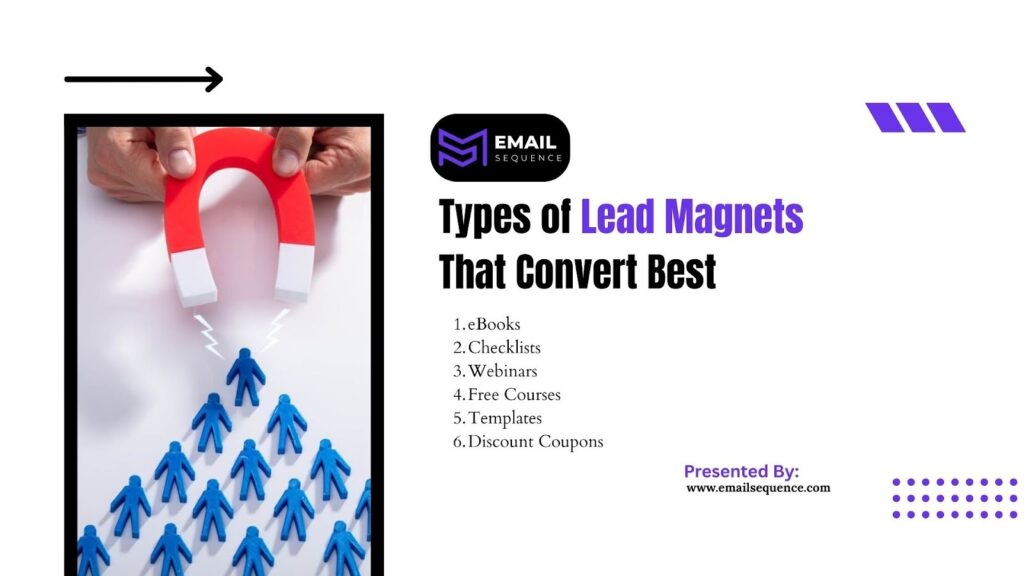
Not all lead magnets perform equally. The format you choose should match both your audience’s preferences and the complexity of your offer.
eBooks
eBooks work well for audiences that want depth. They position you as an authority on a subject and are particularly effective for inbound marketing strategies in B2B or professional services.
- Examples: “The Ultimate Guide to SEO in 2024,” “A Beginner’s Handbook to Investing in Real Estate,” “Mastering the Art of Sourdough.”
Checklists
Checklists are among the highest-converting lead magnet formats because they are fast to consume and immediately actionable. A well-designed checklist solves one specific problem in a clear, scannable format.
- Examples: “The 10-Point Website Launch Checklist,” “Your Weekly Home Cleaning Checklist,” “The Essential Pre-Travel Packing List.”
Webinars
Live or recorded webinars build connection and trust at scale. They work especially well for high-ticket offers where the audience needs more information before committing.
- Examples: “How to Triple Your Sales with LinkedIn Marketing,” “A Live Q&A with a Financial Planning Expert,” “Mastering Project Management with Agile.”
Free courses
A free email course—typically delivered over five to seven days—provides ongoing value while keeping subscribers engaged. It is an excellent format for educators, coaches, and SaaS companies.
Templates
Templates save people time, which makes them highly attractive. Whether it is a social media calendar, a business plan framework, or a content brief, templates are practical and shareable.
Discount coupons
For eCommerce businesses, a discount or free shipping offer is one of the most direct and effective lead magnets available. It removes a barrier to purchase while capturing an email address.
Step-by-Step Guide: How to Set Up a Lead Magnet
Ready to build your own? Creating a high-converting lead magnet involves more than just a good idea; it requires a strategic approach. From identifying your audience’s pain points to designing a compelling offer and setting up the delivery mechanism, each step is crucial. Here is exactly how to set up a lead magnet from start to finish.
1. Define your target audience
Before you create anything, get specific about who you are trying to attract. The more precisely you define your audience, the more relevant—and effective—your lead magnet will be.
Ask yourself: Who is this person? What do they do? What keeps them up at night?
2. Identify a specific problem
A lead magnet should solve one focused problem, not ten. Broad, generalized resources rarely convert because they feel overwhelming and impersonal.
- Action step: Identify the single most pressing challenge your audience faces, and build your lead magnet around that.
3. Create valuable content
The quality of your lead magnet directly reflects the quality of your brand. Invest time in making it genuinely useful. Poor quality content—even if it is free—erodes trust before you have had a chance to build it.
Best practices: Use clear language, practical advice, and a clean layout.
4. Choose the lead magnet format
Match the format to the problem. When in doubt, choose the format that delivers the fastest result for your audience.
- Examples: A complex topic might suit an eBook or a free course. A process-based challenge is better served by a checklist or template.
5. Build a landing page
Your lead magnet landing page is where the conversion happens. Keep it focused and state the benefit clearly. A well-optimized landing page can dramatically improve your lead magnet conversion rates.
- Key elements: Remove distractions, state the benefit clearly, and include social proof if you have it.
- Tools: Platforms like Mailchimp or Leadpages make this process straightforward, even for beginners.
6. Add an opt-in form
Your opt-in form for lead magnet delivery should be simple. Every additional field you add reduces your conversion rate.
- What to ask: Usually just a first name and email address.
- Call to action: Use a benefit-driven CTA (e.g., “Send me the free checklist” rather than “Submit”).
7. Deliver it through email automation
Once someone opts in, they should receive your lead magnet instantly via an automated email. Tools like EmailSequence and Mailchimp allow you to set up triggered email workflows that deliver the resource immediately, followed by a nurture sequence that keeps the relationship warm.
When considering how to set up a lead magnet, remember that prompt, professional delivery sets the tone for everything that follows.
Best Practices for High-Converting Lead Magnets
Creating a compelling lead magnet is only half the battle. If you’re wondering how to set up a lead magnet that truly converts, a few best practices can make all the difference. Optimizing your approach is where the real results come from.
Keep it simple
A lead magnet should be easy to consume. If it looks dense or time-consuming, people will opt in but never actually use it—and that is a missed opportunity to demonstrate your value. Aim for clarity over comprehensiveness.
Deliver quick results
The best lead magnets produce a fast, tangible result. When someone uses your checklist or template and immediately feels the benefit, they associate that positive experience with your brand. This is what builds long-term loyalty.
Use clear CTAs
Every element of your lead magnet funnel—your landing page, opt-in form, and confirmation email—should include a clear call to action that tells the reader exactly what to do next. Vague directions reduce engagement and conversion.
Optimize landing pages
Test different headlines, images, and button colors on your lead magnet landing page. Even small changes can produce meaningful improvements in opt-in rates. Use analytics tools to track your performance and iterate regularly.
Lead Magnet Examples for Different Businesses
Understanding how to apply lead magnets across different industries makes the concept far more practical.
- Coaching business: A free 15-minute strategy session or a downloadable “Goal-Setting Workbook” attracts prospects who are ready to invest in their personal or professional development.
- eCommerce store: A discount code (e.g., “Get 15% off your first order”) is a proven lead magnet that combines customer acquisition with immediate purchase intent.
- SaaS company: A free trial, a feature-specific tutorial, or an ROI calculator gives potential users hands-on experience with the product before committing.
- Digital marketing agency: A free website audit, a social media content calendar template, or an SEO checklist demonstrates expertise while directly addressing a pain point prospective clients face.
These lead magnet examples for small businesses and larger organizations alike show that the most effective approach is always tied to a real, specific need.
Common Lead Magnet Mistakes to Avoid
Even well-intentioned lead magnets can underperform. Here are the pitfalls that most often derail results.
- Asking for too much information: A long opt-in form creates friction. Keep it minimal—name and email is almost always enough.
- Weak value proposition: If your lead magnet does not clearly communicate what the subscriber will gain, they have no reason to sign up. Lead with the benefit, not the format.
- Poor design: Appearance matters. A cluttered, low-quality PDF or landing page sends the wrong signal about your brand. Invest in clean, professional design—even simple tools like Canva can make a significant difference.
- Slow delivery: If your lead magnet does not arrive immediately after opt-in, you risk losing the subscriber’s attention and trust. Automate delivery from day one.
How to Promote Your Lead Magnet
A great lead magnet won’t generate leads if your target audience can’t find it. To maximize your reach, you need a multi-channel promotion strategy that places your offer directly in the path of qualified prospects. Integrating promotional tactics across your owned and paid media is the key to accelerating list growth.
Optimize Blog Conversions
Instead of just adding a generic link, strategically embed your lead magnet offer within relevant blog content. Use content upgrades, which are highly specific resources offered within a post, to convert engaged readers.
For example, a post on “10 SEO Tips” could offer a “Free SEO Checklist” lead magnet via an inline opt-in form, capturing high-intent subscribers at their peak interest.
Leverage Social Media Algorithms
Go beyond simple “link in bio” posts. Create short-form video content (Reels, TikToks) that teases a key takeaway from your lead magnet, directing viewers to download the full resource.
Use pinned posts on platforms like X and Facebook to keep your lead magnet highly visible and run interactive polls in Stories to gauge interest before dropping the link.
Implement Intelligent Popups
Generic popups can be disruptive. Instead, use behavior-triggered popups for a better user experience. For instance, set an exit-intent popup to appear only on high-traffic blog posts, or a scroll-depth popup that triggers after a user has read 70% of the page.
Execute Targeted Paid Ad Campaigns
For rapid list building, use paid ads to target lookalike audiences based on your existing email subscribers or customer lists. Run A/B tests on your ad creative and landing page copy to optimize for cost-per-lead (CPL).
This data-driven approach ensures your ad spend is directed towards acquiring the most qualified subscribers for your lead generation strategy.
Conclusion
A well-crafted lead magnet is one of the highest-leverage investments you can make in your marketing. It grows your email list, builds trust with your audience, and creates a direct path toward email list building and sustainable revenue growth.
Now that you know exactly how to set up a lead magnet from identifying your audience to automating delivery, the next move is to start building. Pick one format, focus on one specific problem, and create something genuinely useful. Use tools like EmailSequence or Mailchimp to automate the delivery process, and track your lead magnet conversion rates from day one so you can optimize as you grow.
The best lead generation strategy is the one you actually implement. Start simple, stay focused, and let the results guide your next step.
Ready to get started? Visit EmailSequence.com to start building your high-converting lead magnet today.
Frequently Asked Questions
1. What is a lead magnet in marketing?
A lead magnet is a free resource offered in exchange for a visitor’s email address. It helps businesses capture leads and grow their email list.
2. How do you create a lead magnet?
To create a lead magnet, identify your audience’s problem, choose a format (checklist, guide, template), create valuable content, and deliver it through an opt-in form.
3. What are the best types of lead magnets?
High-converting lead magnets include checklists, templates, eBooks, webinars, free courses, and discount coupons.
4. How long should a lead magnet be?
A lead magnet should be as long as necessary to deliver value. Many effective ones are short, such as a one-page checklist or a 10–20 page guide.
5. Where should you place a lead magnet on a website?
Lead magnets can be placed on landing pages, blog posts, popups, sidebar forms, and exit-intent prompts to capture visitor emails.