Mastering Managed Email Campaigns – Best Practices for Success
If you’re here, you’re likely a small business owner, entrepreneur, or digital marketer looking to unlock the full potential of email marketing. And, honestly, you’re in the right place. Managed email marketing isn’t just another buzzword—it’s a comprehensive service trusted by businesses of all sizes, from small startups to multi-million dollar brands. It’s designed to alleviate the burdens of email campaigns by involving an experienced team to create, manage, and optimize strategies, ensuring alignment with business goals while handling every aspect of campaign execution and analysis. This includes email campaigns created from the ground up, focusing on the design of email templates, analysis of results, and implementation of strategies based on data insights.
Hi, I’m Syed Abdullah, Founder of EmailSequence.com, where we use AI-powered email campaigns to help businesses do exactly that. Throughout my years in the industry, I’ve seen email marketing evolve into an essential channel for businesses looking to stand out in today’s crowded digital space.
This guide will walk you through the ins and outs of managed email campaigns, from planning to execution, with actionable tips and real-world examples for success.
Why Managed Email Campaigns Matter
You’re losing money every time your emails land in spam or fail to deliver the right message. Think of email marketing as a conversation—if you’re not saying the right things or targeting the right audience, you’re wasting valuable opportunities. But when managed correctly, email campaign management can be game-changers for your business.
Managed email campaigns can support a marketing team in creating and managing effective campaigns by enabling them to build professional messages, set up automated sequences, and target subscribers effectively through features like segmentation and personalized content.
Still not convinced? Here’s some food for thought. Studies show that businesses can generate up to $42 for every $1 spent on email marketing. Yes, you read that right. Now, imagine amplifying those results with AI precision and automation.
Step 1: Planning and Email Marketing Strategy
Define Your Email Marketing Goals
Start here—what do you want to achieve? Are you looking to increase sales, build customer loyalty, or bring back inactive users? Whatever it is, define your SMART goals (Specific, Measurable, Achievable, Relevant, and Time-bound).
- Example Goal #1: “Increase click-through rates by 30% in the next 3 months.”
- Example Goal #2: “Recover abandoned carts with a 20% conversion rate through automation.”
Effective campaign management is crucial in planning and executing email campaigns to achieve these goals.
Once your goals are clear, decide on Key Performance Indicators (KPIs) to track your progress—open rates, click-through rates, and conversion rates are great starting points.
Develop an Email Marketing Strategy
Think long-term! Random, one-off emails don’t cut it. Build a robust email calendar to ensure consistency. Tailor your content to your audience’s preferences and identify the perfect balance between promotional and value-driven messages.
Having email campaigns created with a clear strategy in mind is essential for success. Using an email marketing calendar helps in planning and tracking campaigns, setting specific and measurable goals, and optimizing campaign management.
Pro Tip: Choose the Right ESP (Email Service Provider)
Look for platforms with features like automation, segmentation, and analytics. EmailSequence.com, for example, offers all this and AI-powered tools designed for scaling operations hassle-free.
Define Your Email Marketing Goals
Defining your email marketing goals is a crucial step in creating effective email campaigns. Your goals should be specific, measurable, achievable, relevant, and time-bound (SMART). Some common email marketing goals include:
- Increasing brand awareness and reach
- Generating leads and conversions
- Building customer loyalty and retention
- Driving website traffic and sales
- Improving customer engagement and feedback
To define your email marketing goals, consider the following steps:
- Identify Your Target Audience and Their Needs: Understanding who your audience is and what they need will help you tailor your email campaigns to meet their expectations.
- Determine the Purpose of Your Email Campaigns: Are you aiming to inform, engage, or convert? Knowing the purpose will guide your content and strategy.
- Set Specific and Measurable Objectives: For example, aim to “increase click-through rates by 30% in the next 3 months” or “recover abandoned carts with a 20% conversion rate through automation.”
- Establish a Timeline for Achieving Your Goals: Setting a timeframe helps in tracking progress and maintaining focus.
- Track and Analyze Your Email Campaign Performance: Use detailed reporting to monitor key metrics and adjust your goals as needed.
By following these steps, you can create a clear roadmap for your email marketing efforts, ensuring that each campaign is aligned with your overall business objectives.
Develop a Comprehensive Email Marketing Strategy
Developing a comprehensive email marketing strategy is crucial for achieving your marketing goals. A well-planned strategy helps you create effective email campaigns that resonate with your target audience. Here are some key components to include in your email marketing strategy:
- Define Your Target Audience and Their Preferences: Understanding your audience is the foundation of any successful email marketing strategy. Identify who they are, what they need, and how they prefer to receive information. This will help you tailor your email campaigns to meet their expectations.
- Set Clear Goals and Objectives for Your Email Campaigns: Establishing specific, measurable, achievable, relevant, and time-bound (SMART) goals will guide your email marketing efforts. Whether you aim to increase brand awareness, generate leads, or drive sales, having clear objectives will keep your campaigns focused and effective.
- Choose the Right Email Service Provider (ESP) for Your Business: Selecting an ESP that aligns with your business needs is essential. Look for features like automation, segmentation, and detailed reporting to enhance your email campaign management.
- Plan Your Email Content and Design: Consistency is key. Develop an email marketing calendar to schedule your campaigns and ensure a balanced mix of promotional and value-driven content. Design visually appealing templates that reflect your brand and engage your audience.
- Determine the Frequency and Timing of Your Email Campaigns: Finding the right frequency and timing for your emails can significantly impact engagement. Test different schedules to see what works best for your audience and stick to a consistent routine.
- Establish Metrics for Measuring Email Campaign Performance: Track key performance indicators (KPIs) such as open rates, click-through rates, and conversion rates. Use these metrics to evaluate the success of your campaigns and make data-driven adjustments.
A comprehensive email marketing strategy will help you create email campaigns that drive engagement, conversion, and revenue for your business.
Step 2: Building and Managing Your Email List

Email List Building Techniques
Your email list is gold—but only if you build it the right way. Here’s how to grow a quality list fast:
- Add opt-in forms to high-traffic pages of your website.
- Incentivize sign-ups with freebies like eBooks or discounts.
- Use social media strategically by promoting exclusive email content like special offers.
Segment Your Audience
Gone are the days of sending the same email to everyone. With segmentation of your contact list, you can group users by demographics, preferences, or behaviors. For example, a segment of frequent buyers can receive early-bird product launches, while inactive users might get re-engagement campaigns.
Transactional emails are crucial in effectively communicating with subscribers at various stages in the sales funnel. These emails can be automated and segmented to enhance their execution, ensuring timely and relevant communication.
Pro Tip: Keep Your List Clean
To maintain the health and effectiveness of your email campaigns, it’s essential to regularly clean your subscriber list by removing inactive or unengaged users. Inactive subscribers can hurt your email performance metrics, such as open rates and click-through rates, and they increase the likelihood of bounces or spam complaints. High bounce rates or being flagged as spam can negatively impact your sender reputation, which in turn affects how many of your emails actually reach inboxes. By keeping your subscriber list clean, you’ll improve deliverability, ensuring your emails land in the right inboxes and are seen by those who are genuinely interested in your content.
Build a High-Quality Email List
Building a high-quality email list is essential for the success of your email marketing campaigns. A good email list consists of subscribers who are genuinely interested in your products or services and have opted-in to receive emails from you. Here are some tips for building a high-quality email list:
- Use Opt-In Forms on Your Website to Collect Email Addresses: Place opt-in forms on high-traffic pages of your website to capture email addresses. Make sure the forms are easy to find and fill out.
- Offer Incentives Such as Discounts or Freebies to Encourage People to Subscribe: Entice visitors to join your email list by offering something of value, like a discount on their first purchase or a free eBook.
- Use Social Media to Promote Your Email List and Encourage People to Subscribe: Leverage your social media platforms to promote your email list. Share the benefits of subscribing and provide a direct link to your opt-in form.
- Use Email List Segmentation to Categorize Your Subscribers Based on Their Interests and Preferences: Segment your email list to send more targeted and relevant content. Group subscribers by demographics, purchase history, or engagement levels.
- Regularly Clean and Update Your Email List to Remove Inactive or Unengaged Subscribers: Maintain the health of your email list by periodically removing inactive subscribers. This will improve your email deliverability and engagement rates.
A high-quality email list will help you create targeted and effective email campaigns that drive engagement and conversion.
Bonus: How to Whitelist Domains, IPs, and Build Domain Authority via SEO
Whitelisting Domains and IPs
Whitelisting is a key step to ensuring that emails from your domain or IP address are recognized as legitimate by recipient mail servers. Here’s how you can do it:
- Authenticate Your Emails: Implement email authentication protocols like SPF (Sender Policy Framework), DKIM (DomainKeys Identified Mail), and DMARC (Domain-based Message Authentication, Reporting, and Conformance). These tell email providers that your messages are trustworthy and not spam.
- Work with ISPs: Reach out to major email service providers (like Gmail, Yahoo, and Outlook) to ensure your IP address and domain are added to their “safe” or “approved senders” list. This prevents your emails from being flagged as suspicious.
- Encourage Subscribers to Whitelist You: In your welcome email, ask your subscribers to add your email address to their address book or safe senders list. This step can significantly improve your deliverability rates.
- Monitor Your Blacklist Status: Regularly check if your domain or IP appears on email blacklists. If it does, take immediate action to correct the issue, such as removing spam traps or high-bounce contacts.
Building Domain Authority with SEO
Domain authority isn’t just crucial for email deliverability—it’s also vital for improving your website’s search engine rankings. Here’s how to build your domain authority effectively:
- High-Quality Content: Publish valuable, original, and relevant content that meets the needs of your audience. Quality content encourages backlinks, boosting your authority.
- Earn Backlinks: Secure links from reputable websites related to your industry. Focus on gaining natural, high-quality backlinks rather than using spammy link-building techniques.
- Optimize On-Page SEO: Ensure all pages on your website are properly optimized. This includes using keywords strategically, optimizing meta titles and descriptions, and ensuring fast page load times.
- Mobile-Friendly Design: Make sure your website is responsive and mobile-friendly since search engines prioritize websites that deliver great experiences on all devices.
- Reduce Bounce Rates: Encourage visitors to stay on your site by improving navigation, providing engaging content, and ensuring your website loads quickly.
By taking these steps, you’ll not only improve your email deliverability and reduce the risk of spam complaints but also strengthen your domain authority, making your website more visible and trustworthy to both users and search engines. The combination of both strategies ensures long-term success for your digital presence.
Segment Your Email List for Better Engagement
Segmenting your email list is a powerful way to increase engagement and conversion rates. By dividing your list into smaller groups based on demographics, behavior, and preferences, you can create targeted email campaigns that resonate with each group.
Here are some ways to segment your email list:
- Demographic Segmentation: Group your subscribers by age, location, job title, industry, etc. This allows you to tailor your messages to specific demographic characteristics.
- Behavioral Segmentation: Segment based on purchase history, email opens, clicks, and other behaviors. This helps in sending more relevant content to your most engaged subscribers.
- Preference-Based Segmentation: Use interests, preferences, and survey responses to create segments. This ensures that your emails align with what your subscribers care about.
- Firmographic Segmentation: For B2B email marketing, segment by company size, industry, revenue, etc., to address the unique needs of different business types.
To segment your email list, use your email service provider’s (ESP) segmentation tools or create custom segments based on your own criteria. Effective segmentation leads to more personalized and impactful email campaigns, ultimately driving better results.
Step 3: Creating Effective Email Content

Craft Compelling Subject Lines and CTAs Without Spam Words
Your subject line is your first (and sometimes only) chance to grab attention. Use curiosity, urgency, or humor to drive opens—just avoid spammy words like “FREE,” “LIMITED TIME ONLY!!!,” or excessive punctuation, which can trigger spam filters.
- Example Subject Line #1: “Abandoned your cart? Here’s 10% off to finish the job!”
- Example Subject Line #2: “This coffee will change your mornings forever ☕”
Pair your subject line with a strong Call-to-Action (CTA) to encourage clicks, but keep it natural. Phrases like “Shop Now,” “Learn More,” or “Claim Your Offer” work great without sounding pushy.
Creating successful email campaigns means crafting templates, compelling content, and clear CTAs while avoiding spam triggers to ensure your message reaches your audience.
Design Visually Appealing Templates
Your email should look stunning on every device. Use responsive design and brand-aligned visuals to maximize engagement. When paired with HTML/CSS customization, your emails won’t just look good—they’ll perform better across platforms like Gmail, Outlook, and Apple Mail.
Create Compelling Email Content
Creating compelling email content is critical for driving engagement and conversion. Your email content should be relevant, informative, and engaging, and should include a clear call-to-action (CTA). Here are some tips for creating compelling email content:
- Use Attention-Grabbing Subject Lines and CTAs: Your subject line is the first thing subscribers see, so make it count. Use curiosity, urgency, or personalization to grab attention. Pair it with a strong CTA that clearly tells the reader what to do next.
- Use Personalized Content to Address Your Subscribers by Name: Personalization goes beyond just using the subscriber’s name. Tailor your content to their preferences and behavior to make your emails more relevant and engaging.
- Use Segmentation to Create Targeted Content That Resonates with Your Subscribers: Segment your email list to send more relevant content to different groups. This ensures that your messages resonate with each segment, increasing engagement and conversions.
- Use Automation Tools to Create Dynamic Content That Changes Based on Subscriber Behavior: Automation tools allow you to send personalized content based on subscriber actions, such as browsing history or past purchases. This dynamic content keeps your emails relevant and timely.
- Use A/B Testing to Optimize Your Email Content and Improve Performance: Continuously test different elements of your emails, such as subject lines, CTAs, and content. Use the results to refine your strategy and improve performance.
Compelling email content will help you drive engagement, conversion, and revenue for your business.
Design Responsive and Mobile-Friendly Emails
Designing responsive and mobile-friendly emails is essential for ensuring that your email campaigns look great on any device. With more and more people checking their emails on their smartphones, it’s crucial to optimize your emails for mobile.
Here are some tips for designing responsive and mobile-friendly emails:
- Use a Mobile-Friendly Template or Design: Choose templates that automatically adjust to different screen sizes, ensuring a seamless experience for all users.
- Keep Your Email Content Concise and Scannable: Mobile users often skim through content, so make sure your emails are easy to read with clear headings and short paragraphs.
- Use Clear and Readable Fonts: Select fonts that are legible on small screens and avoid using too many different font styles.
- Optimize Images for Mobile Devices: Ensure that images load quickly and look good on smaller screens. Use alt text for images in case they don’t load.
- Use a Clear and Prominent Call-to-Action (CTA): Make your CTA buttons large enough to be easily tapped on a mobile device and place them prominently within the email.
To design responsive and mobile-friendly emails, use your ESP’s mobile-friendly templates or design your own using HTML and CSS. This ensures that your email campaigns are accessible and engaging, no matter how your audience views them.
Step 4: Automating and Optimizing Email Campaign Management

Automate Like a Pro
Got a new subscriber? Manage email campaigns to send them a welcome email instantly. Abandoned cart? Follow up with personalized reminders at the perfect time. Automation takes the guesswork out of email marketing and ensures you’re always connecting at the right moment. These tools also help your marketing team manage campaigns more efficiently by setting up automated sequences and targeting subscribers effectively.
At EmailSequence.com, our AI automation tools make this seamless, whether you’re running drip campaigns or triggered emails.
A/B Testing is Non-Negotiable
Don’t send an email without testing it! Experiment with subject lines, CTAs, and visuals to determine what resonates with your audience. Remember, small changes can make a big difference.
Automate Your Email Campaigns for Efficiency
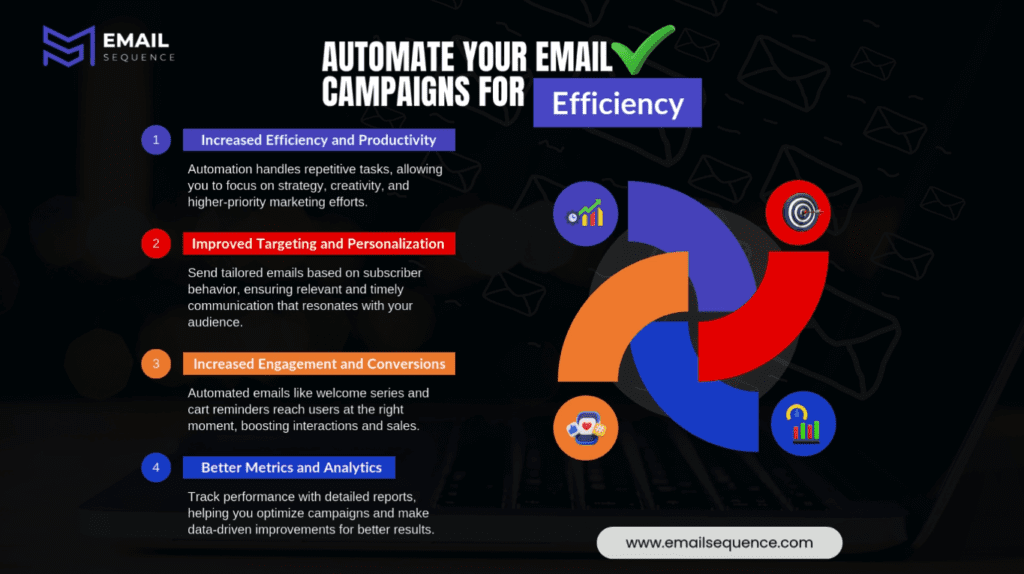
Automating your email campaigns can help you save time and increase efficiency. Automation tools allow you to create and send targeted email campaigns based on subscriber behavior and preferences. Here are some benefits of automating your email campaigns:
- Increased Efficiency and Productivity: Automation takes care of repetitive tasks, freeing up your time to focus on strategy and creativity.
- Improved Targeting and Personalization: Automation tools enable you to send personalized emails based on subscriber actions, ensuring your messages are relevant and timely.
- Increased Engagement and Conversion: Automated emails, such as welcome series or abandoned cart reminders, are sent at the right moment, increasing the likelihood of engagement and conversion.
- Better Metrics and Analytics: Automation tools provide detailed reporting on your email campaigns, helping you track performance and make data-driven decisions.
- Reduced Manual Errors and Mistakes: Automation minimizes the risk of human error, ensuring your emails are sent accurately and on time.
Automation tools can help you create and send targeted email campaigns that drive engagement and conversion.
Use A/B Testing to Optimize Email Campaigns
A/B testing, also known as split testing, is a powerful way to optimize your email campaigns and improve their performance. By testing different elements of your email campaigns, such as subject lines, CTAs, and email content, you can determine which elements perform better and make data-driven decisions.
Here are some ways to use A/B testing to optimize your email campaigns:
- Test Subject Lines and Email Open Rates: Experiment with different subject lines to see which ones generate higher open rates. Try variations in length, tone, and keywords.
- Test CTAs and Conversion Rates: Compare different call-to-action phrases and button designs to find out which ones drive more conversions.
- Test Email Content and Engagement Rates: Vary the content, layout, and images in your emails to see what resonates most with your audience.
- Test Sender Names and Email Open Rates: Try using different sender names (e.g., a person’s name vs. a company name) to see which one leads to higher open rates.
- Test Email Timing and Open Rates: Send your emails at different times of the day or week to determine the optimal timing for your audience.
To use A/B testing, leverage your ESP’s A/B testing tools or create your own tests using HTML and CSS. By continuously testing and refining your email campaigns, you can achieve better results and maximize the impact of your email marketing efforts.
Email Marketing Campaigns Best Practices
Following email marketing best practices is essential for creating effective email campaigns that engage and convert your target audience. Here are some best practices to follow:
Follow Email Marketing Best Practices
- Use a Clear and Relevant Subject Line: Your subject line should grab attention and give a hint of what’s inside the email.
- Use a Clear and Prominent CTA: Make sure your call-to-action stands out and clearly tells the reader what to do next.
- Keep Your Email Content Concise and Scannable: Use short paragraphs, bullet points, and headings to make your content easy to read.
- Use a Mobile-Friendly Design: Ensure your emails look great on all devices by using responsive design techniques.
- Segment Your Email List for Better Engagement: Tailor your messages to different segments of your audience for more personalized and effective campaigns.
- Use A/B Testing to Optimize Your Email Campaigns: Continuously test different elements of your emails to find out what works best.
- Track and Analyze Your Email Campaign Performance: Use detailed reporting to monitor key metrics and make data-driven decisions.
- Use a Clear and Relevant Sender Name: Choose a sender name that your audience will recognize and trust.
- Use a Clear and Relevant Email Signature: Include a professional email signature with your contact information and social media links.
- Follow Anti-Spam Laws and Regulations: Ensure your emails comply with laws like CAN-SPAM to avoid penalties and maintain your reputation.
By following these best practices, you can create effective email campaigns that engage and convert your target audience, driving better results for your business.
Case Study 1: Revitalizing a Retailer with AI
The Challenge:
A mid-sized retailer was facing declining sales and struggling to connect with their audience. Their email marketing campaigns were generic, resulting in low open rates, poor engagement, and minimal conversions. Customers were disengaged, and the retailer needed a solution to stand out in a crowded market and re-engage their audience.
Our Solution:
We introduced AI-powered personalization to their email marketing strategy. By analyzing customer data, including purchase history, browsing behavior, and preferences, we created tailored email templates for different audience segments. Each segment received highly relevant content, such as personalized product recommendations, exclusive offers, and custom messaging.
The Results:
Within just three months, the retailer experienced a 35% increase in sales. Open rates and click-through rates improved significantly as customers responded positively to the personalized approach. Engagement skyrocketed, with many customers returning to make repeat purchases. The tailored campaigns enabled the retailer to build stronger customer relationships and optimize revenue growth.
Case Study 2: From Small Bakery to Big Wins
The Challenge:
A local bakery was struggling to drive both online orders and foot traffic to their store. With limited marketing experience, their previous email campaigns lacked structure and failed to resonate with their audience. The bakery needed a scalable way to increase sales while maintaining a personal touch that reflected their brand.
Our Solution:
We implemented managed email campaigns featuring segmentation and intelligent targeting. By segmenting their audience into groups such as loyal customers, first-time buyers, and dormant users, we ensured that each group received emails tailored to their behavior. For example, loyal customers received exclusive discounts on new menu items, while dormant users were drawn back with special incentives. Additionally, we used eye-catching designs and clear call-to-action buttons to make ordering online seamless.
The Results:
Over six months, the bakery saw a 50% increase in online orders and a 20% boost in in-store visits. Customers appreciated the personalized touches in the emails, and the clear communication helped to drive action. The success of the campaigns not only improved sales but also helped the bakery build a stronger connection with its community.
Step 5: Measuring and Improving Email Campaign Performance
Email service providers play a crucial role in managing and optimizing email campaigns, but it’s not enough to send emails—you need to measure their impact. Monitor open rates, click-through rates, and conversions. Use detailed analytics to spot areas for improvement and amplify what works.
Track Important Email Marketing Metrics
Tracking important email marketing metrics is crucial for measuring the performance of your email campaigns. Here are some key metrics to track:
- Open Rates: The percentage of subscribers who open your emails. A high open rate indicates that your subject lines and sender name are effective.
- Click-Through Rates: The percentage of subscribers who click on links in your emails. This metric shows how engaging your content and CTAs are.
- Conversion Rates: The percentage of subscribers who complete a desired action, such as making a purchase or filling out a form. This is a key indicator of your email campaign’s effectiveness.
- Bounce Rates: The percentage of emails that are returned as undeliverable. High bounce rates can harm your sender reputation, so it’s important to keep your email list clean.
- Unsubscribe Rates: The percentage of subscribers who opt-out of your emails. Monitoring this metric helps you understand if your content is resonating with your audience.
Tracking these metrics will help you optimize your email marketing strategy and improve performance.
Why Choose EmailSequence.com?
Your emails shouldn’t go unnoticed. With our managed email campaigns, powered by AI, you’ll turn subscribers into buyers effortlessly.
Constant Contact is a leading email marketing tool known for its user-friendly interface, robust analytics, and powerful automation features.
Here’s what we offer:
- Smart Audience Targeting
- AI-Optimized Content
- Spam-Free Email Delivery
- Revenue-Driven Campaigns
Don’t just take my word for it—our clients have doubled their sales, boosted engagement, and transformed their businesses.
Get Started Today
Our email marketing software is fully booked! But don’t worry—you can still join our membership or sign up for the waitlist to access our cutting-edge AI automation tools. Visit EmailSequence.com to secure your spot. Don’t miss out!